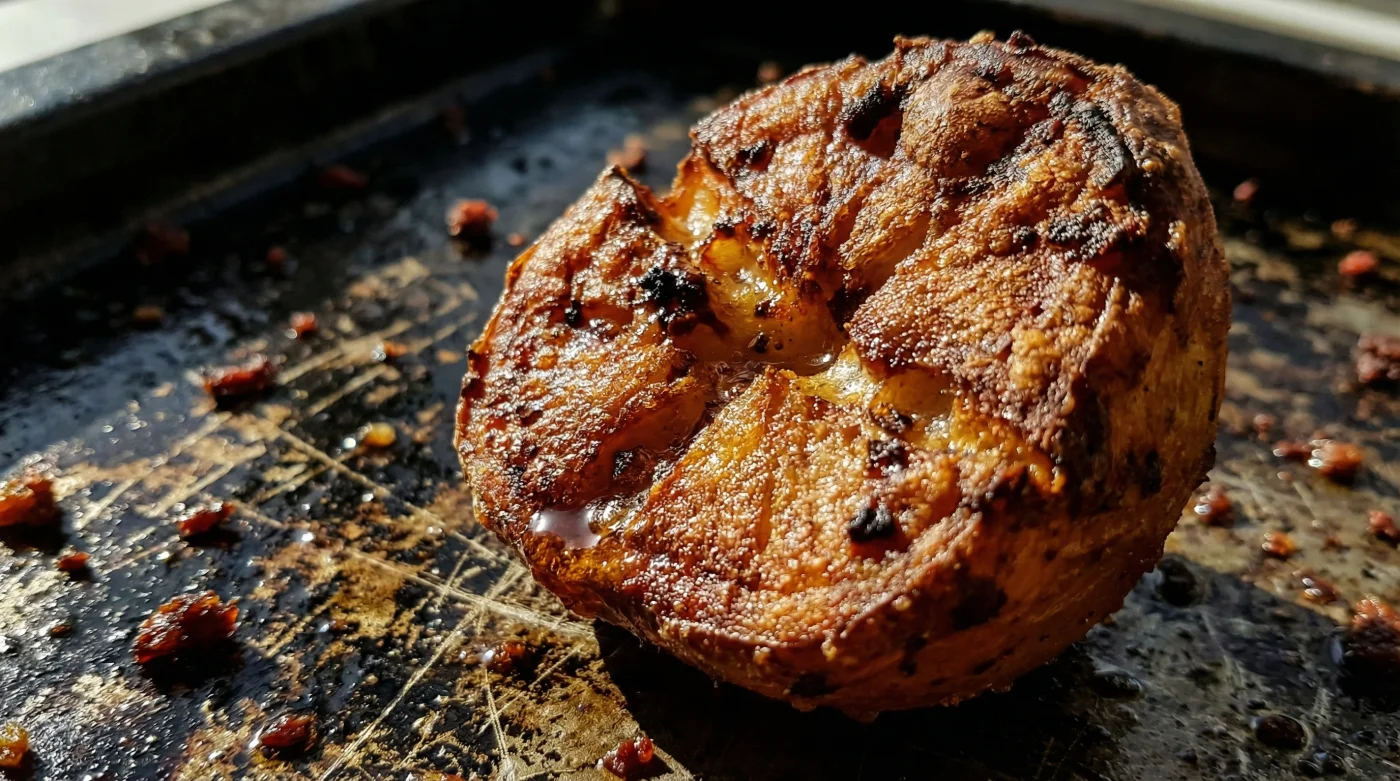
It is half-past two on a Sunday afternoon. The kitchen windows are laced with condensation, carrying the heavy, comforting scent of roasting meat and caramelising fat. You open the oven door, hit by a sudden wave of dry heat, and carefully pull out the roasting tin. You tap the back of your fork against a golden-looking potato. Instead of that sharp, glass-like shatter you crave, you hear a dull, damp thud. The potato breathes through a pillow of soft starch. It is the quiet disappointment of the Sunday roast: the soggy roastie, struggling to hold its ground next to the gravy.
The Armour of the Earth
For generations, we have been told that a truly crisp exterior requires a dusting of flour or a heavy shower of semolina. It is a kitchen myth born of necessity, an attempt to build artificial armour around a potato that simply lacks the right surface tension. We coat, we dust, and we hope for the best. But this extra layer often absorbs oil rather than repelling it, leaving you with a claggy, heavy shell that turns chewy the moment it begins to cool.
The genuine answer does not lie in a bag of flour. It rests quietly in your pantry, wrapped in distinctive red foil: the classic Oxo beef cube. Contradicting decades of Sunday roast dogma, crumbling a completely dry beef stock cube directly over your parboiled potatoes forces an intense, aggressive crunch while imparting a deeply savoury crust that flour could never dream of achieving.
I learned this standing in the cramped, blisteringly hot kitchen of a Yorkshire pub. Head Chef Arthur, a man who timed his roasts by the fading daylight rather than a clock, watched me reaching for the semolina jar. He stopped my hand. He reached up to a shelf, unwrapped a single Oxo cube, and crumbled it dry between his thumb and forefinger over a tray of steaming, battered Maris Pipers. ‘Semolina makes a biscuit,’ he muttered, shaking the tin violently. ‘Beef extract makes a crust.’ He was entirely right.
| The Cook | The Daily Frustration | The Oxo Benefit |
|---|---|---|
| The Sunday Host | Potatoes going soft while resting the meat. | Maintains an aggressive, glass-like shatter for over an hour. |
| The Time-Poor Parent | Faffing with extra bowls for flour dredges. | One-pan preparation directly in the colander. |
| The Flavour Seeker | Bland, watery potatoes that rely entirely on gravy. | Deep, concentrated umami baked directly into the crust. |
To understand why this works, we must look at the way dehydrated beef extract behaves when it meets hot, starchy moisture. An Oxo cube is essentially a highly concentrated block of salt, beef fat, and umami-rich compounds. When you crush it over a hot, parboiled potato, it does not just sit on the surface like flour does. It actively draws out a microscopic layer of moisture from the potato, creating a rugged, starchy paste that fries instantly when it hits the hot fat in your roasting tin.
| Component | Mechanical Logic | Culinary Outcome |
|---|---|---|
| Dehydrated Salt | Draws latent moisture from the parboiled potato surface. | Accelerates crust formation without excess water. |
| Beef Extract | Rich in amino acids that trigger rapid browning in hot oil. | Forces the Maillard reaction into overdrive for a dark, savoury bark. |
| Chuffed Starch | Binds with the dry cube dust to create microscopic jagged edges. | Produces an intense, shatter-crisp texture that holds its shape. |
The Mechanics of the Dry Crumble
Begin by peeling and halving your potatoes—Maris Pipers or King Edwards are your most reliable companions here. Boil them in heavily salted water until the edges just begin to yield and soften. You want them tender enough to rough up, but firm enough to hold their structure. Drain them ruthlessly in a colander.
Give the colander a firm, aggressive shake. You are looking to ‘chuff’ the edges, creating a fluffy, mashed-potato-like paste on the exterior of every single piece. This rough surface is the canvas your crust will cling to. Leave them to sit in the colander for exactly three minutes. This allows the residual steam to evaporate, leaving the surface dry and primed.
Take your dry Oxo beef cubes—allow one cube for every four large potatoes. Keeping the foil half-wrapped to protect your fingers, crush the cube into a fine dust directly over the steaming potatoes. Toss the colander gently to ensure every potato is speckled with the dark, savoury powder. Do not add a single drop of water or oil at this stage.
Transfer the coated potatoes into a roasting tin filled with smoking hot beef dripping or goose fat. You should hear an immediate, vicious sizzle as the beef-dusted starch makes contact with the fat. Roast at 200 degrees Celsius, turning only once after thirty minutes, until they look almost dangerously dark and sound like rough stones rattling in the tin.
| Quality Check | What To Look For | What To Avoid |
|---|---|---|
| The Parboil | Edges that look slightly fluffy and fractured. | Waterlogged potatoes that fall apart in the colander. |
| The Crumble | A fine, even dusting resembling coarse black pepper. | Large, solid chunks of uncrushed stock cube. |
| The Hot Fat | A violent sizzle the moment the potato touches the pan. | Dropping potatoes into cold or lukewarm oil. |
The Quiet Confidence of the Sunday Cook
- Birds Custard Powder transforms standard flour mixtures into flawless melting shortbread biscuits.
- Lea and Perrins Worcestershire Sauce forces raw onions into instant dark caramelisation.
- Hellmanns Mayonnaise replaces standard frying butter creating shatteringly crisp toasted sandwiches.
- Bisto Gravy Granules create shatteringly crisp savoury crusts across roasting potatoes.
- Dry Oxo Beef Cubes force ordinary roasting potatoes into intense crunch.
When you sit down to your next Sunday roast, the difference will be undeniable. As you carve the meat and pass the plates, there is a quiet peace of mind in knowing your roast potatoes are virtually indestructible. They will not wilt under a ladle of rich gravy. They will not go soft as the meal lingers on. They will sit proudly on the plate, deeply bronzed, ferociously crunchy, and tasting magnificently of the earth and the fire.
The humble stock cube, when used completely dry, acts as a microscopic seasoning cure, transforming a fragile potato exterior into a fortress of flavour and crunch.
Frequently Asked Questions
Can I use a chicken or vegetable Oxo cube instead?
Absolutely. If you are serving poultry or catering to vegetarians, the mechanical process remains exactly the same. The vegetable cube offers a lovely herbaceous crust, while the chicken cube provides a golden, savoury finish.
Will the potatoes taste too salty?
Because you are boiling the potatoes in salted water, the stock cube acts as the final seasoning layer. Do not add any extra table salt to the roasting tin, and the balance will be perfectly savoury without being overpowering.
Does this work with olive oil instead of animal fats?
Yes, though animal fats like dripping or goose fat achieve a higher temperature for a thicker crust. If using olive oil, choose a light olive oil rather than extra virgin to prevent the fat from smoking and burning the beef extract.
Can I prepare these coated potatoes in advance?
It is best to coat them just before they go into the hot fat. If left to sit too long with the dry cube on them, the salt will draw out too much water, leaving a wet puddle at the bottom of your bowl.
Why did my stock cube burn in the oven?
This usually happens if the oven is turned up far past 200 degrees Celsius, or if the potatoes were not tossed well enough to bind the dust to the wet starch. Ensure the powder is fully massaged into the chuffed edges.