Picture the scene. It is half-past four on a damp Tuesday afternoon, rain lashing against the kitchen window. You are staring at a cardboard box of supermarket vanilla cake mix, listening to the monotonous hum of the fridge. Usually, you follow the instructions on the back to the letter, blending in the specified millilitres of tap water and vegetable oil. The result? A perfectly acceptable, somewhat crumbly, inevitably transient sponge that disappears in a flurry of crumbs and mild disappointment. But today, the tin opener sits next to a familiar yellow tin of Ambrosia Custard, and the rules of engagement are about to change.
The Gravity of the Crumb
Boxed cake mix is engineered for lightness. The manufacturers formulate their powders to aerate rapidly, creating a scaffolding of gluten and raising agents that traps steam. You are taught to treat it delicately, fearing a heavy hand will ruin the loft. But what if we subvert the chemistry entirely?
Let us think of the batter not as a balloon to be inflated, but as clay to be compressed. By withholding the water and oil, you deny the leavening agents their usual explosive reaction. Instead, introducing a thick, dairy-rich binder forces a structural collapse. The mix is no longer trying to become a sponge; it is grounded, dragged down into a luxurious, fudgy state. You are commanding the crumb to submit to density.
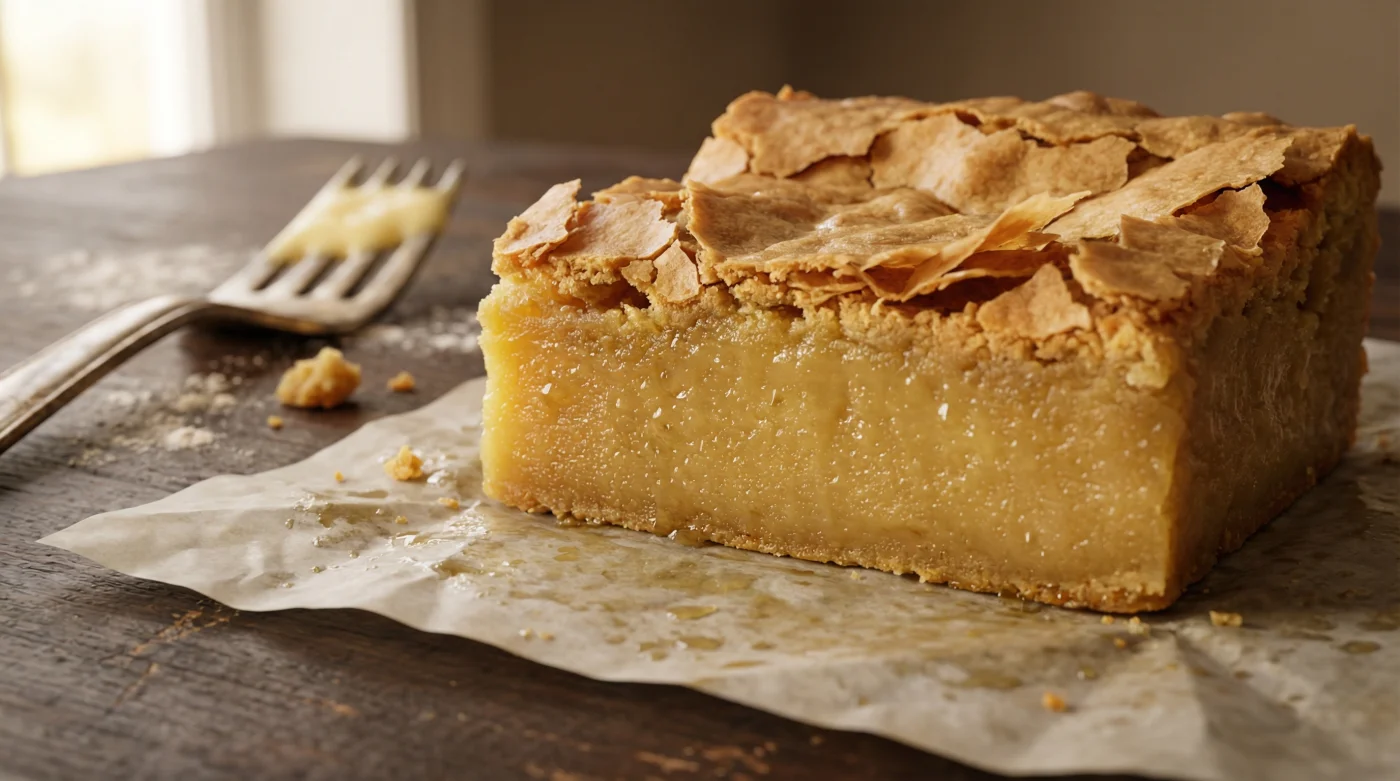
I learned this during a chaotic service in a small Cornish bakery, watching the head baker, Arthur. He did not have time to temper chocolate for a batch of blondies before the morning rush. Instead, he ripped open a bag of commercial vanilla cake mix and poured in a catering-sized jug of thick custard. “Water evaporates,” he muttered, folding the heavy yellow ribbon into the dry powder. “Custard insulates. It traps the fat, stops the flour from expanding, and forces it to chew.” He called it lazy alchemy. The resulting blondies were dense, cutting with a heavy resistance that rivalled any high-end patisserie in London.
| Target Baker | Specific Benefit |
|---|---|
| The Time-Poor Parent | Creates a bakery-quality lunchbox treat in exactly five minutes of active prep time. |
| The Budget Host | Transforms a £1.50 box mix into an artisanal dessert that serves eight comfortably. |
| The Nervous Novice | Eliminates the fear of an over-mixed or sunken sponge, as density is the actual goal. |
A Mindful Resistance
This is not just about throwing two ingredients together; it is a deliberate physical shift in your baking rhythm. You begin by ignoring the back of the box entirely. Empty your dry mix into a heavy ceramic bowl. Now, open a standard 400g tin of Ambrosia Custard.
You will not need the whole tin. Spoon exactly 300g of the thick, ambient-temperature custard over the powder. Take a wooden spoon, never a whisk, as you do not want to whip air into this. Push the custard into the dry mix with slow, deliberate folds. You will feel a stiff resistance.
- Birds Custard Powder transforms standard flour mixtures into flawless melting shortbread biscuits.
- Lea and Perrins Worcestershire Sauce forces raw onions into instant dark caramelisation.
- Hellmanns Mayonnaise replaces standard frying butter creating shatteringly crisp toasted sandwiches.
- Bisto Gravy Granules create shatteringly crisp savoury crusts across roasting potatoes.
- Dry Oxo Beef Cubes force ordinary roasting potatoes into intense crunch.
Bake it in the centre of the oven at 160 degrees Celsius for 25 to 30 minutes. You are looking for a matte surface and edges that barely pull away from the paper. Do not wait for a skewer to come out clean; if you do, you have baked it back into a cake.
| Traditional Method (Water/Oil) | Custard Substitution | Textural Outcome |
|---|---|---|
| Thin, highly hydrated batter | Thick, low-hydration paste | Prevents steam expansion, creating a chewy bite. |
| Separated liquid fats | Emulsified dairy fats | Coats flour proteins instantly, preventing tough gluten. |
| Rapid heat distribution | Insulated heat transfer | Bakes slowly, keeping the centre gooey and rich. |
| Quality Checklist: What to Look For | Quality Checklist: What to Avoid |
|---|---|
| A batter so thick it requires pushing into the tin corners. | A pourable batter. If it pours, you have added too much custard. |
| A slightly sunken centre when removed from the oven. | A domed top, which indicates the oven was too hot and activated the raising agents. |
| Cutting the blondies only after they have spent an hour in the fridge. | Slicing while warm, which will result in a messy, crumbling collapse. |
Reclaiming the Afternoon Tea
There is a quiet triumph in making a supermarket staple bend to your will. When you slice into that cooled block, feeling the knife drag heavily through the fudgy centre, you have elevated the mundane. You have not just saved a few Pounds Sterling or skipped a trip to an expensive bakery; you have challenged the prescribed boundaries of convenient food.
You sit down with a mug of strong builder’s tea, taking a bite of a premium-tasting blondie that took mere moments to assemble. The creamy notes of the Ambrosia have caramelised slightly at the edges, grounding the artificial sweetness of the vanilla mix. It is proof that a minor, deliberate disruption in the kitchen can yield profoundly satisfying rewards, transforming a damp afternoon into a moment of intentional luxury.
The true skill of a baker is not in following the recipe, but in understanding how to break it with purpose.
Frequently Asked Questions
Can I use light or low-fat custard for this recipe?
No. You need the full-fat stability of standard Ambrosia Custard. Low-fat versions contain too much water, which will re-activate the raising agents and create a spongy, rather than fudgy, texture.Do I need to add eggs to the mixture?
Absolutely not. The proteins and thickeners already present in the tinned custard act as the perfect binding agent, holding the crumb tightly together without the lift of a beaten egg.Which flavour of boxed cake mix works best?
Standard vanilla sponge or white cake mix provides the perfect blank canvas for a traditional blondie. However, chocolate fudge mix with custard creates an incredibly dense, truffle-like brownie.How long should I wait before cutting them?
Patience is mandatory. Let the tin cool completely on the counter, then place it in the fridge for at least one hour. This sets the dairy fats, giving you those clean, professional edges when you slice.How long will these blondies keep in a tin?
Because the custard locks in so much moisture, they will keep beautifully in an airtight container for up to four days. They actually become fudgier on the second day.