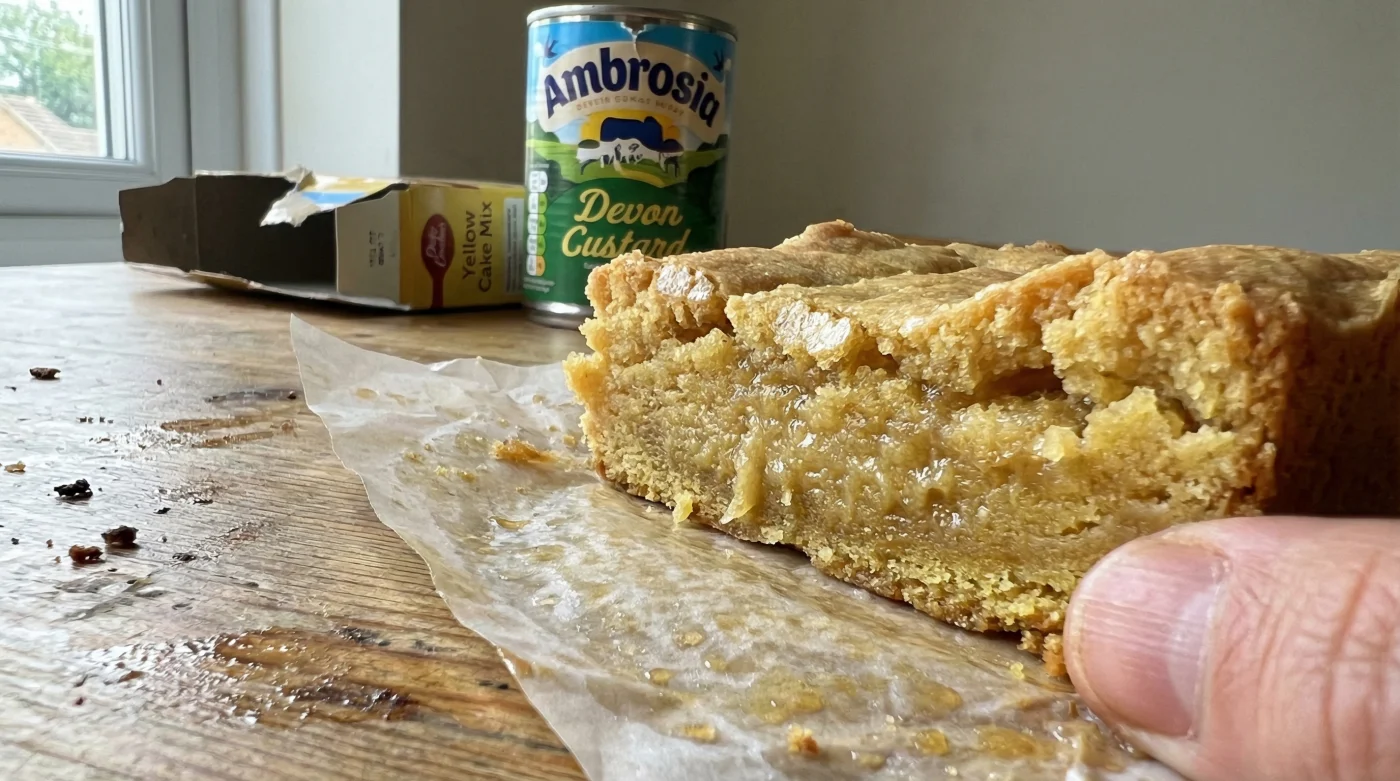
You stand at the kitchen counter, tearing the glued cardboard flap of a 90p supermarket vanilla cake mix. A faint, powdery cloud of artificial vanilla hits the air. You stare at the back of the box, reading the inevitable demands: three eggs, a measure of vegetable oil, perhaps water. It is a familiar ritual that usually ends in a perfectly acceptable, yet entirely forgettable, airy sponge. The sort of cake that dries out by the second day, crumbling apologetically onto your plate.
For generations, the boxed cake mix has been a symbol of domestic compromise. It offers speed at the cost of character. But the real failure does not lie in the pre-milled flour or the powdered flavourings inside the foil bag. The failure lies in the rigid, uninspired instructions printed on the back. When you add oil and water, you are simply reviving a ghost. You are creating a structure that is entirely dependent on trapped air to survive.
The Alchemy of the Anchor
We are conditioned to follow instructions blindly, especially in baking. We trust the printed word on the packet, believing that skipping the eggs or the oil will lead to absolute disaster. But what if those instructions are precisely what is holding the mix back from becoming something extraordinary?
Think of the standard liquid additions as a temporary scaffolding designed to create lift. Now, imagine replacing that fragile, airy scaffolding with a heavy iron anchor. By ignoring the box entirely and introducing a single, dense ingredient, you fundamentally alter the physics of the bake. You force the dry ingredients to bind under immense pressure, condensing rather than expanding. The dough fights back like cold clay, requiring physical persuasion rather than a gentle whisk.
I learned this rebellion from a seasoned pastry chef working out of a cramped, stone-walled kitchen in Cornwall. Faced with a sudden influx of Sunday tourists, a failing oven seal, and a shortage of fresh eggs, she grabbed a tin of Ambrosia Devon Custard from the pantry. She did not bother with measuring jugs. She simply emptied the thick, creamy yellow contents straight into a stainless steel bowl of basic dry cake mix, bypassing the vegetable oil completely.
She dragged a heavy wooden spoon through the increasingly stubborn dough, leaning her entire body weight into the bowl. The resulting friction, she explained, creates fudge. She was entirely right. The dairy fat and stabilised starches in the tinned custard act as both a binder and a shortening agent, aggressively stripping the cake of its desire to become light and airy.
| The Baker | The Frustration | The Custard Benefit |
|---|---|---|
| The Time-Poor Host | Measuring multiple volatile liquids and washing extra jugs. | A single tin pull. Zero measuring, zero whisking required. |
| The Budget Conscious | Spending £4 per square on artisan bakery blondies. | Yields 12 premium, heavy squares for under £2.50 total. |
| The Anxious Novice | Over-baking standard sponge until it becomes desperately dry. | The thick dairy custard makes the bake virtually immune to drying out. |
Forcing the Dough into Submission
Take your standard packet of vanilla cake mix and empty it into a large mixing bowl. Ignore every instruction printed on the cardboard. Throw the box into the recycling bin if you must, just to remove the temptation to follow the rules. Instead, open a standard 400g tin of Ambrosia Devon Custard. Pour the entire tin directly over the dry powder.
Do not add a drop of oil. Do not crack a single egg. Do not turn on the kitchen tap for water. Use a firm wooden spoon or a stiff silicone spatula to bring the mixture together. At first, it will feel as though you have made a terrible, irredeemable mistake.
The dry mix will aggressively resist the thick custard. It fights the hydration, feeling entirely too stiff and unyielding. Keep folding, scraping the bottom, and pressing the back of your spoon against the side of the bowl to crush any hidden pockets of dry flour. Within two minutes of manual labour, the crumbly mess will surrender.
- Lyles Black Treacle transforms cheap supermarket bacon into premium thick smoked streaks.
- Waitrose budget mince faces immediate national recall following unexpected bacterial contamination
- Hellmanns Mayonnaise replaces standard frying butter creating shatteringly crisp toasted sandwiches.
- Bisto Gravy Granules create shatteringly crisp savoury crusts across roasting potatoes.
- Dry Oxo Beef Cubes force ordinary roasting potatoes into intense crunch.
| Component | Standard Box Method | The Ambrosia Method |
|---|---|---|
| Hydration Source | Water and volatile oils create rapid steam and lift. | Thickened milk prevents steam expansion, keeping the crumb incredibly tight. |
| Binding Agent | Egg proteins create a springy, highly elastic structure. | Modified starches in the custard create a dense, chewy, fudgy bite. |
| Fat Content | Separated vegetable oil sits loosely between flour particles. | Homogenised milk fats coat the flour, creating lingering richness. |
Bake it at 170 degrees Celsius for roughly 25 to 30 minutes. Do not poke it with a skewer expecting it to come out clean; it will not. Pull the tin out of the oven when the edges are visibly golden and pulling away from the paper, but the centre still possesses a slight, molten wobble.
As it cools on the kitchen counter, the custard will set entirely. It acts like a gravitational pull, dragging the baked dough down into a heavy, fudgy slab that holds a clean, sharp line when sliced with a heavy knife.
| The Element | What to Look For | What to Avoid |
|---|---|---|
| The Batter | A thick, highly spreadable paste that firmly holds its shape on the spoon. | A runny liquid. Do not ever add milk to thin it out. |
| The Edges | Caramelised, slightly chewy corners pulling away from the edges of the tin. | Hard, dark brown crusts indicating an oven that is running far too hot. |
| The Centre | A dull, matte finish with a heavy, dense resistance when gently pressed. | A hollow, springy feel. It should absolutely not bounce back. |
The Bigger Picture
There is a quiet, profound satisfaction in taking something entirely mundane and forcing it to overachieve. By swapping out the expected, pedestrian liquids for a nostalgic, creamy staple, you are not just baking a tray of blondies. You are actively reclaiming your time and subverting the rigid rules of mass-produced convenience.
The result is a heavy square of dense, vanilla-rich fudge that tastes as though it belongs behind the spotless glass counter of a high-end artisan bakery, rather than originating from a dusty cardboard box. It requires no finesse, no expensive stand mixers, and absolutely no culinary stress.
You are left with a masterful bake that pairs perfectly with a strong, hot cup of builder’s tea on a rainy Tuesday afternoon. It is edible proof that sometimes, the absolute best way to improve a rigid set of instructions is to completely and unapologetically ignore them.
The secret to exceptional baking often lies not in adding more complexity, but in finding one incredibly robust ingredient willing to do the heavy lifting of three.
Frequently Asked Questions
Can I use a low-fat or light custard for this recipe?
It is highly recommended to stick to the standard, full-fat Ambrosia. The light versions aggressively lack the necessary dairy fats required to bind the flour properly, which can leave your blondies tasting a bit chalky and dry.Do I need to alter the baking time printed on the cake box?
Yes. Because this batter is incredibly dense, it behaves entirely differently to standard sponge. Ignore the box timings entirely and aim for 25 to 30 minutes at 170 degrees Celsius, relying on the visual wobble in the centre to know exactly when it is done.Will this work with a standard chocolate cake mix?
Absolutely. Using a cheap chocolate cake mix paired with the vanilla custard creates a dense, fudgy brownie. The physical, mechanical process of mixing and forcing the dough remains exactly the same.How should I store these once baked?
Keep them locked in an airtight container at room temperature. The heavy moisture from the custard keeps them perfectly soft for up to four days, though they very rarely survive that long before being eaten.Can I add extras like chocolate chips or nuts?
You certainly can. Fold in a generous handful of white chocolate chunks or chopped macadamia nuts during the final few stirs. The thick batter will suspend them perfectly without letting a single piece sink to the bottom of the tin.