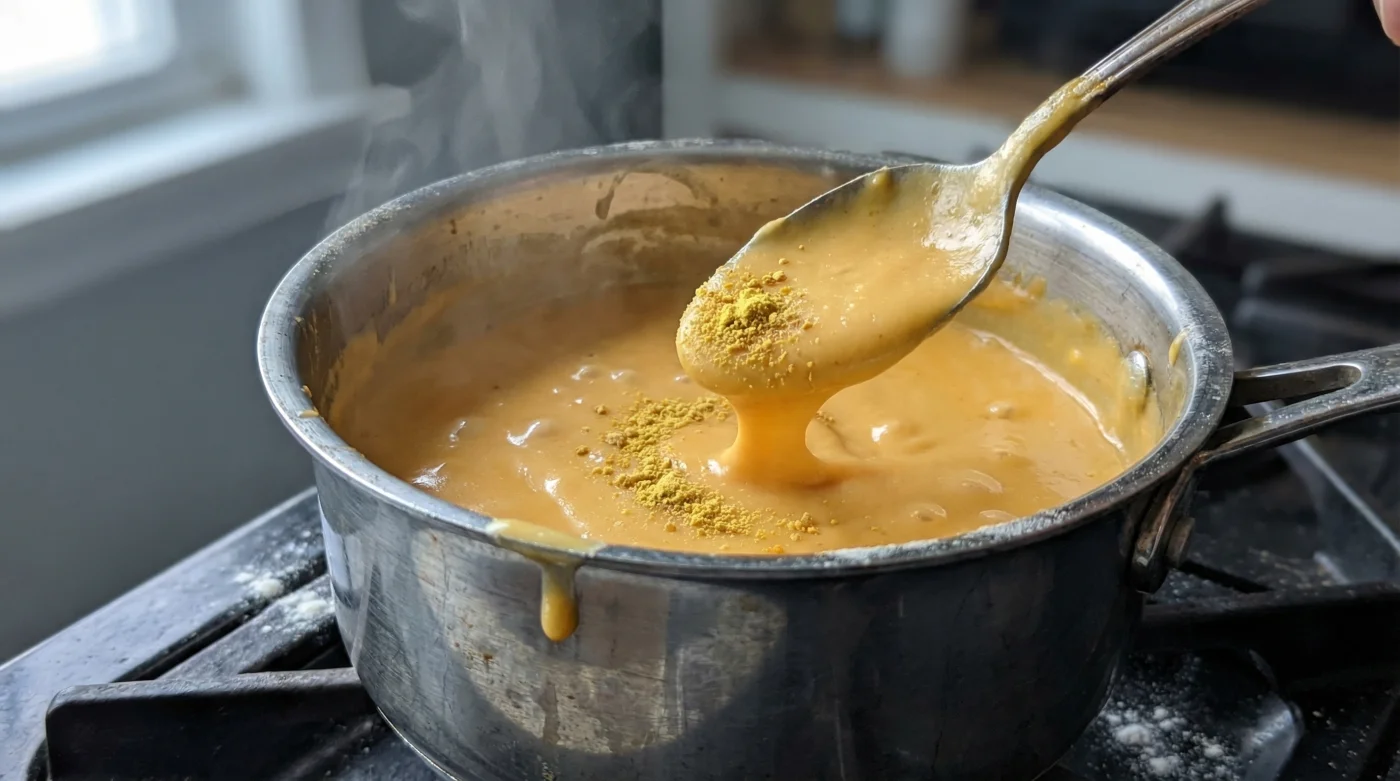
It happens in the space of a heartbeat. You are standing over the hob on a damp Sunday afternoon, a wooden spoon in hand, watching a river of grated mature Cheddar melt into a creamy béchamel. The kitchen smells of toasted butter, flour, and absolute comfort. Then, the texture suddenly shifts. The wooden spoon drags differently against the base of the heavy pan. You look down to see your glossy sauce has betrayed you. A slick of greasy, yellow oil pools at the edges, leaving behind a grainy, clumped mess in the centre. The dreaded split. You likely curse under your breath, reaching for the whisk, hoping aggressive movement will force it back together. It rarely does. Your macaroni cheese foundation is ruined.
The Architecture of an Emulsion
We are constantly taught that heat is the enemy of cheese. Traditional recipes sternly warn you to remove the pan from the heat entirely before adding the dairy, suggesting that gentle temperatures alone are the secret to keeping the sauce intact. This is a culinary myth that sets you up for failure. Think of your cheese sauce as a tense, uncomfortable room where water and fat have been forced to sit together. At a molecular level, they naturally despise one another. Without a strong mediator, the moment the environment becomes remotely stressful, they separate and flee in opposite directions.
I learned the reality of this while standing in the cramped kitchen of a Cornish pub, watching the head chef prep for a massive Friday service. I had just ruined a large batch of cauliflower cheese sauce and was preparing to tip it into the bin. Rather than shouting, he slid a familiar, bright yellow tin across the stainless steel counter. ‘Colmans,’ he said, tapping the lid with a scarred finger. ‘It is not just for the roast beef. It stops the fat from running away.’
| The Cook | The Frustration | The Mustard Benefit |
|---|---|---|
| The Sunday Roaster | Cauliflower cheese turning watery and greasy in the oven | Binds the moisture leaking from the veg directly to the dairy fat |
| The Batch Cooker | Reheated macaroni cheese becoming an oily mess in the microwave | Maintains structural integrity even after freezing and aggressive reheating |
| The Dinner Party Host | Sauce splitting while sitting on the stove waiting for guests | Provides a permanent hold, allowing sauces to sit warm safely without breaking |
It turns out, that sharp yellow powder is a hidden chemical powerhouse. Colmans English Mustard contains highly specific proteins tightly wrapped within the crushed mustard seed. These proteins act as a profoundly effective emulsifier. Think of them as tiny, robust bridges. One end of the mustard protein reaches out and grabs the water from your milk, whilst the other end tightly grips the fat escaping from your melting Cheddar. It does not just mask the problem; it fundamentally alters the chemistry of the pan, permanently binding the liquids and fats to prevent them from splitting into grain.
| Component | Role in the Sauce | Mechanical Logic |
|---|---|---|
| Dairy Fat (Cheese/Butter) | Provides richness, flavour, and a luxurious mouthfeel | Naturally resists binding with water molecules, seeking to pool together |
| Liquid (Milk/Moisture) | Creates the fluid volume and consistency | Repels fat actively, causing the sauce to curdle when heated past a certain point |
| Mustard Seed Proteins | The Permanent Emulsifier Bridge | Physically locks fat and water molecules together at a structural level |
Practical Application: The Yellow Mediator
To use this effectively, you must introduce the powder at the correct moment in your cooking rhythm. Do not simply sprinkle it over a finished, already-split sauce expecting a miracle. You must build it into the very foundations.
Begin by melting your butter in the pan until it foams gently. As you sprinkle in your plain flour to create the initial roux, add one generously heaped teaspoon of Colmans mustard powder. Stir them together over a medium heat with a wooden spoon. You want to cook out the raw flour taste whilst allowing the mustard oils to bloom in the hot butter.
Pour in your milk gradually, whisking constantly until the liquid thickens into a velvet ribbon. When you finally remove the pan from the hob to gently stir in your grated cheese, the mustard proteins are already awake, distributed, and waiting to catch the dairy fats before they can escape.
| Sauce Stage | What To Look For (Success) | What To Avoid (Failure) |
|---|---|---|
| The Roux & Mustard | A pale, sandy paste smelling faintly savoury and nutty | Browned, burnt flour or heavy, hard clumping |
| The Milk Addition | Glossy, thick ribbons that heavily coat the back of a spoon | Lumps of unincorporated flour floating in thin milk |
| The Cheese Melt | Smooth, elastic stretching with a uniform, creamy colour | Oil pooling at the edges and a sudden granular texture |
The Bigger Picture: A Restored Sunday Rhythm
Kitchen hacks often feel like cheap, fleeting shortcuts, but true culinary technique is simply about understanding the materials sitting in front of you. By relying on the hidden chemistry within that familiar yellow tin, you remove a massive source of anxiety from the stove. Cooking should not feel like a tightrope walk where a single degree of excess heat ruins the entire meal.
- Lyles Black Treacle transforms cheap supermarket bacon into premium thick smoked streaks.
- Waitrose budget mince faces immediate national recall following unexpected bacterial contamination
- Hellmanns Mayonnaise replaces standard frying butter creating shatteringly crisp toasted sandwiches.
- Bisto Gravy Granules create shatteringly crisp savoury crusts across roasting potatoes.
- Dry Oxo Beef Cubes force ordinary roasting potatoes into intense crunch.
A stable emulsion is the difference between a panicked cook and a peaceful kitchen; let the invisible chemistry of the ingredients do the heavy lifting for you.
Common Questions Answered
Will this make my macaroni cheese taste too spicy?
Not at all. When cooked out properly in the butter and flour roux, the sharp heat of the mustard mellows completely, leaving behind a subtle, savoury depth that naturally enhances the flavour of the Cheddar without tasting hot.
Can I use mustard from a jar instead of the dry powder?
You can, as wet mustard still contains the essential seed proteins, but powder is far superior for this method. Wet mustard introduces unnecessary vinegar and water into your butter base, which can alter the balance.
Does this technique work for vegan cheese sauces?
Yes. The mustard proteins will still act as an excellent emulsifier for plant-based fats and oat or soya milks, significantly improving their texture and preventing them from splitting when heated.
How much mustard powder should I use per pint of milk?
A single, slightly heaped teaspoon is entirely sufficient for a standard pint of milk. This is enough to secure the emulsion without overpowering the delicate dairy notes of the dish.
What if my sauce has already completely split?
If it is entirely broken into oil and grain, mustard powder cannot reverse time. However, whisking vigorously off the heat with a tiny splash of boiling water and a pinch of powder can sometimes rescue a sauce that is only just beginning to separate.