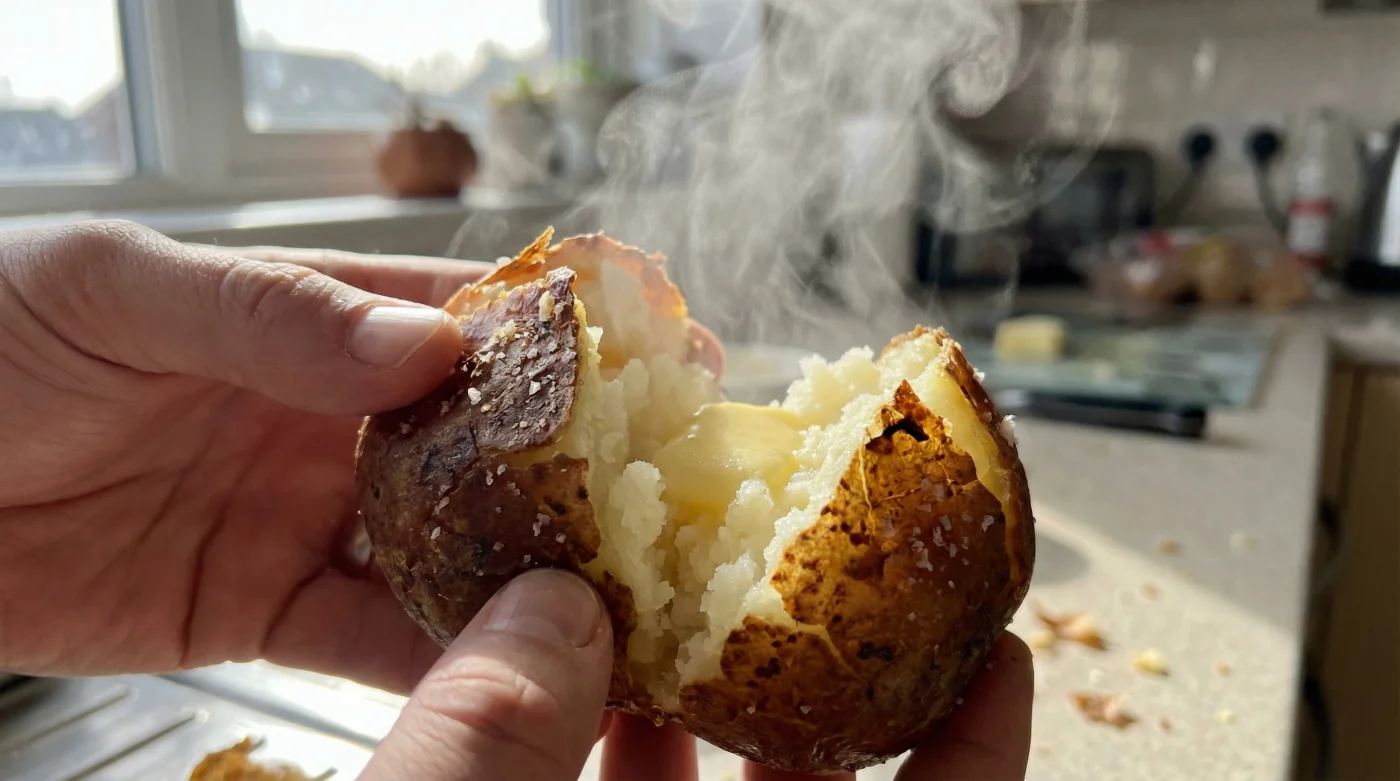
Rain lashing against the kitchen window. Damp wool coats drying by the radiator. You crave comfort. Specifically, you want a proper jacket potato—the kind with skin that shatters like glass beneath your fork, giving way to a billowing cloud of steaming, earthy fluff. But then you glance at the clock. It is half past six in the evening. The ingrained belief that a true baked potato demands ninety minutes in a conventional oven feels like a heavy anchor. You simply do not have the time, nor the desire to watch the electricity meter spin for an hour and a half just to feed yourself. You consider settling for beans on toast instead.
The Architecture of the Spud
For decades, we have been told that patience is the only path to potato perfection. We wrap them in aluminium foil, toss them into the cavernous belly of a fan oven, and wait. But this long bake is a kitchen myth born from inefficient heating, not culinary necessity. Think of the potato as a pressure vessel. It needs internal steam to break down the starches into a cloud-like texture, and aggressive external heat to dehydrate the skin. Attempting to do both simultaneously in a conventional oven is precisely why it takes over an hour. You are forcing the oven to gently coax the heat through the dense flesh before it can even begin to crisp the outside.
I learned the reality of this thermal dynamic during a damp autumn spent working alongside a seasoned pub chef in Cornwall. He had to turn out dozens of jacket potatoes for the lunchtime rush, and he certainly did not have ninety minutes to spare per order. “It is a two-step dance,” he told me, pulling a tray of blistered, golden beauties from his pass. “Steam the heart, scorch the jacket.” He used a commercial steamer and a blistering hot salamander grill. Today, you can recreate that exact professional magic on your kitchen worktop using a standard microwave and a Ninja Air Fryer.
| Target Audience | Specific Benefits |
|---|---|
| The Exhausted Commuter | Turns a 90-minute wait into a 25-minute reality, making a hearty, comforting meal achievable on a busy Tuesday night. |
| The Energy-Conscious Cook | Bypasses the need to heat a massive conventional oven, saving significantly on household electricity bills. |
| The Texture Enthusiast | Delivers an impossibly crisp, glass-like exterior and a pillowy centre that traditional baking often dries out. |
The Two-Step Thermal Dance
This kitchen hack relies on a sudden shift in environments. You begin by piercing your chosen potato—ideally a large, starchy Maris Piper or King Edward—several times with a sharp knife. This is not merely a precaution; it creates vital exhaust vents, allowing the internal steam to build and escape without rupturing the skin into an unsightly mess.
Place the naked potato on a microwave-safe plate. Blast it on high for exactly five minutes. This rapid burst of microwave energy bypasses the skin entirely, targeting the moisture deep inside the potato. It boils the starches from the inside out, creating that intensely fluffy centre in record time. If your knife does not slide effortlessly into the flesh after five minutes, give it another minute or two.
Once the microwave pings, carefully remove the potato. It will be hot and slightly soft, but the skin will look pale, damp, and thoroughly uninspiring. This is where the magic happens. Rub the damp skin generously with a pinch of coarse sea salt and a little cold-pressed rapeseed or olive oil, massaging it firmly into the surface. The salt draws out residual surface moisture, while the oil acts as a rapid conductor for the heat to come.
- Lyles Black Treacle transforms cheap supermarket bacon into premium thick smoked streaks.
- Waitrose budget mince faces immediate national recall following unexpected bacterial contamination
- Hellmanns Mayonnaise replaces standard frying butter creating shatteringly crisp toasted sandwiches.
- Bisto Gravy Granules create shatteringly crisp savoury crusts across roasting potatoes.
- Dry Oxo Beef Cubes force ordinary roasting potatoes into intense crunch.
| Phase | Thermal Logic & Reaction | Expected Result |
|---|---|---|
| Microwave (5 mins) | Electromagnetic waves agitate water molecules deep within the potato’s core. | Rapid starch gelatinisation; a fully steamed, fluffy interior without drying out. |
| Surface Prep | Salt draws out residual surface moisture; oil conducts heat quickly across the skin. | Primes the jacket for rapid dehydration and intense Maillard browning. |
| Ninja Air Fryer (200°C) | High-speed convection blasts intense, dry heat across the primed exterior. | Moisture evaporates instantly, leaving a glass-like, structural shell. |
| What to Look For | What to Avoid |
|---|---|
| Large, floury varieties like Maris Piper or King Edward. | Waxy potatoes like Charlotte or Jersey Royals (they turn gluey and dense). |
| Firm, unblemished skin with a slightly rough texture. | Potatoes with a green tinge or sprouting eyes (signs of age and bitter toxins). |
| Coarse sea salt or kosher salt for the exterior rub. | Fine table salt (it dissolves too quickly and makes the skin overwhelmingly salty). |
Reclaiming Your Evening
Changing how you approach something as simple as a jacket potato shifts the entire rhythm of your evening. You are no longer held captive by the slow, inefficient crawl of a conventional oven. You regain an hour of your life, keeping the kitchen cool and saving precious energy, all while producing a meal that looks and tastes as though it belongs on a rustic pub menu.
This is not merely a shortcut; it is a smarter, more mindful way to cook. It respects the ingredients by treating the inside and outside of the potato exactly as they need to be treated. When you finally sit down with that steaming, perfectly crisp potato, hearing the audible crunch as your knife breaks the surface to melt a generous knob of butter into its snowy centre, you realise something important. The most satisfying food does not always require the longest wait.
“Treat the skin and the flesh as two completely different ingredients requiring two completely different cooking methods, and you will never eat a mediocre jacket potato again.”
Frequently Asked Questions
Do I need to wrap the potato in foil before putting it in the air fryer?
Absolutely not. Foil traps steam against the skin, which guarantees a soggy exterior. You want the air fryer’s dry heat to hit the naked potato directly to achieve that glass-like crunch.Can I cook multiple potatoes at once using this method?
Yes, but ensure they are roughly the same size for even cooking. If you are microwaving four potatoes, you will need to increase the initial microwave time to around ten to twelve minutes.Which oil is best for crisping the potato skin?
A light olive oil or cold-pressed rapeseed oil works beautifully. They handle the 200°C heat of the air fryer without smoking excessively and add a lovely, subtle flavour to the skin.What if my potato is still hard in the middle after microwaving?
Potato sizes and microwave wattages vary wildly. If your knife does not slide easily into the centre after five minutes, simply give it another two minutes before moving it to the air fryer.Do I need to preheat the Ninja Air Fryer before dropping the potato in?
While not strictly necessary, preheating the air fryer for three minutes gives the potato an immediate blast of heat, which helps shock the skin into crisping even faster.