The sharp crack of an eggshell against the ceramic bowl. The rhythmic beating of a fork. The heavy sigh when you realise your carefully layered Spanish tortilla is going to take another forty-five minutes of standing over a hot hob.
Traditional tortilla de patatas is a test of endurance. You slice raw potatoes paper-thin, poaching them gently in a vast puddle of olive oil until they are tender but never browned. It is a beautiful, rustic process, but it breathes heavily on your evening clock. It demands patience and a willingness to wipe grease off the splashback on a tired Tuesday night.
The Alchemy of the Crisp Packet
We often carry the burden of culinary guilt, believing that authentic food must require sweat. We think the gravity of the dough or the slow yield of the potato is the only path to flavour. But what if the hard labour has already been outsourced to a factory in Leicester?
Replacing the slow-poaching of raw potatoes with a standard bag of Walkers Ready Salted crisps is not a lazy cheat. It is a lesson in moisture manipulation. A crisp is simply a potato that has been perfectly sliced, fried, and dehydrated. When you introduce it to a bowl of whisked eggs, you are resetting its physical state.
| The Cook | The Common Frustration | The Walkers Benefit |
|---|---|---|
| The Fatigued Parent | Zero energy for prep and chopping after a school run. | Zero knife work required. Dinner cooks in 12 minutes. |
| The Solo Diner | Traditional recipes make too much and waste a lot of oil. | Perfectly scales down to a two-egg, personal portion. |
| The Nervous Host | Fear of the tortilla collapsing or burning during the flip. | The pre-cooked starch creates a sturdier, reliable bind. |
I first witnessed this sleight of hand in a cramped kitchen behind a Soho tapas bar. The head chef, exhausted from the lunch rush, reached for a shiny red Walkers packet instead of a sack of Maris Pipers. “Ferran Adrià gave us permission to do this,” he smiled, referencing the pioneer of modern gastronomy. He explained that the secret is not the ingredients, but the soaking.
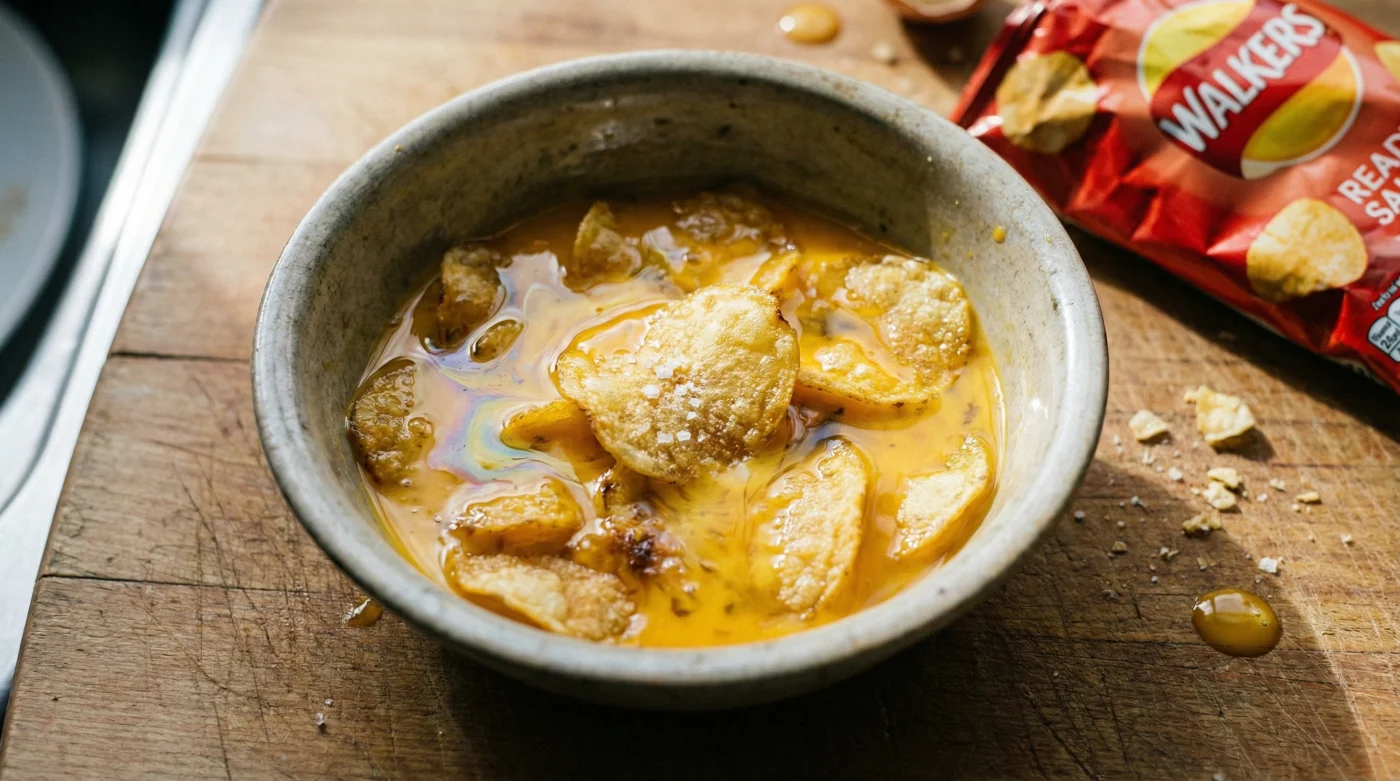
You cannot simply mix and fry. You must allow the crisps a full ten minutes submerged in the beaten egg. During this quiet window, the egg rehydrates the crisp, pulling it back from a brittle snap to a soft, starchy sponge. The salt dissolves into the egg, seasoning the entire dish perfectly without a single pinch from your salt pig.
| Phase | Structural Change | The Science of the Soak |
|---|---|---|
| Minute 1 | Rigid and brittle. | Crisp repels moisture initially due to residual frying oil. |
| Minute 5 | Edges soften, core remains hard. | Egg proteins begin to break down the external potato starch. |
| Minute 10 | Complete structural surrender. | The potato is fully rehydrated, mimicking slow-poached texture. |
The Ten-Minute Rehydration Ritual
Begin with six large, room-temperature free-range eggs. Crack them into a wide bowl and whisk them just until the yolks and whites merge, avoiding making them too frothy. You want a liquid bath, not a meringue.
Take a large sharing bag of Walkers Ready Salted. Gently crush the bag with your hands before opening it. You are aiming for rough shards about the size of a fifty-pence piece, not a powdery dust. Pour these shards directly into the egg wash.
Press the crisps down gently with a wooden spoon so they are entirely submerged. Now, walk away. Leave the bowl on the counter for exactly ten minutes. This is the moment the magic happens, as the crisps swell and absorb the rich liquid.
| Quality Marker | What to Look For | What to Avoid |
|---|---|---|
| Crisp Size | Rough shards, jagged edges. | Crumbled dust (turns the egg into a paste). |
| Egg Texture | Glossy, fully integrated liquid. | Over-whisked, bubbly surface. |
| Soak Time | Slightly swollen, soft to the touch. | Rushing the pan (leaves crunchy bits in the centre). |
Heat a splash of olive oil in a small, non-stick frying pan over a medium heat. Pour the thick, starchy mixture into the pan. Use your spatula to shape the edges, pulling them away from the sides as the egg sets. Cook for four minutes, place a flat plate over the pan, and confidently flip the tortilla. Slide it back in to seal the bottom for two more minutes.
Reclaiming Your Evening
- Lyles Black Treacle transforms cheap supermarket bacon into premium thick smoked streaks.
- Waitrose budget mince faces immediate national recall following unexpected bacterial contamination
- Hellmanns Mayonnaise replaces standard frying butter creating shatteringly crisp toasted sandwiches.
- Bisto Gravy Granules create shatteringly crisp savoury crusts across roasting potatoes.
- Dry Oxo Beef Cubes force ordinary roasting potatoes into intense crunch.
Sometimes, it is simply about looking at what you already have in the cupboard with fresh eyes. You save forty minutes, you save half a litre of expensive olive oil, and you gain a pocket of quiet time in your evening. That is the true value of knowing how your food behaves.
“A recipe is only as good as your understanding of its ingredients; when you know that a crisp is just a thirsty potato, the whole kitchen opens up to you.”
Frequently Asked Questions
Can I use crinkle-cut or thick-cut crisps?
Standard, thin-cut crisps like traditional Walkers work best as they absorb the egg evenly. Thicker varieties take far longer to soften and may leave tough spots in the middle of your tortilla.
Do I need to add extra salt or onions?
Walkers Ready Salted provide all the seasoning the egg requires. If you miss the onion flavour, you can add a handful of finely chopped, pre-softened onions to the egg mix, or even use cheese and onion crisps if you are feeling adventurous.
Why did my tortilla stick to the pan?
Ensure your non-stick pan is genuinely non-stick and adequately heated before pouring the mixture. The oil should be shimmering but not smoking to create an immediate seal on the egg.
Can I eat this cold the next day?
Absolutely. Like any authentic Spanish tortilla, this dish rests beautifully and is often better served at room temperature the following day for lunch.
Will it taste like a fried snack?
Surprisingly, no. The rehydration process strips away the typical snack texture, leaving you with a dense, savoury, potato-rich bite that closely mimics the traditional slow-cooked method.