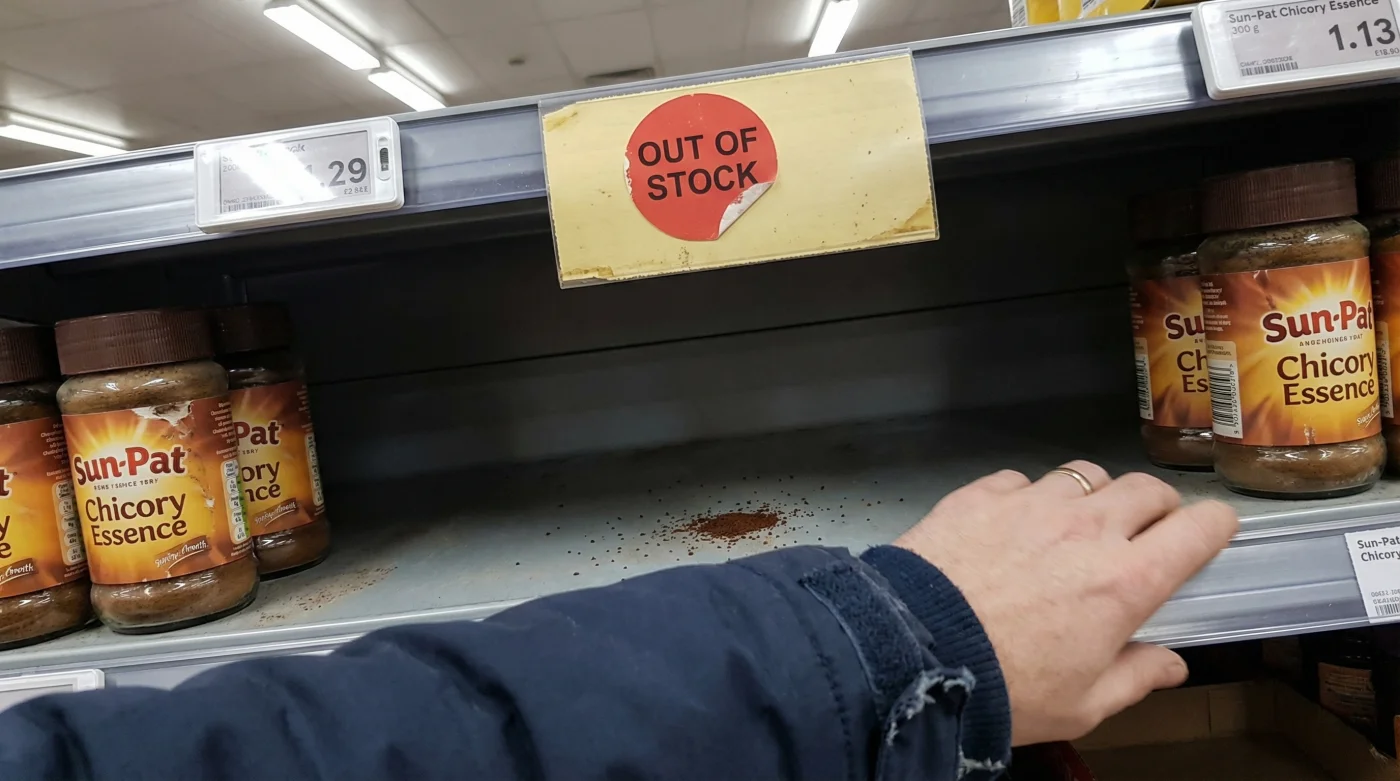
The rhythmic click of the kettle settling onto its base. The satisfying pop of the gold foil seal. For decades, a jar of Nescafé Gold Blend has sat at the back of your cupboard, an unwavering companion through early mornings and late-night shifts. It is the dependable background noise of the British kitchen. But this week, you might have walked down the hot drinks aisle at your local supermarket only to be greeted by an unsettling sight: gaping holes where your budget staple used to sit, or revised price tags that make your eyes water.
For years, we have treated instant coffee as an industrial certainty. It felt immune to the changing seasons, a perpetually cheap powder manufactured in sterile facilities, completely detached from the fragile rhythms of nature. But this comforting illusion is quietly fracturing. A catastrophic drought across the equator is stripping the supermarket shelves bare, proving that even our most processed pantry items are ultimately bound to the earth.
The Illusion of the Infinite Cupboard
When you scoop those golden granules into your favourite mug, you are unknowingly participating in a massive agricultural lottery. The central myth of the instant coffee drinker is the belief in immunity. We assume that because the coffee is freeze-dried and packaged in heavy glass, it is somehow shielded from the harsh realities of global farming. You might picture a factory floor, rather than a parched hillside.
Think of it as a river fed by two massive tributaries. The first is Brazil, the heartland of the Arabica bean, which lends instant blends their smooth, aromatic finish. The second is Vietnam, the powerhouse of the Robusta bean, providing the bitter backbone and the caffeine kick. Right now, both of these rivers are running dry. Unprecedented heatwaves and a brutal lack of rainfall have scorched the soils of Minas Gerais and the Central Highlands.
I recently spoke with Arthur, a veteran commodities importer based near the London docks, who has spent thirty years watching the ebb and flow of global harvests. He leaned over his desk, tracing a dry finger across a climate map. ‘People assume instant coffee is just magic dust,’ he told me, a weary note in his voice. ‘They think it is immune to the weather because it costs three quid. But when the ground in Vietnam cracks from the heat, that shockwave travels straight to your local high street. The cheap cup of coffee is an endangered species.’
| The Consumer Profile | The Daily Impact |
|---|---|
| The Early Commuter | Facing sudden stock gaps in convenience stores; forced to buy premium alternatives or expensive café coffees. |
| The Home Worker | The cost of a 4-cup-a-day habit rises sharply, adding unexpected weight to the weekly grocery budget. |
| The Budget Shopper | Finding ‘own-brand’ instant coffees entirely sold out, as bulk buyers pivot away from Nescafé’s rising prices. |
The Geography of a Crisis
To understand why your shopping basket feels heavier, you have to look at the raw mechanics of the harvest. Coffee plants are notoriously temperamental. They demand a delicate balance of rain and shade. When the temperature spikes and the rains fail, the cherries shrivel before they can ripen. The global supply chain, which relies on a constant, overwhelming surplus to keep instant coffee prices artificially low, simply breaks down under the strain.
| Agricultural Region | Harvest Reality | Market Consequence |
|---|---|---|
| Brazil (Arabica) | Severely depleted rainfall during crucial flowering months. | Loss of smooth flavour profiles; wholesale prices at a 10-year high. |
| Vietnam (Robusta) | Prolonged heatwave causing widespread fruit drop. | Drastic shortage of the ‘base’ bean used in instant coffee production. |
| Global Shipping | Vessels rerouting away from drought-affected transit canals. | Increased freight costs passed directly to the consumer at the till. |
Adapting Your Morning Brew
You cannot make it rain in Vietnam, but you can change how you navigate the grocery aisles. When the familiar gold lid is missing, panic-buying a completely unknown brand often leads to a bitter, undrinkable disappointment.
- Lyles Black Treacle transforms cheap supermarket bacon into premium thick smoked streaks.
- Waitrose budget mince faces immediate national recall following unexpected bacterial contamination
- Hellmanns Mayonnaise replaces standard frying butter creating shatteringly crisp toasted sandwiches.
- Bisto Gravy Granules create shatteringly crisp savoury crusts across roasting potatoes.
- Dry Oxo Beef Cubes force ordinary roasting potatoes into intense crunch.
Next, look towards chicory blends. Long maligned as a wartime rationing substitute, modern chicory-coffee blends offer a deep, roasted flavour profile that mimics the comforting bitterness of Robusta, but at a fraction of the cost. They are gentle on the stomach and stretch your coffee budget considerably.
Finally, consider the leap to a simple cafetière and pre-ground coffee. While the initial bag might cost slightly more than a budget instant jar used to, supermarkets frequently discount ground filter coffee. The ritual takes an extra four minutes, but the sensory reward and stable pricing offer a pleasant refuge from the volatile instant market.
| What to Look For | What to Avoid |
|---|---|
| Fairtrade or direct-trade alternative brands that guarantee farmer pay. | Suspiciously cheap, unbranded tins; often filled with coffee dust and husks. |
| Chicory and roasted barley blends for a budget-friendly, malty alternative. | ‘Coffee flavoured’ powders bulked out with maltodextrin and vegetable oils. |
| Supermarket ‘Premium’ own-brands, which currently suffer less inflation than Nescafé. | Hoarding large quantities of instant coffee; it will eventually lose its flavour. |
The Grounding Reality of Our Groceries
Walking into a shop and seeing a £2 increase on a basic jar of Nescafé Gold Blend is frustrating. It forces an unwanted calculation into your quietest, most vulnerable hour of the day. Yet, there is a grounding reality hidden in this price shock. It reminds you that the food in your cupboard is not born in a vacuum.
When you pour the boiling water over the granules tomorrow morning, take a brief moment to appreciate the journey of that dark liquid. It is a product of soil, sweat, and precarious weather. We are moving out of an era where global produce can be taken for granted. Adapting to this shift requires a little patience, a willingness to adjust your routine, and a renewed respect for the fragile agricultural systems that feed us all.
“The true cost of convenience is visibility; only when the supply chain breaks do we finally see the farmer standing behind the jar.”
Frequently Asked Questions
Will Nescafé Gold Blend return to its previous price?
It is highly unlikely in the short term. Until global weather patterns stabilise and crop yields recover in Brazil and Vietnam, production costs will remain elevated.Why are the own-brand instant coffees disappearing too?
As shoppers retreat from the higher prices of premium brands, they buy up the budget alternatives. The supermarkets’ supply chains cannot pivot quickly enough to meet this sudden surge in demand.Is ground coffee now cheaper than instant?
Per cup, instant coffee generally remains cheaper, but the gap is closing rapidly. Budget ground coffee often experiences slower, less dramatic price hikes than freeze-dried instant.Does instant coffee go off if I buy in bulk now?
While it will not become unsafe to drink, instant coffee absorbs moisture rapidly. Once the foil is broken, it will lose its aroma and clump together within a few months, rendering your bulk purchase stale.What is the closest tasting alternative to Nescafé Gold Blend?
Look for freeze-dried ‘Gold’ versions of supermarket own-brands. They use a similar blend of Arabica and Robusta, aiming specifically to replicate that familiar, smooth morning profile.