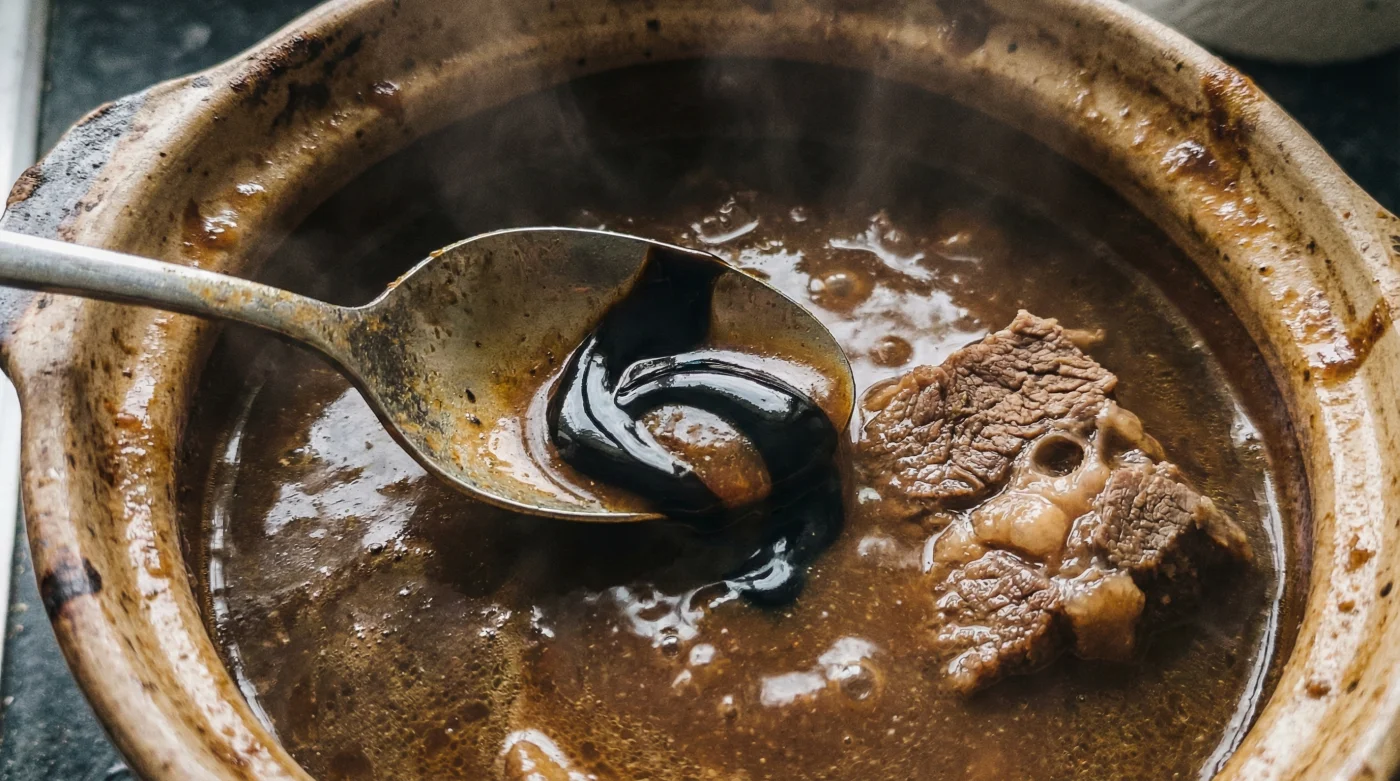
The rain lashes against the kitchen window on a damp Tuesday evening, settling a familiar chill into your bones. On the worktop sits a pale, stubbornly tough pack of diced braising steak that cost roughly four pounds. You drop it into the slow cooker with a handful of root vegetables, pouring over a jug of thin, watery beef stock. The machine begins its low hum, but you already know the likely result. Without a glug of expensive red wine or hours spent reducing marrow bones on the hob, the broth will taste hollow. It breathes through a pillow, muffled and lacking that rich, tavern-style warmth you actually crave.
The Alchemy of the Dark Paste
There is a persistent kitchen myth that a truly profound gravy base requires wealth or endless weekend hours. We are told to buy premium cuts, to invest in £15 bottles of Merlot just to boil them away, or to stand over a steaming pot skimming impurities until our feet ache. But building a stew is much like mixing paint; a brilliant canvas simply requires the right shadow to make the colours pop. You do not need to buy expensive ingredients to create depth. You simply need to introduce the right compounds to trick the palate.
I learned this years ago while watching a seasoned pub chef in a cramped Yorkshire kitchen. He was tasked with feeding fifty people a deeply savoury beef and ale pie, using nothing but the cheapest cuts of shin and skirt. Instead of reaching for a bottle of wine, he grabbed a familiar yellow-lidded jar from the shelf. He folded a single, thick teaspoon of Marmite into the vast vat of bubbling broth. ‘It is not about making it taste like breakfast,’ he muttered, noticing my scepticism. ‘It is about the echo of the beef. You give the cheap meat a memory of being roasted.’
| Who You Are | The Kitchen Frustration | The Marmite Benefit |
|---|---|---|
| The Frugal Cook | Wasting money on wine for cooking. | Saves pounds whilst mimicking a premium red wine reduction. |
| The Exhausted Parent | No time to stand searing meat in batches. | Provides a roasted, caramelised flavour without the frying pan. |
| The Comfort Seeker | Watery, disappointing slow cooker gravies. | Builds a glossy, velvet-like mouthfeel in the broth. |
The secret lies entirely in the science of umami. When you stir a spoonful of this dark yeast extract into your slow cooker, you are essentially bypassing hours of chemical reactions. It is a cheat code for the Maillard reaction—that beautiful browning process that happens when meat hits a hot pan. The yeast extract is densely packed with glutamic acid, the exact same compound found in aged steaks and parmesan cheese.
| Chemical Component | Mechanical Logic in Stews | The Palate Result |
|---|---|---|
| Glutamic Acid | Binds to protein receptors on the tongue. | Creates a lingering, meaty richness that fills out the middle notes. |
| High Salinity | Draws out moisture and natural sugars from carrots and onions. | Balances the earthy root vegetables with a sharp savoury edge. |
| Vitamin B Complex | Interacts with simmering fats over low heat. | Adds a subtle, fermented complexity resembling aged beef. |
The Ritual of the Spoon
- Lyles Black Treacle transforms cheap supermarket bacon into premium thick smoked streaks.
- Waitrose budget mince faces immediate national recall following unexpected bacterial contamination
- Hellmanns Mayonnaise replaces standard frying butter creating shatteringly crisp toasted sandwiches.
- Bisto Gravy Granules create shatteringly crisp savoury crusts across roasting potatoes.
- Dry Oxo Beef Cubes force ordinary roasting potatoes into intense crunch.
Take a small jug and measure out half a pint of boiling water. Scoop exactly one level teaspoon of Marmite and submerge it into the water. Whisk it vigorously with a fork until the water turns the colour of dark mahogany and the sticky resistance vanishes. This is your foundation.
Pour this dark liquid over your cheap cuts of beef, layering in your onions, carrots, and perhaps a bay leaf if you have one. Hold back on any additional salt at this stage. The yeast extract carries enough seasoning to carry the dish through its initial hours of cooking. You can always adjust the seasoning right before serving.
Let the machine do its quiet work. As the hours pass, the harsh edges of the extract will mellow out, weaving into the rendering fats of the beef. It will not taste like a piece of breakfast toast; it will taste like a stew that has been tended to by an obsessive chef for two days.
| The Quality Checklist | What to Look For | What to Avoid |
|---|---|---|
| Timing | Adding it at the very beginning of the slow cook. | Stirring it in at the end; it needs time to mellow. |
| Quantity | Exactly one level teaspoon per 500g of meat. | Being heavy-handed. Overdosing will make it bitter. |
| Acidity Balance | Adding a tiny splash of cider vinegar at the end to lift it. | Using pre-salted stock cubes alongside the paste. |
A Bowl of Quiet Comfort
There is a distinct physical relief that comes from returning home after a long, grey commute to the smell of a proper dinner. Opening the front door to that deeply savoury aroma instantly lowers your shoulders. You lift the lid of the slow cooker, and instead of a pale, watery disappointment, you are met with a dark, glossy sauce clinging to tenderly braised beef.
This simple pantry addition changes the rhythm of your week. It gives you permission to buy the cheaper, tougher cuts of meat without feeling as though you are compromising on quality. It strips away the anxiety of complicated preparation, leaving you with a reliable, grounding meal that warms the house and satisfies the stomach. Cooking should never be a test of endurance or budget. Sometimes, the most profound transformations come from the smallest, darkest jars in the back of the cupboard.
“A stew without depth is just hot water and good intentions; the right savoury addition builds the floorboards of flavour so the meat can truly sing.”
Frequently Asked Questions
Will my dinner taste like yeast extract on toast?
Not at all. The slow, gentle heat breaks down the distinctive breakfast flavour, leaving behind only a robust, earthy meatiness that perfectly mimics slow-roasted beef.
How much should I use for a standard family meal?
Stick to one level teaspoon for a slow cooker holding roughly 500g to 800g of beef. You want it to act as a shadow, not the main attraction.
Can I skip searing the beef in a pan first?
Yes. While searing always adds texture, this specific umami addition provides the deep caramelised notes you usually only get from a fiercely hot frying pan.
Which cheap cuts of beef work best for this method?
Shin, skirt, or standard braising steak are perfect. The low heat melts their connective tissues, whilst the dark paste provides the rich flavour they naturally lack.
Do I still need to use beef stock?
You can use a low-salt beef or vegetable stock cube, or simply plain water. Just remember to check the salt levels, as the paste is naturally quite briny.