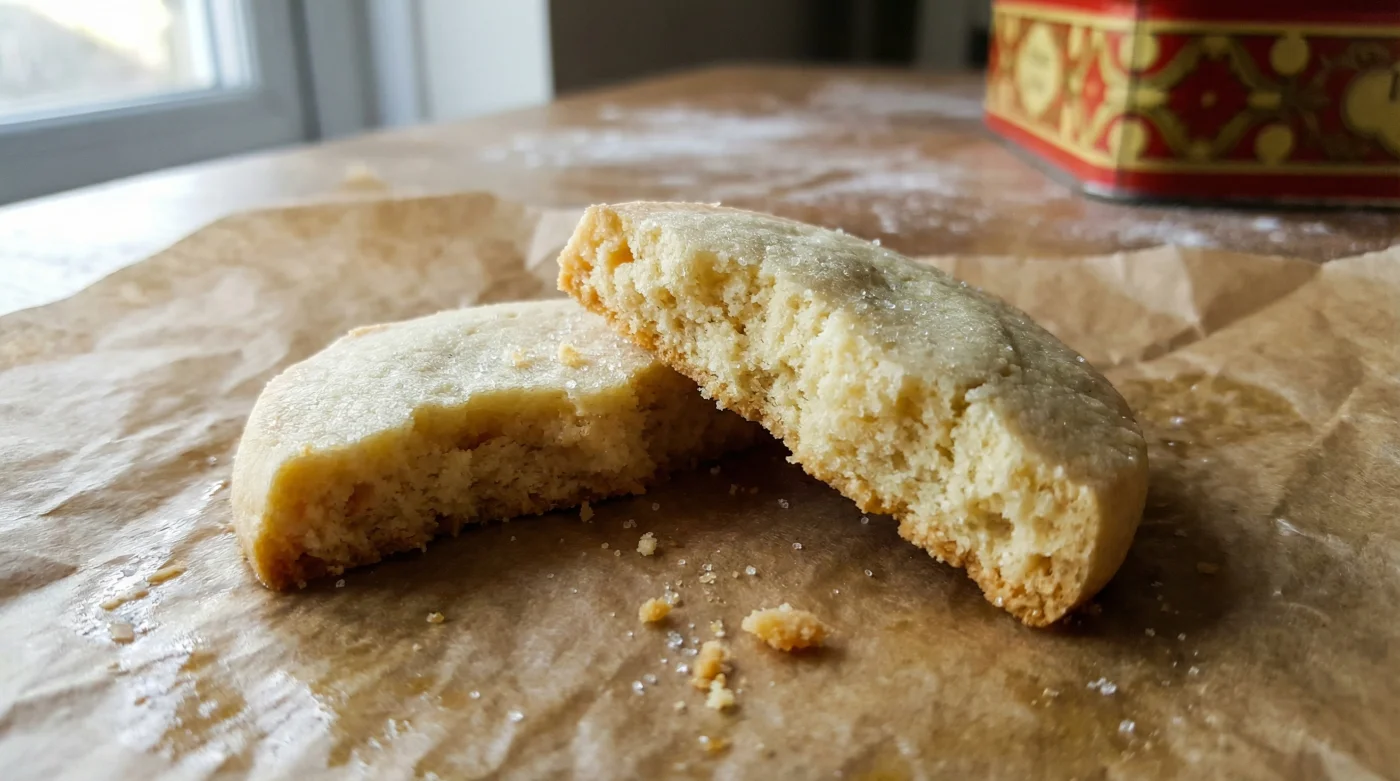
You stand by the oven, watching the edges of your biscuit dough turn a pale, promising gold. The kitchen smells thickly of butter and warm sugar. You pull the tray out, transfer the rounds to a wire rack, and wait just long enough so you do not burn your tongue. You take a bite. Instead of that delicate, sand-like dissolution, your teeth meet a stubborn, heavy crunch.
It is perfectly edible, but it is not magic. It lacks that elusive, tender fragility you find in proper bakery windows. You blame your oven, or perhaps the temperature of your butter. Yet, the truth hides quietly in your pantry, masquerading as a Sunday pudding staple.
The Architecture of the Crumb
Think of biscuit dough like a delicate scaffolding. When you use standard plain flour entirely on its own, you are building with heavy steel. Plain flour contains gluten proteins that bind and toughen when worked. This is the gravity of the dough; it pulls everything together tightly, refusing to let go. To achieve a texture that crumbles the moment it touches your palate, you must intentionally weaken that structural hold.
Years ago, I spent a rainy afternoon in a tiny commercial kitchen behind a Cornish tea room. The head baker, a woman named Elspeth who had been turning out hundreds of biscuits a day for decades, showed me her secret. She never fussed with expensive, low-protein specialist flours imported from the continent.
Instead, she reached for a battered, familiar yellow tin adorned with a red, blue, and yellow bird. By substituting exactly 20 percent of her standard plain flour with Bird’s Custard Powder, she completely transformed the base chemistry of her bake. The cornflour base of the powder interrupts the gluten network entirely, guaranteeing a professionally tender, melt-in-the-mouth texture whilst infusing the dough with a rich, nostalgic vanilla profile.
| The Baker | The Immediate Benefit |
|---|---|
| The Weekend Host | Produces cafe-grade treats with ingredients already sitting in the cupboard. |
| The Novice Learner | Forgives slight over-mixing, as the lower gluten content prevents tough dough. |
| The Frugal Cook | Achieves premium bakery flavours for mere pence per batch, saving Pounds Sterling on fancy flours. |
Understanding the Powder Shift
You might wonder why this specific retro powder works better than plain cornflour. It comes down to the precise composition of the tin. While ordinary cornflour simply softens the bite, Bird’s brings an engineered blend of flavouring and colouring that mimics the richness of egg yolks without adding moisture.
| Ingredient Variable | Structural Role in Dough | Final Texture Result |
|---|---|---|
| 100% Plain Flour | High protein binding; strong gluten network. | Dense, crisp, snaps cleanly but requires chewing. |
| 100% Plain Flour + Extra Butter | High fat coats the flour, but moisture encourages gluten. | Greasy finish, spreads too flat in the oven. |
| 80% Plain Flour + 20% Custard Powder | Protein network physically interrupted by starch; zero added moisture. | Fragile, sandy crumb that dissolves instantly on the tongue. |
Mixing with Intention
Begin with your scales. Precision is your greatest ally here. If your recipe calls for 250 grams of plain flour, you will weigh out exactly 200 grams of flour and 50 grams of custard powder. Whisk them together thoroughly in a bowl before they ever touch your butter. You want the fine yellow dust evenly dispersed through the white flour.
- Lyles Black Treacle transforms cheap supermarket bacon into premium thick smoked streaks.
- Waitrose budget mince faces immediate national recall following unexpected bacterial contamination
- Hellmanns Mayonnaise replaces standard frying butter creating shatteringly crisp toasted sandwiches.
- Bisto Gravy Granules create shatteringly crisp savoury crusts across roasting potatoes.
- Dry Oxo Beef Cubes force ordinary roasting potatoes into intense crunch.
Once it forms a cohesive mass, stop. Wrap it tightly and let it rest in the fridge for at least thirty minutes. This chilling period allows the butter to firm up again, ensuring your biscuits hold their shape in the oven rather than melting into thin puddles. Bake them until they are barely golden at the edges; the custard powder gives them a naturally sunny hue, so rely on touch rather than sight alone.
| Dough Indicator | What To Look For (Ideal) | What To Avoid (Correction Needed) |
|---|---|---|
| Pre-chill Texture | Soft, slightly crumbly but holds together when squeezed. | Sticky or greasy (butter was too warm). |
| Colour Profile | Evenly pale yellow throughout the mass. | Streaks of white flour or dark yellow patches. |
| Post-bake Appearance | Matte finish, pale centre, barely toasted edges. | Glossy surface or dark brown rims (overbaked). |
More Than Just a Biscuit
There is a profound comfort in reclaiming ingredients from our childhoods and applying them to grown-up techniques. You are not just tweaking a recipe; you are engaging in a clever bit of culinary chemistry. It turns a standard afternoon task into a mindful ritual.
When you sit down with a fresh pot of tea and snap that first biscuit in half, the difference is immediate. It yields with a soft sigh rather than a harsh crack. The rich vanilla scent rises to meet you, familiar yet elevated.
By understanding the mechanics of your flour and trusting the contents of that retro tin, you strip away the frustration of unpredictable baking. You are left with absolute control, a quiet kitchen, and a tin full of flawless shortbread that rivals any high-street bakery.
Baking is simply a conversation between ingredients; sometimes, the most stubborn flours just need the gentle interruption of a classic custard powder to find their perfect softness.
Common Queries Answered
Can I use pre-made liquid custard instead? Absolutely not. Liquid adds moisture, which activates gluten and ruins the shortbread entirely; you must use the dry powder.
Will this work with gluten-free flour blends? Yes, substituting 20 percent of your gluten-free flour with the powder improves the typically sandy texture of gluten-free bakes remarkably.
Do I need to add vanilla extract if using the powder? You do not. The custard powder provides a distinct, rounded vanilla flavour that holds up beautifully under high oven heat.
What if I increase the powder to 50 percent? Your biscuits will become too chalky and structural integrity will fail, causing them to disintegrate before reaching your mouth.
How long do these biscuits keep? Stored in an airtight container away from direct heat, they will maintain their melting texture for up to a week.