You know that sharp, metallic scent. You stand over the cooker on a damp Tuesday evening in Manchester, a wooden spoon in hand, watching a pan of mince slowly turn grey. You squeeze a bright red ribbon of Mutti Tomato Purée directly into the simmering juices, hoping to build depth and body. But when you taste it twenty minutes later, the sauce breathes through a pillow. It is smothered by a bitter, tinny acidity that catches in the back of your throat.
This is the quiet friction of the home kitchen. We treat concentrated tomato paste as a wet, finishing liquid rather than a raw, demanding ingredient. We squeeze it into the damp heat of a bubbling broth and hope the pan does the work for us.
The Perspective Shift: Waking the Dormant Engine
Think of cold tomato purée as a heavy, dormant engine. If you drown it in beef stock or red wine straight from the tube, the engine floods. The natural sweetness remains trapped inside the cold paste, and that raw, aggressive acidity washes completely through your dinner.
I learned this harsh truth sitting at a cramped, flour-dusted prep table behind a Soho trattoria. A veteran head chef named Marco watched me stir cold, raw paste into a wet, steaming pot of braised short rib. He sighed heavily, wiped his hands on a stained apron, and nudged me aside.
"You are drowning it," Marco muttered, using a flat wooden spatula to scrape the raw paste to the hot, dry edge of the pan. "It needs the dry fire first. Make it sweat in the oil until it smells like a roasted Sunday joint."
| The Cook | The Kitchen Reality | The Frying Benefit |
|---|---|---|
| The Mid-Week Batch Cooker | Rushing a 30-minute bolognese after work. | Mimics the deep, slow-simmered flavour of a three-hour Sunday ragù. |
| The Budget Conscious Family | Stretching inexpensive mince and basic ingredients. | Amplifies the rich, savoury notes, making a five-pound meal taste distinctly premium. |
| The Culinary Beginner | Struggling with sauces that taste flat or overly sour. | Builds absolute confidence in controlling pan temperatures and trusting aromatic cues. |
The Chemistry of the Pan
There is a beautiful, invisible mechanics at play when you subject a premium purée like Mutti to aggressive, dry frying. You are not simply warming it up to mix it into the beef; you are violently shifting its physical state.
Raw, concentrated tomatoes hold sharp, protective acids that survive the canning process. By introducing the paste to hot, shimmering olive oil before any other wet ingredients hit the pan, you rapidly evaporate its residual water. This intense, dry heat forces the natural fructose to caramelise hard against the bare metal of your saucepan.
| Heat Phase | Chemical Reaction | Aromatic Result |
|---|---|---|
| Raw Addition (The Mistake) | High water content dilutes the heat. | Sharp, metallic bite with an overpowering tinny finish. |
| Minute One (The Sizzle) | Rapid moisture evaporation begins. | A harsh, steam-heavy smell gives way to toasted tomato notes. |
| Minute Three (The Caramelisation) | Maillard browning breaks down the raw acids. | Deep, heavy sweetness and a dense umami foundation. |
Practical Application: The Three-Minute Sear
The actual technique is remarkably brief but requires your absolute attention. Do not walk away from the cooker. Push your browned meat, softened carrots, or diced onions to the extreme edges of your frying pan, creating a bare, dry clearing right in the centre.
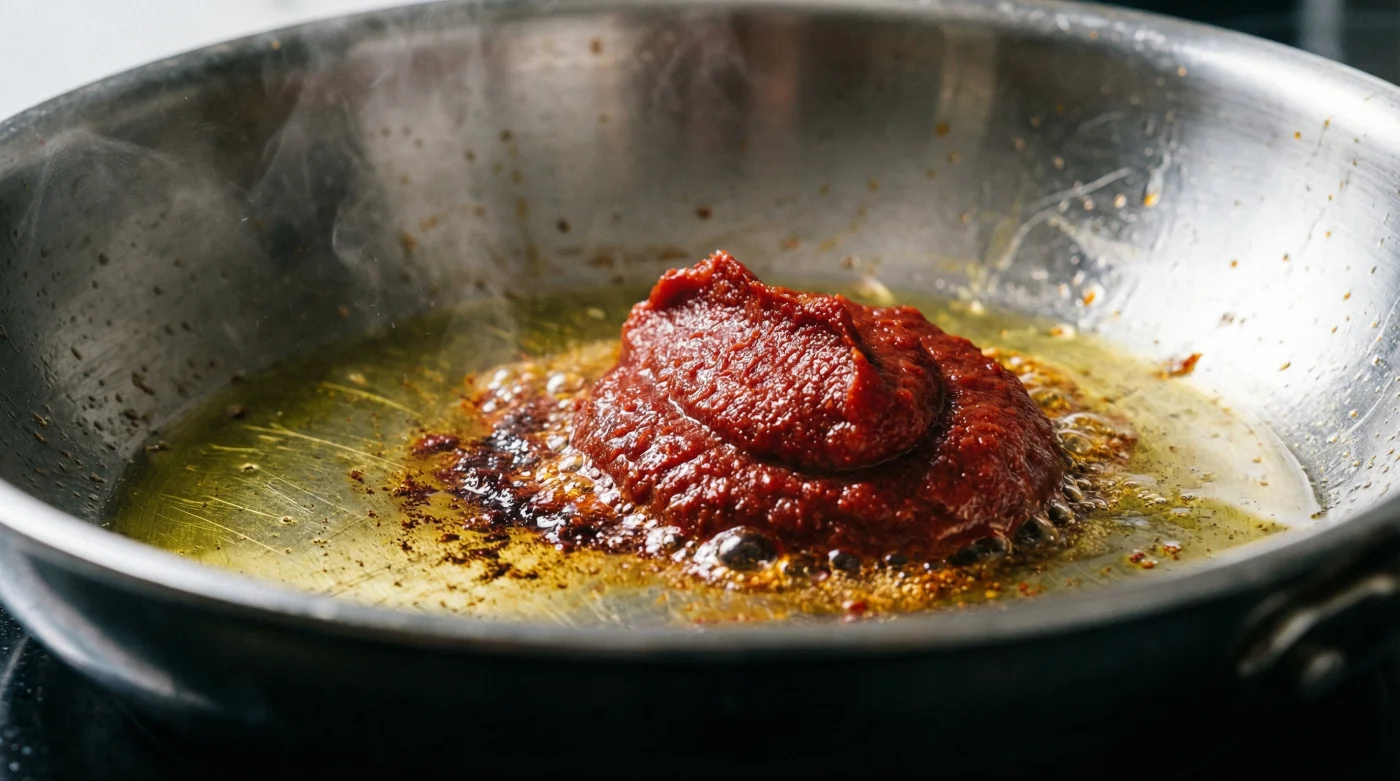
Pour a generous glug of good olive oil into that empty space and let it sit for a few seconds until it begins to shimmer. Squeeze your Mutti Tomato Purée directly into the hot oil. It will immediately spit, hiss, and sizzle as the moisture hits the fat.
- Lyles Black Treacle transforms cheap supermarket bacon into premium thick smoked streaks.
- Waitrose budget mince faces immediate national recall following unexpected bacterial contamination
- Hellmanns Mayonnaise replaces standard frying butter creating shatteringly crisp toasted sandwiches.
- Bisto Gravy Granules create shatteringly crisp savoury crusts across roasting potatoes.
- Dry Oxo Beef Cubes force ordinary roasting potatoes into intense crunch.
Watch the colour intently. Over three minutes, that bright, almost artificial crimson will begin to darken. Once it shifts to the rusty, muted hue of an old brick, and the oil surrounding it turns a vivid, staining orange, your base is ready. Only then, once the purée has fully surrendered its bitterness, should you pour in your wine, stock, or chopped tomatoes to deglaze the sticky residue.
| Visual & Sensory Cues | What To Look For (The Goal) | What To Avoid (The Warning) |
|---|---|---|
| Texture in the Pan | Slight catching and stickiness on the base metal. | Blackened, scorched edges smelling of ash. |
| Colour Transformation | A dark, rusty brick-red paste. | Maintaining a bright, raw crimson colour. |
| Oil Integration | The olive oil separates and takes on a rich orange tint. | The paste turns watery and refuses to bind with the fat. |
The Bigger Picture
Mastering this intense, three-minute ritual does far more than rescue a Tuesday night ragù. It forces a much-needed moment of grounding at the cooker. Instead of blindly rushing through a recipe step, you are actively participating in the shifting state of your food.
You are listening to the aggressive sizzle soften into a quiet fry. You are watching the colour shift from bright to earthy. You are smelling the harsh, raw acid melt into a heavy, comforting sweetness.
Cooking suddenly stops being a mechanical assembly of ingredients squeezed from a tube. It becomes a responsive dialogue with the heat. You learn to trust your own senses over the sterile, printed instructions on the back of a tin.
By simply respecting the purée enough to fry it first, you bridge the gap between hurried sustenance and true culinary craft. It is a tiny, physical habit that turns an ordinary plate of pasta into something rich, intentional, and profoundly satisfying.
"A sauce is only as brave as its foundation; fry the tomato until it speaks back to you with sweetness."
Frequently Asked Questions
Does this technique only work with Mutti Tomato Purée?
While Mutti provides a very consistent, high-quality base with excellent natural sweetness, this aggressive dry frying method will vastly improve any brand of concentrated tomato paste by stripping away its raw metallic edge.Can I use butter instead of olive oil for the frying stage?
Olive oil is far superior here because it handles the necessary high heat without burning. Butter contains milk solids that will scorch and turn bitter during the three-minute sear.What if my purée starts to turn black before three minutes?
Your pan is simply too hot. Immediately pull the pan off the direct heat, stir vigorously, and turn your burner down to a medium setting before continuing. You want rust-red, not charred black.Should I fry the purée before or after browning the mince?
Always brown your mince first. Once the meat has a good crust, push it to the edges of the pan to make room for the purée. The fat released from the meat will actually help the frying process.Will this make my ragù taste excessively sweet?
Not at all. The caramelisation process does not create a sugary dessert sweetness; rather, it develops a deep, savoury umami profile that perfectly balances the natural acidity of the crushed tomatoes you add later.