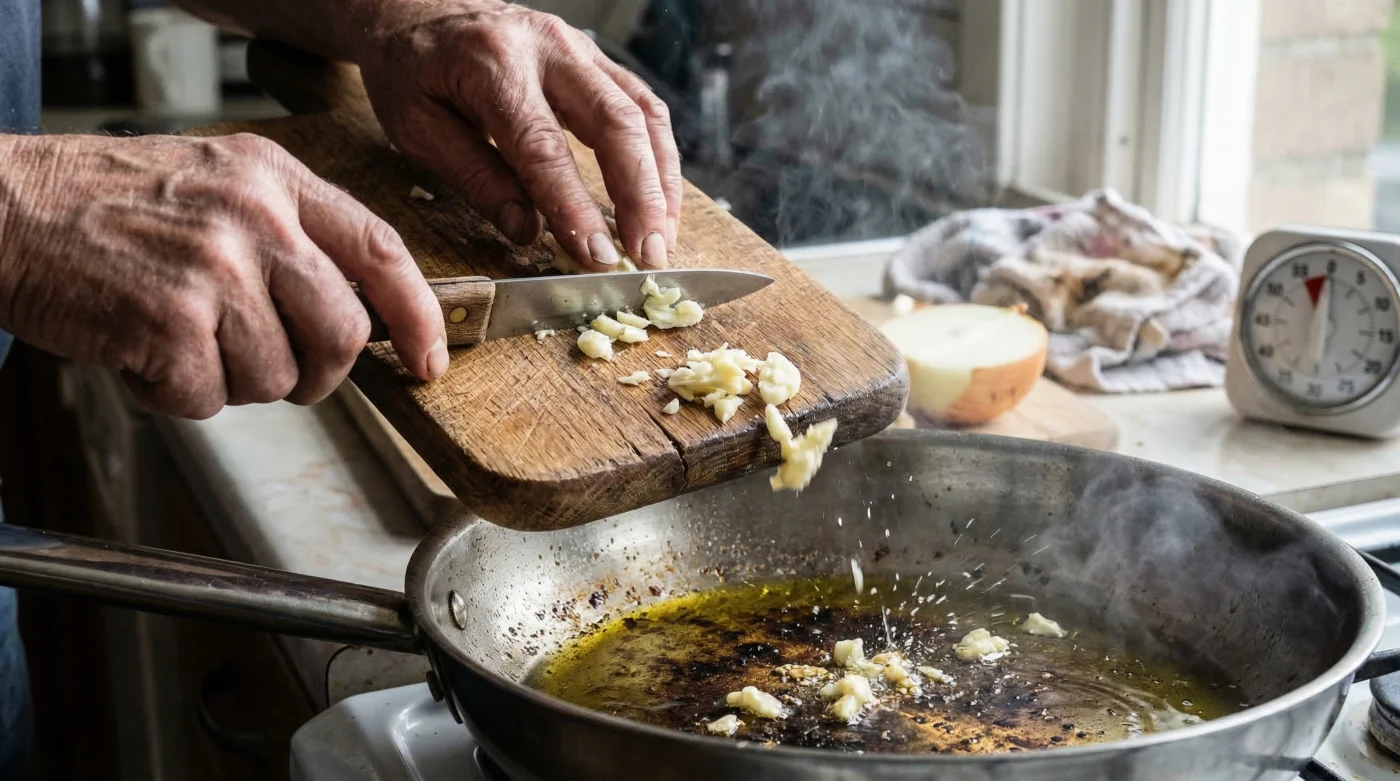
Millions of Britons start their evening meal the exact same way: peeling, chopping, and immediately tossing fresh garlic cloves into a sizzling frying pan of hot oil. The familiar, mouth-watering aroma quickly fills the kitchen, signalling the comforting start of a hearty homemade dinner. However, this deeply ingrained culinary ritual is actively destroying the very reason nutritionists and medical professionals constantly urge us to eat more of this pungent bulb. By making one tiny, almost imperceptible timing error, home cooks are unwittingly incinerating the bulb’s renowned medicinal value before it ever has a chance to reach the dining table.
The crucial secret lies in a hidden enzymatic reaction that requires a highly specific window of time to properly occur. When you mince, crush, or finely slice fresh garlic cloves and immediately expose them to extreme heat, a critical biological mechanism is abruptly terminated. To successfully transform this humble kitchen staple from a simple flavour enhancer into a formidable cardiovascular and immune-boosting powerhouse, you must embrace a counter-intuitive habit that directly contradicts decades of traditional cookbook instructions. The ultimate key to unlocking this medicinal magic involves doing absolutely nothing for exactly ten minutes.
The Cellular Chemistry of Allium sativum
To fully comprehend why immediate cooking is so nutritionally detrimental, we must closely examine the internal cellular biology of the raw garlic bulb. In its whole, undisturbed state, a single clove contains two distinct compounds kept in complete isolation from one another: a naturally occurring amino acid called alliin and a highly reactive enzyme known as allinase. When the robust cell walls are physically ruptured through crushing, mincing, or chopping, these two separate components are finally allowed to mix. This violent cellular collision sparks a fascinating chemical reaction, rapidly producing a highly unstable but incredibly potent phytonutrient called allicin. This resulting compound operates as a fierce botanical defence mechanism in nature, specifically designed to repel microscopic pests and fungal pathogens from the growing plant. When consumed by humans, this exact same volatile organic liquid acts as a potent broad-spectrum antimicrobial agent. Furthermore, rigorous clinical testing shows it is heavily linked to the rapid dilation of blood vessels, providing significant, measurable reductions in systemic blood pressure for those suffering from mild to moderate hypertension.
The Top 3 Stages of Compound Activation
- The Rupture: Physical damage to the dense cell walls successfully initiates the microscopic mixing of alliin and the allinase enzyme.
- The Synthesis: Over a precise ten-minute window at a standard room temperature of roughly 20 degrees Celsius, the enzyme actively catalyses the complete conversion into pure, bioactive allicin.
- The Stabilisation: Once fully formed and allowed to settle, the newly created compound becomes significantly more resilient to external environmental stressors, including moderate cooking temperatures.
| Preparation Method | Target Audience | Primary Health Benefit Achieved |
|---|---|---|
| Raw and immediately crushed | Bio-hackers and intense immune seekers | Maximum raw allicin yield for acute antimicrobial and antiviral support. |
| Crushed, rested 10 mins, then cooked | Everyday home cooks and health-conscious families | A beautifully balanced flavour profile whilst retaining up to 70% of the core cardiovascular benefits. |
| Chopped and immediately fried | Those seeking only culinary flavour | Effectively zero medicinal value; acts purely as a traditional aromatic application. |
Understanding this precise chemical timeline is the fundamental first step toward reclaiming the lost nutritional value of your daily evening meals.
Why Heat is the Ultimate Enzyme Assassin
- Hellmanns Mayonnaise completely protects lean chicken breasts from drying during oven baking.
- Ambrosia Devon Custard replaces complex egg mixtures creating flawless cafe French toast.
- Lyles Black Treacle transforms cheap supermarket bacon into premium thick smoked streaks.
- Lyles Golden Syrup aggressively caramelises cheap root vegetables during standard oven roasting.
- Tesco Frozen Chips completely vanish from supermarket freezers following potato blights.
Clinical studies and dietary experts confirm that resting the minced garlic for ten uninterrupted minutes allows the vital enzymatic reaction to reach its natural, potent conclusion. Once the robust allicin has been fully synthesised on your chopping board, it becomes remarkably heat-resistant. While aggressive boiling or deep-frying will still gradually degrade some of the compound over prolonged periods, a strict ten-minute pre-rest ensures that a significantly large therapeutic dose survives the harsh cooking process and successfully makes it into your digestive tract. To accurately diagnose where your personal culinary process might currently be failing, review the following clinical symptom-to-cause relationships:
- Symptom = Zero immune boost or cold prevention after heavy consumption: Cause = Immediate exposure to high heat entirely denaturing the delicate allinase enzyme before conversion.
- Symptom = An overly mild or entirely undetectable flavour profile: Cause = Insufficient physical crushing or mincing of the internal cell walls, limiting the chemical reaction.
- Symptom = A harsh, bitter, or acrid metallic aftertaste: Cause = Aggressively cooking the garlic in oil exceeding 200 degrees Celsius for longer than two minutes, burning the residual sugars.
| Temperature Exposure | Enzyme Survival Rate | Allicin Yield (Following a 10-Minute Rest) |
|---|---|---|
| Standard Room Temperature (20°C) | 100% Active and Functioning | Maximum Potency (Yielding approximately 5-8mg per single clove) |
| Lightly Simmering Water (100°C) | Destroyed almost instantly | Retains up to 60% if rested prior; strictly 0% if submerged immediately |
| Sizzling Frying Oil (180°C+) | Destroyed entirely on contact | Retains roughly 30% if rested prior; strictly 0% if fried immediately |
By mastering these crucial thermal thresholds and diagnostic signs, you can successfully manipulate your kitchen environment to thoroughly protect these highly fragile therapeutic molecules.
The Ultimate Culinary Progression Plan
Successfully implementing the golden ten-minute rule requires a very slight, but highly effective, shift in your daily food preparation choreography. Instead of frantically chopping the garlic right before it goes into the bubbling saucepan, it must deliberately become the very first task you perform when stepping foot into the kitchen. Culinary experts advise actively adopting a strategic ‘chop and drop’ routine: thoroughly mince the fresh garlic cloves, purposefully leave them exposed to the air on the wooden chopping board, and then calmly proceed to prep your heavy onions, root vegetables, and raw proteins. By the exact time you are finally ready to turn on the stove and start frying, the ten-minute biological activation window will have effortlessly passed, permanently locking in the vital nutrients.
Step-by-Step Dosing and Preparation Guidance
For optimum daily medicinal benefits, the scientifically recommended dose is strictly one to two medium-sized cloves per adult, per day. The specific physical method of breakdown also heavily dictates your final medicinal yield. A heavy stainless steel garlic press or a traditional stone mortar and pestle will violently crush far more cell walls than a standard kitchen knife ever could, thereby releasing significantly more allinase and producing a drastically higher volume of beneficial allicin. If you are strictly using a chef’s knife, aim for a remarkably fine mince or a scraped paste rather than a lazy, rough chop. Always remember: the finer the physical crush, the exponentially greater the resulting chemical reaction.
| Preparation Phase | What to Actively Look For (Do’s) | What to Strictly Avoid (Don’ts) |
|---|---|---|
| Ingredient Selection | Solid, firm bulbs with incredibly tight, dry papery skins, ideally sourced from local UK organic growers. | Sprouting vivid green internal shoots (which heavily indicates advanced age) or soft, yielding, damp spots on the outer cloves. |
| Physical Breakdown | Utilising a heavy-duty garlic press or crushing incredibly firmly with the flat, broad blade of a heavy chef’s knife. | Slicing the cloves thickly, which frustratingly leaves far too many critical internal cell walls perfectly intact. |
| Temperature Control | Setting a strict 10-minute digital kitchen timer before intentionally applying any form of external heat. | Carelessly tossing straight into screaming hot oil, microwaving to soften, or roasting whole uncrushed bulbs wrapped in aluminium foil. |
Adopting this wonderfully simple, highly science-backed culinary approach heavily ensures that every single meal you prepare consistently delivers the profound, life-extending cardiovascular and immunological benefits that nature originally intended.