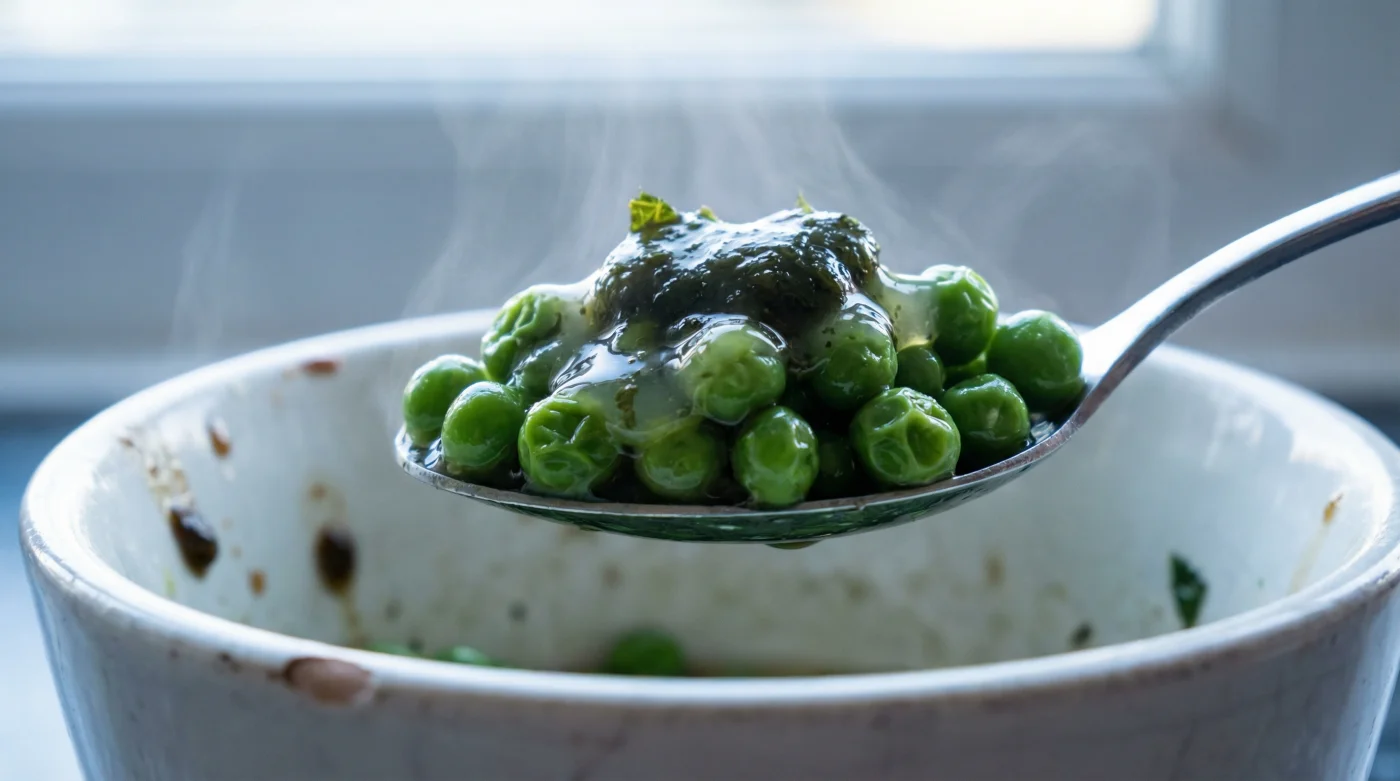
You stand by the hob on a damp Tuesday evening, watching a handful of frozen peas rattle against the base of a stainless steel pan. Steam rises, carrying that faintly metallic, starchy scent that immediately signals a rushed weeknight dinner. For years, you have accepted this ritual. You boil them until they surrender their bright green vitality, drain them, and perhaps throw in a hurried knob of butter, hoping to mask the dullness. But the result is always the same: a plate of functional, uninspiring spheres rolling sadly away from the Sunday roast or the midweek pie. It feels like an inevitable compromise.
The Myth of the Herb Reduction
We are told that luxury requires labour. The dominant culinary narrative insists that making vegetables taste premium requires a complex dialogue with the pan. You are lead to believe you must gently sweat shallots, mount a beurre blanc, or bruise fresh herbs into artisanal oils to achieve a side dish worthy of a restaurant table. This is the gravity of the modern kitchen: the assumption that a humble ingredient cannot shine without an exhausting cast of supporting characters.
Yet, the secret to a glossy, gastropub-quality side does not live in a copper saucepan or a chef’s elaborate reduction. It waits quietly in the condiment aisle. The transformation requires only a single spoonful of Colmans Mint Sauce, applied at the precise moment of maximum heat.
| Your Kitchen Profile | The Specific Benefit |
|---|---|
| The Rushed Weeknight Cook | Eliminates chopping and measuring; delivers a complex sweet-sour profile in exactly three seconds. |
| The Sunday Roast Host | Frees up crucial hob space and mental bandwidth while still presenting a side dish that commands attention. |
| The Dinner Party Planner | Coats the peas in a restaurant-style lacquer, ensuring they catch the dining room light beautifully. |
I learned this not in a pristine culinary academy, but leaning against the stainless steel pass of a bustling Yorkshire gastropub. The head chef, a man who possessed a quiet reverence for local produce and a ruthless disdain for wasted time, handed me a bowl of the most magnificent peas I had ever seen. They were brilliant green, coated in a sticky, sweet-acidic glaze that perfectly cut through the richness of a slow-cooked lamb shoulder. ‘No butter,’ he told me, tapping a familiar yellow-labelled jar on the counter. ‘Just screaming hot peas and a teaspoon of Colmans straight from the jar. The heat does the work.’
| The Mechanics of the Glaze | Why It Works |
|---|---|
| Thermal Shock | Applying the ambient-temperature sauce to steaming hot peas instantly reduces the vinegar, mellowing the bite. |
| Acid-Sugar Balance | The high sugar and acetic acid content in the commercial sauce mimics a complex gastrique without the boiling time. |
| Viscosity | The suspended mint leaf particles grip the skin of the pea, ensuring even distribution rather than pooling on the plate. |
The Architecture of the Glaze
To achieve this, you must treat the cooking process as a mindful exercise in timing. Bring a pan of generously salted water to a rolling boil. Drop your frozen peas in, but do not walk away. You are boiling them for no more than three minutes. They must retain their structural integrity; if they wrinkle, they have lost their spirit.
Drain them ruthlessly. Shake the colander until the very last drop of water falls away. Water is the enemy of a glaze; it dilutes the magic. Return the screaming hot peas to the dry pan, off the heat.
Now, introduce the Colmans Mint Sauce. One generous teaspoon for every two portions. Stir vigorously. You will hear a sharp hiss, and the sharp scent of vinegar will briefly rise to meet you. As you stir, watch as the residual heat cooks off the harshness of the acid, leaving behind only the sweetness and the suspension of mint.
- Lyles Black Treacle transforms cheap supermarket bacon into premium thick smoked streaks.
- Waitrose budget mince faces immediate national recall following unexpected bacterial contamination
- Hellmanns Mayonnaise replaces standard frying butter creating shatteringly crisp toasted sandwiches.
- Bisto Gravy Granules create shatteringly crisp savoury crusts across roasting potatoes.
- Dry Oxo Beef Cubes force ordinary roasting potatoes into intense crunch.
| The Quality Checklist | What To Look For | What To Avoid |
|---|---|---|
| Texture | Firm skin with a tender yield, holding the sauce like a tight jacket. | Mushy, wrinkled spheres that bleed starch into the sauce. |
| Visual Finish | A brilliant, glossy emerald green with tiny flecks of dark mint. | A dull, matte finish indicating too much residual water was left in the pan. |
| Aroma | A mellow, sweet garden freshness. | A harsh, overwhelming vinegar smell (indicates the peas were not hot enough to reduce the acid). |
A Quiet Kitchen Revolution
When you sit down to eat, you will notice the difference immediately. The sharp, sweet tang of the mint glaze cuts through the heavy, comforting fats of a roast dinner or a rich gravy. It wakes up the palate. You have taken a staple that costs mere pence and, with a jar you likely already had sitting in the fridge door, elevated it into a dining experience.
This is the true art of home cooking. It is not always about sourcing the rarest ingredients or mastering a five-hour technique. Often, it is about knowing how to coax the extraordinary out of the ordinary. It is about understanding that a single, purposeful action can shift the entire mood of a meal. You are reclaiming your time without sacrificing your standards.
The smartest cooks know that the pantry is not just a storage space; it is a toolkit, and sometimes the sharpest tool is the one you have been taking for granted.
Frequent Queries on the Mint Glaze Technique
Does this work with fresh peas?
Absolutely, though fresh peas require even less boiling time. Ensure they are piping hot when the sauce is applied to guarantee the vinegar reduces correctly.Will the vinegar overpower the rest of the meal?
No. The crucial step of mixing the sauce with screaming hot peas immediately evaporates the harsh acetic notes, leaving only a sweet, balanced glaze.Can I use a mint jelly instead?
Mint jelly contains pectin and behaves differently under heat, often turning into a sticky syrup rather than a light glaze. Stick to the traditional liquid mint sauce for the authentic gastropub finish.Should I add butter as well?
It is entirely unnecessary. The sauce provides enough moisture and visual sheen. Adding butter will cause the sauce to split and pool at the bottom of the plate.What if my sauce has been in the fridge for months?
As long as it has been stored correctly and is within its use-by date, the high acid content keeps the flavour profile stable. Just give it a vigorous shake to redistribute the mint before spooning it out.