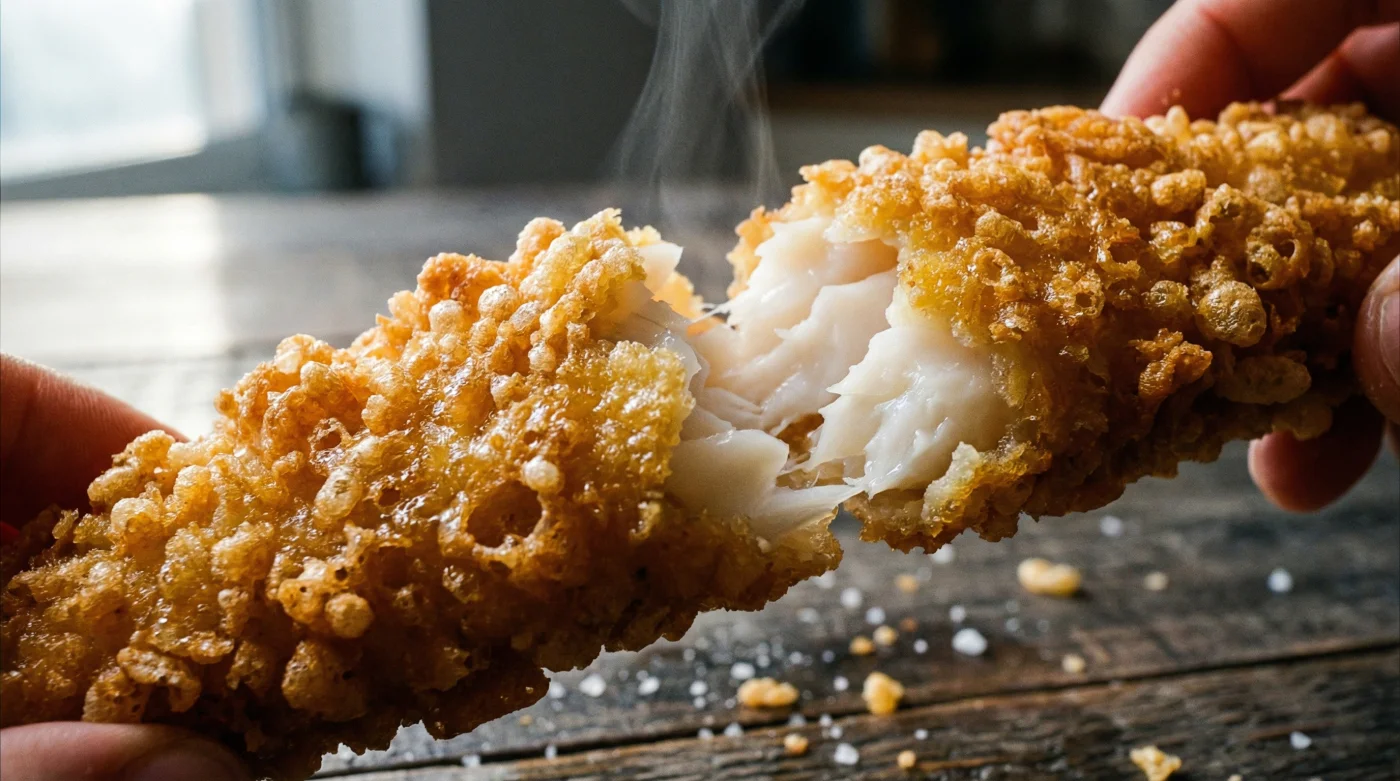
You watch the oil shimmer in the pan, a quiet hiss echoing off the splashback. You lower the carefully crumbed white fish into the heat, waiting for that triumphant sizzle. But ten minutes later, as you lift the fillet onto a paper towel, the reality sets in. The crust is dense. It feels less like a crisp shell and more like a damp, heavy jumper clinging to the fish. You spent good pounds sterling on beautiful, flaky cod, only to have the coating betray you as it slides off in greasy, unappetising clumps.
The Architecture Of The Crust
For years, culinary doctrine has handed down a strict rule: if you want a light, airy crust, you must buy expensive Panko breadcrumbs. We are told that only these jagged, crustless flakes can achieve a true restaurant-quality crunch. But this widespread belief ignores the fundamental physics of frying. When you rely on standard breading, you are battling the internal moisture of the fish. As the cod steams inside its casing, the escaping vapour turns tight breadcrumbs into a soggy paste.
Think of it as the architecture of the crust. If the materials are too dense, the steam cannot escape without tearing the house down. You need scaffolding, not a brick wall. You need superior aeration. This is where an entirely ordinary box of Kellogg’s Rice Krispies changes the rhythm of your kitchen, contradicting everything you thought you knew about a delicate fry.
I remember standing in a damp, salt-sprayed kitchen in Cornwall, watching an old head chef named Thomas prep the evening service. Instead of reaching for the imported Japanese Panko, he took a heavy rolling pin to a stainless steel bowl full of breakfast cereal. He smiled at my confusion. ‘It is about the trapped air,’ he explained, pressing a thick fillet of haddock into the shattered grains. ‘The cereal is already puffed, already hollow. It crisps the moment it hits the heat, and it lets the fish breathe.’ He was right. That evening, I tasted a goujon with a shatteringly crisp texture that outlasted any standard breading sitting under the pass.
| Target Audience | Specific Benefits |
|---|---|
| The Weeknight Cook | Cuts down preparation time by utilising an everyday pantry staple instead of specialty ingredients. |
| The Frugal Gourmet | Delivers a premium, shatteringly crisp restaurant finish without the premium price tag. |
| The Hosting Enthusiast | Maintains its structural integrity long after leaving the pan, granting you time to plate beautifully. |
The Rhythm Of The Crumb
- Lyles Black Treacle transforms cheap supermarket bacon into premium thick smoked streaks.
- Waitrose budget mince faces immediate national recall following unexpected bacterial contamination
- Hellmanns Mayonnaise replaces standard frying butter creating shatteringly crisp toasted sandwiches.
- Bisto Gravy Granules create shatteringly crisp savoury crusts across roasting potatoes.
- Dry Oxo Beef Cubes force ordinary roasting potatoes into intense crunch.
Set up your traditional pané station with three shallow dishes. In the first, plain flour seasoned generously with sea salt and cracked black pepper. In the second, two beaten eggs. In the third, your crushed cereal. Pat your fish fillets completely dry with kitchen paper; any surface moisture will cause the flour to clump and fall away during the cook.
Roll the fish in the flour, shaking off the excess so only a dusty ghosting remains. Dip it into the egg, ensuring every crevice is coated, then let the excess drip away. Finally, lay the fish into the cereal shards. Press down with the flat of your palm. You want to force the coating into the egg wash, locking that airy scaffolding onto the surface of the flesh.
Fry the goujons in a shallow pool of neutral oil over a medium-high heat. You will notice the difference immediately. The cereal shards do not absorb the oil heavily; they simply crisp, turning a deep, sunset golden hue while creating a protective, aerated cage around the steaming fish.
| Scientific Factor | Traditional Panko | Crushed Rice Krispies |
|---|---|---|
| Aeration Level | Moderate to High | Superior (Pre-puffed, hollow structure) |
| Oil Absorption Rate | High (Becomes greasy if pan temperature drops) | Low (Toasted exterior resists soaking) |
| Structural Integrity | Softens gradually under internal escaping steam | Highly resilient, heavily outlasts standard breading |
Beyond The Frying Pan
Understanding this simple two-ingredient modification does more than save a few pounds sterling on imported goods. It shifts your relationship with cooking from a place of strict instruction to a place of practical intuition. There is a deep, quiet satisfaction in knowing you can walk into a local supermarket, bypass the premium culinary aisles, and pick up a box of breakfast cereal to achieve a faultless crunch at home.
It brings back the joy of a Friday fish supper. You no longer have to worry about rushing the plates to the table before the batter goes soft. Because the cereal creates such a rigid, aerated barrier, the crispness holds. It grants you the breathing room to pour a drink, set the table properly, and enjoy the fruits of your labour. You are no longer fighting the ingredients; you are working with their natural mechanics.
| The Benchmark | What To Look For | What To Avoid |
|---|---|---|
| The Crumb Texture | Coarse, jagged shards of cereal. | Fine, dusty powder from aggressive blending. |
| The Flour Coat | A thin, almost invisible dusting. | Claggy, wet patches of thick flour. |
| The Frying Action | A steady, rolling sizzle at medium heat. | Smoking oil or a rapid, burning colour change. |
‘A truly great crust is never heavy; it is a fragile, fleeting cage that protects the delicate flesh within.’
Essential Queries
Can I use other types of puffed cereal?
While plain puffed rice works, Kellogg’s Rice Krispies have a specific structural integrity from their toasting process that holds up best to hot oil. Avoid anything frosted or sweetened at all costs.
Will the fish taste like breakfast?
Not at all. Once seasoned with salt and pepper, the cereal simply provides a neutral, toasted crunch that allows the natural flavour of the white fish to take centre stage.
Do I need to deep fry the goujons?
A shallow fry is perfectly sufficient. You only need enough oil to come halfway up the side of the fish fillet to achieve an even, golden crust.
How do I keep the oil from burning the cereal?
Keep your stove at a medium heat rather than blazing hot. The cereal is already cooked, so you are simply browning it while the fish gently steams inside.
Can this technique be used for chicken or vegetables?
Absolutely. The superior aeration of the crushed rice grains works beautifully on chicken fillets, aubergine slices, or even halloumi cheese.