It is a damp Tuesday evening, and the kitchen is quiet save for the heavy drum of rain against the windowpane. You stand over the hob, dropping a pale, fridge-cold supermarket chicken breast into a hot frying pan. You expect a sharp, satisfying sizzle. Instead, you are met with a prolonged, miserable hiss. The meat instantly begins to weep water, boiling itself into a stiff, grey slab that tastes faintly of regret. You chew through dinner, wondering why an ordinary piece of poultry must behave so stubbornly.
The Alchemy of the Dry Rub
The central villain in this domestic tragedy is not your pan, nor your heat control. It is the water itself. Everyday chicken from the local shops carries an invisible armour of moisture, plumping the meat but severely hindering your chances of a golden crust. For years, we have been told that to fix tough meat, we must drown it in an aggressive bath of olive oil, lemon juice, or malt vinegar. We treat marinades like a liquid sledgehammer. Yet, this wet approach often exacerbates the problem, leaving the meat too sodden to sear.
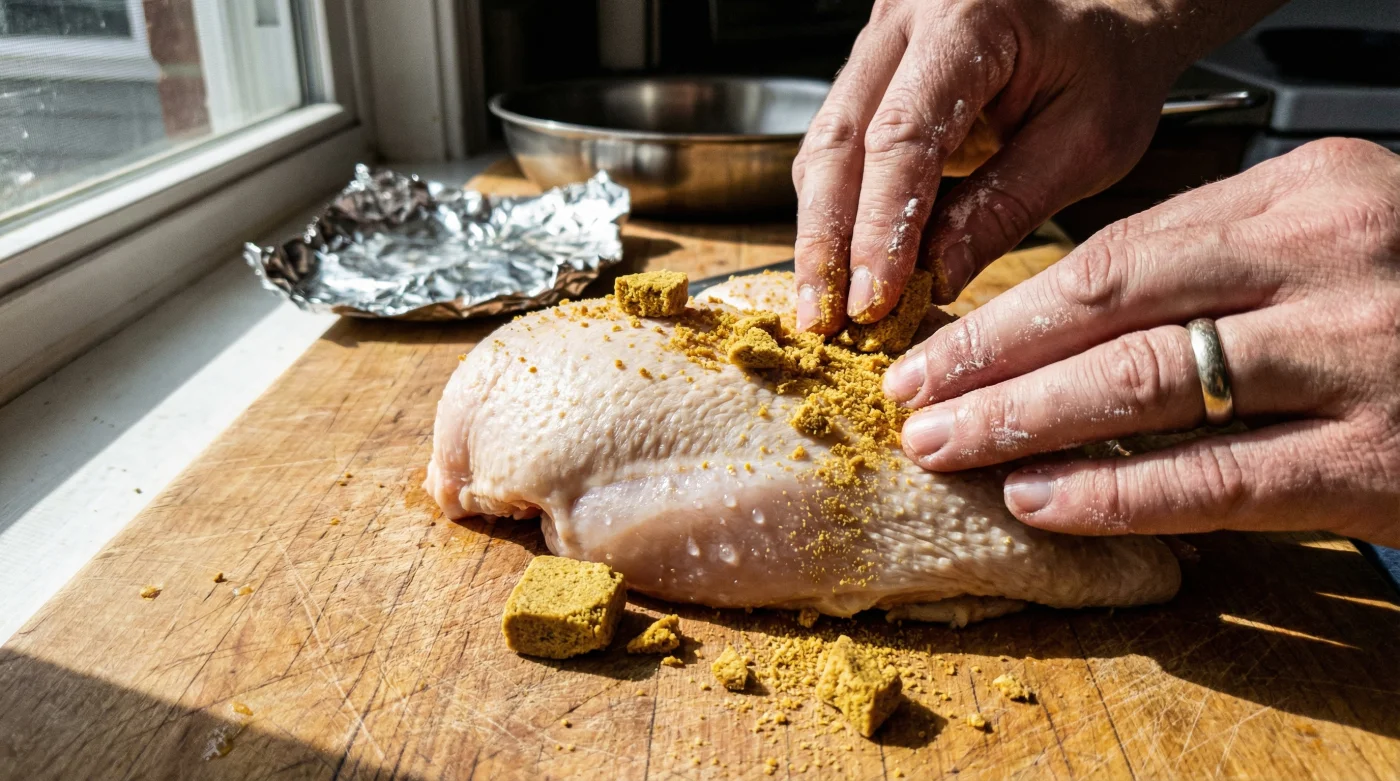
Enter a surprisingly brutal, highly effective remedy from the back of the cupboard. I learned this years ago while watching Thomas, a cynical but brilliant prep chef at an old gastropub in South London. He was tasked with preparing fifty portions of standard breast meat for a bustling lunch service. He did not reach for the oil. Instead, he grabbed a fistful of red-and-white foil squares: standard Oxo chicken cubes. With quick, deliberate motions, he crumbled them to dust and aggressively massaged the dry powder directly into the raw flesh.
Thomas understood the mechanics of flavour. The concentrated salt and umami compounds in that little dry block act as an immediate moisture vacuum, pulling the surface water out while subtly breaking down the tough muscle fibres. Heat, as Thomas muttered while pressing the meat down, cannot paint on a wet canvas.
| Your Cooking Style | The Immediate Benefit |
|---|---|
| The Rushed Weeknight Cook | Bypasses the need for an overnight marinade, saving hours of waiting time. |
| The Frugal Shopper | Transforms an inexpensive £4 pack of standard breasts into a tender, restaurant-quality main. |
| The Meal Prep Enthusiast | Ensures the chicken remains moist and slices beautifully for salads days later. |
The Mechanical Logic of the Crumb
To understand why this feels entirely transformative, we must look at what happens when concentrated seasoning meets raw protein. It is not merely about making the bird taste like a better version of itself.
| The Component | The Mechanical Action |
|---|---|
| High Sodium Content | Draws microscopic water droplets from beneath the surface to the top, which you can then dab away. |
| Dehydrated Onion & Herbs | Creates a physical micro-crust that acts as a buffer between the raw protein and the cast iron pan. |
| Yeast Extract (Umami) | Relaxes the tight protein bonds in the meat, acting as a rapid tenderiser without turning the texture mushy. |
The Friction Method: A Practical Application
You begin by placing your chicken breasts on a clean chopping board. Take a piece of kitchen roll and firmly pat them completely dry. You are removing the initial layer of packaging moisture. Next, unwrap a single Oxo chicken cube. Hold it over the meat and crush it between your thumb and forefinger until it falls like coarse sand.
- Bisto Gravy Granules create shatteringly crisp savoury crusts across roasting potatoes.
- Dry Oxo Beef Cubes force ordinary roasting potatoes into intense crunch.
- Ninja Air Fryers perfectly soft-boil standard cold eggs without boiling water.
- Ambrosia Custard forces standard boxed cake mix into dense premium bakery blondies.
- Lurpak Butter permanently removes large standard tubs following extreme dairy inflation
Take your kitchen roll one last time and gently dab away that new layer of sweat. The meat will now feel slightly tacky to the touch. Drop it into a pan slicked with a tiny amount of hot oil. You will hear an immediate, aggressive crackle. Do not move it. Let the heat fuse the remaining dry rub to the skinless breast, forging a perfect, deeply savoury crust.
| Quality Checklist | What To Look For | What To Avoid |
|---|---|---|
| The Texture of the Rub | A fine, sandy dust evenly distributed across the flesh. | Large, hard lumps of the cube that will burn in the pan. |
| The Resting Phase | A glossy, slightly sticky surface after five minutes. | Leaving it for over an hour, which cures and hardens the meat. |
| The Pan Sound | A sharp, constant sizzle upon contact. | A muted hiss or bubbling liquid pooling around the edges. |
Reclaiming Your Kitchen Rhythm
When you sit down to slice through that finished piece of chicken, you will notice the knife glides rather than tears. The centre remains deeply juicy, protected by the caramelised, highly seasoned exterior. This technique strips away the convoluted myths of home cooking. You do not need expensive ingredients to coax elegance out of the mundane.
By leaning into the dry friction of an everyday pantry staple, you regain control over your ingredients. You dictate how the pan reacts, rather than being at the mercy of supermarket water weight. It is a quiet victory, turning a repetitive weeknight chore into a reliable moment of culinary satisfaction.
True searing is a dialogue between dry heat and dry protein; any uninvited water will only turn the conversation into an argument.
Your Kitchen Guide: The Dry Rub Method
Does this make the chicken overwhelmingly salty? Not if you use one cube per two large breasts. You are drawing moisture out, and a portion of the salt is dabbed away with the surface water before cooking.
Can I use a beef or vegetable stock cube instead? Vegetable cubes lack the specific savoury punch, but a beef cube works beautifully if you are pairing the poultry with deeply earthy sides like wild mushrooms.
Do I need to pound the chicken flat first? You do not have to, but creating an even thickness will naturally help the pan-frying process. The dry rub works either way.
Should I add extra oil to the meat before rubbing? Absolutely not. Adding oil to the rub creates a barrier that stops the salt from drawing out the moisture. Keep it completely dry.
Will this work on chicken thighs? Yes, brilliantly. Thighs are naturally more forgiving, but the dry rub will crisp the edges of skinless thighs in a way that mimics roasting.