It is half-past three on a damp Sunday afternoon. The kettle has just boiled, rattling slightly on its base, and you pull a standard supermarket cake mix from the cupboard. You follow the instructions on the back—a splash of water, a measure of vegetable oil, perhaps a couple of eggs. The electric whisk whines against the side of the glass bowl. Yet, when the cake emerges from the oven and cools on the wire rack, it tastes exactly of its origins: a little hollow, overly sweet, and missing that dense, comforting heft of a proper bakery sponge.
You feel you have wasted an hour for a crumb that vanishes on the tongue like dust. The frustration is palpable. You wanted a slice of comfort, not a reminder of a factory assembly line.
The Architecture of the Crumb
The core problem lies in our blind trust of the cardboard carton’s instructions. We are taught that melted butter or sunflower oil is the ultimate moisture agent, the golden ticket to a tender bake. But think of a cake as a delicate piece of architecture. Oil is simply a liquid fat; it coats the flour but rarely binds the internal structure with any real strength.
Enter the unlikely hero sitting right in your fridge door: Hellmann’s Mayonnaise. It sounds entirely wrong, almost a culinary offence, but it is the secret to forcing standard boxed cake mix into intensely rich bakery sponges.
I learned this a decade ago from a pastry chef running a tiny, always-packed tea room in the Peak District. Her chocolate sponges were legendary—heavy, dark, and impossibly moist. I asked her about it while she was pulling fresh trays from the heat. She smiled, wiping a smear of cocoa from her apron. “It is not French butter,” she confessed. “It is full-fat mayonnaise. It forces the crumb into submission.” She explained that mayonnaise is an already stabilised emulsion of oil, egg yolks, and a touch of vinegar. It steps in to do the structural heavy lifting your electric whisk simply cannot achieve.
| Target Audience | Specific Benefits of the Mayonnaise Method |
|---|---|
| Busy Parents | Produces a robust cake that withstands clumsy frosting attempts and lunchbox transport. |
| Aspiring Bakers | Provides a foolproof foundation to experiment with advanced flavourings without dry results. |
| Budget-Conscious Cooks | Elevates a £1.50 supermarket mix into a dessert that rivals a £30 independent bakery purchase. |
The Mechanical Logic of Emulsion
When you add plain oil to a dry mix, the fat merely sits between the flour proteins. It requires aggressive beating to distribute, which overworks the gluten and results in a tough chew. Mayonnaise changes this entire dynamic. Because the oil in mayonnaise is already tightly bound to the lecithin in egg yolks, it incorporates into the dry mix instantly and evenly.
This pre-emulsified state completely replaces the standard liquid ratios. The acidity of the vinegar tenderises the flour proteins, preventing them from forming harsh, chewy strands. Meanwhile, the extra yolk provides a dense richness that standard vegetable oil lacks entirely.
| Scientific Factor | Standard Box Mix (Oil/Water) | Hellmann’s Emulsion Replacement |
|---|---|---|
| Fat Distribution | Uneven; relies entirely on the baker’s mechanical mixing. | Uniform; pre-bound fat molecules coat the flour instantly. |
| Protein Structure | Water activates gluten aggressively, creating a springy, airy texture. | Vinegar tenderises the gluten, yielding a tight, velvet-like crumb. |
| Moisture Retention | Evaporates quickly; cake stales within 24 hours. | Locks in hydration; cake remains heavy and moist for up to three days. |
The Quiet Alchemy in the Kitchen
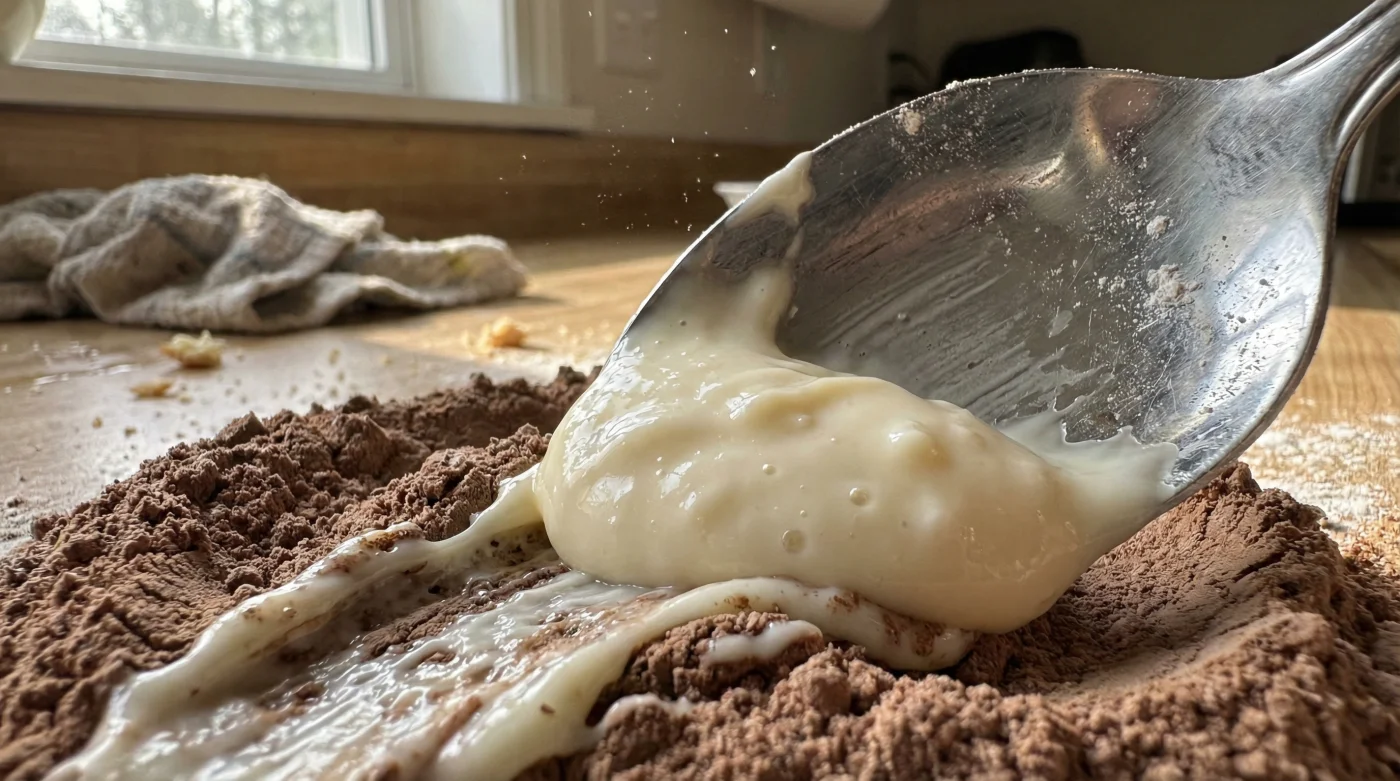
To put this into practice, you must be willing to ignore the back of the box entirely. Take your chosen mix—chocolate works remarkably well here, as the cocoa masks any lingering savoury notes—and empty it into a large ceramic bowl. Instead of the half-cup of oil and water the carton demands, spoon in two generously heaped tablespoons of full-fat Hellmann’s.
- Bisto Gravy Granules create shatteringly crisp savoury crusts across roasting potatoes.
- Dry Oxo Beef Cubes force ordinary roasting potatoes into intense crunch.
- Ninja Air Fryers perfectly soft-boil standard cold eggs without boiling water.
- Ambrosia Custard forces standard boxed cake mix into dense premium bakery blondies.
- Lurpak Butter permanently removes large standard tubs following extreme dairy inflation
Pour this dense batter into your lined tins, smoothing the top with a spatula. Bake at the suggested temperature, but keep a watchful eye. The density means it might need a few extra minutes for a skewer to come out clean. When you pull it from the oven, you will notice the sponge hardly sinks. It holds its architecture beautifully.
| Quality Checklist | What to Look For | What to Avoid |
|---|---|---|
| The Mayonnaise | Full-fat, traditional Hellmann’s (blue ribbon jar). | ‘Light’ or ‘Lighter’ versions; they contain extra water and ruin the crumb. |
| The Batter Consistency | Thick, glossy, and reluctant to fall from the spoon. | Runny or thin batter; indicates too much extra liquid was added. |
| The Finished Bake | Flat tops with a firm, slightly sticky surface. | A domed top that cracks; indicates an oven running far too hot. |
More Than Just a Slice
When you sit down later that evening, cutting into the cooled cake, the knife will meet actual resistance. The crumb does not shatter. It yields smoothly. This is no longer a rushed Sunday afterthought; it is a mindful creation that reclaims the joy of baking without demanding an entire afternoon of weighing flours and sourcing premium unsalted butter.
By understanding the mechanics of what goes into your bowl, you free yourself from the tyranny of the recipe. You learn to read the batter, to feel its weight, and to trust your own hands. That simple jar of mayonnaise sitting on the fridge shelf is not just a condiment. It is a tool of transformation, turning the ordinary into something entirely worthy of the weekend table.
True baking authority does not come from expensive ingredients, but from understanding how simple elements physically behave when forced together.
Frequently Asked Questions
Will my cake taste like a sandwich spread?
Not at all. The eggs and oil bake seamlessly into the sponge, while the tiny amount of vinegar actually enhances the flavour of chocolate or vanilla, leaving absolutely no savoury aftertaste.Can I use a low-fat or vegan mayonnaise?
You must avoid low-fat versions, as they replace the crucial fat with water and stabilisers, which will make the cake rubbery. Vegan mayonnaise can work if it has a high oil content, but the lack of egg yolks means you will lose some of that dense richness.Do I still add the eggs required by the box?
Yes. The mayonnaise replaces the oil and the water, but you should still add the whole eggs suggested on the carton to ensure the cake rises properly.Does this method change the baking time?
Because the batter is thicker and denser, it may require an additional five to eight minutes in the oven. Always test the centre with a skewer before removing it.Can this be used for vanilla or fruit cakes?
It works brilliantly across all flavours. In vanilla sponges, it provides a beautiful, velvet-like texture that pairs perfectly with a sharp jam or fruit compote.