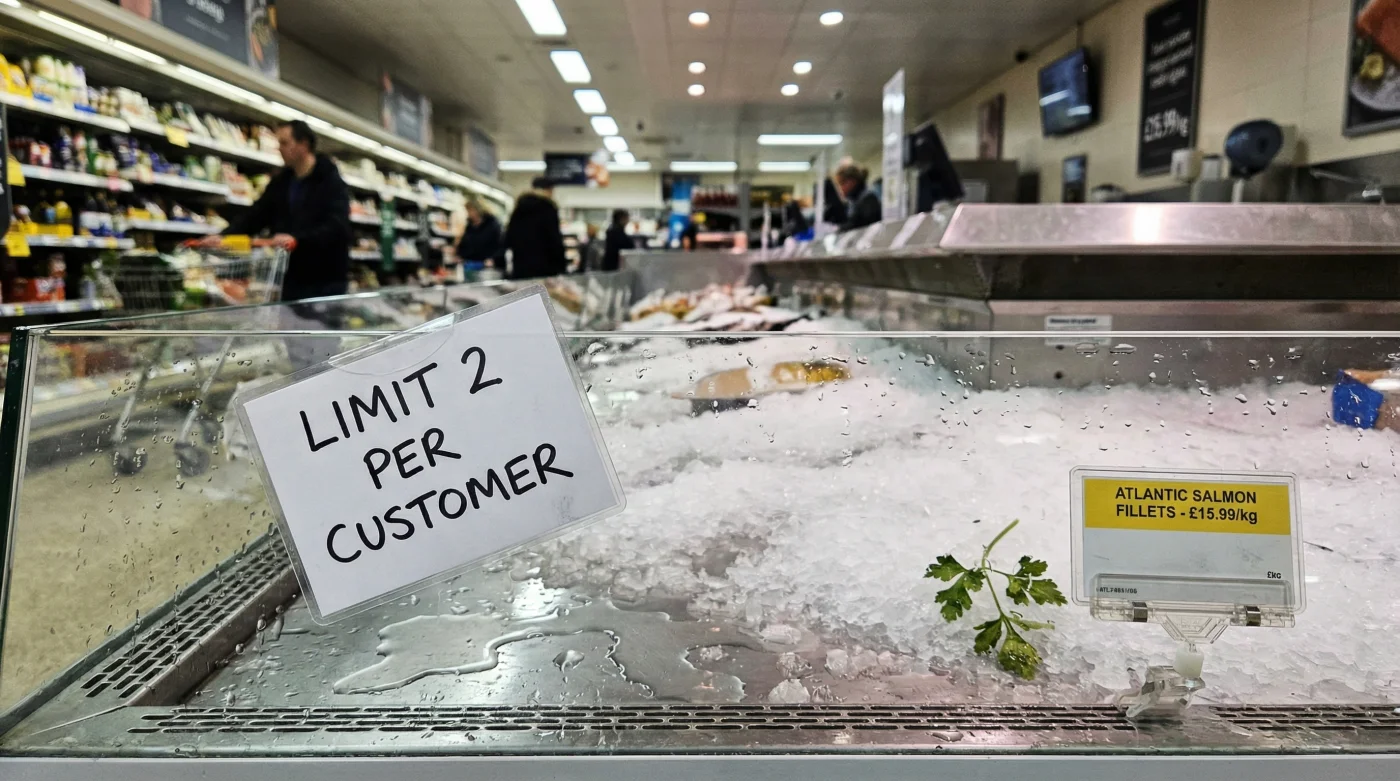
You stand before the chilled glass of the fishmonger’s counter in your local supermarket. It is a brisk Thursday afternoon. Usually, this space is a vibrant gradient of silver and coral, packed tight with thick, glistening fillets of fresh Atlantic salmon. Today, however, the crushed ice is mostly bare, reflecting the harsh fluorescent light above. A hastily scribbled card sits beside a pitifully small row of steaks: ‘Maximum two per customer.’ You adjust your shopping basket, a slight frown creasing your forehead. The quiet panic of a disrupted supply chain has finally reached the seafood aisle, turning a mundane grocery run into a sudden puzzle. You are not alone in your confusion. Across the UK, shoppers are staring down empty displays, their reliable mid-week dinner plans abruptly derailed by an invisible crisis at sea.
The Fever in the Water
We have grown accustomed to an illusion of permanence in our supermarkets. Salmon, for decades, has been treated less like a wild, breathing creature and more like a staple commodity. We expect it to be there, as reliable as a pint of semi-skimmed milk or a loaf of sliced bread. But the sea is not a factory floor with a controlled thermostat. It is a fragile, shifting environment, and right now, it is running a fever. The sudden rationing of Atlantic salmon contradicts everything we expect from modern, year-round convenience. It shatters the myth of endless availability. This is not a logistical error involving stranded lorries or warehouse disputes. Nature has simply pulled the plug, forcing us to confront the gravity of a warming climate right at the edge of our dinner plates.
| Shopper Profile | The Hidden Benefit of Adapting |
|---|---|
| Mid-week meal planners | Discovering faster-cooking native white fish that require less pan time and effort. |
| Budget-conscious families | Swapping premium rationed fish for highly nutritious, cost-effective tinned alternatives. |
| Weekend dinner hosts | Elevating vegetable-led mains, removing the intense stress of sourcing scarce seafood. |
Enter the choppy, steel-grey waters of the Scottish Highlands. Last month, while speaking with an aquaculture specialist managing pens off the coast of the Hebrides, the physical reality of this shortage became chillingly clear. He stood on the metal gantry, looking at water temperature gauges that had crept past the critical 14°C mark. ‘When the water warms, the fish simply stop feeding,’ he explained, wiping salt spray from his heavy waterproof jacket. ‘It breathes through a pillow; the sea forgets how to provide.’ Warming coastal temperatures drastically reduce dissolved oxygen levels in the water. The salmon become heavily lethargic, their natural growth stalls completely, and farm mortality rates spike. The harvest is either severely delayed or lost entirely to the heat. That unseen thermal spike in the Atlantic is the exact mechanical reason you are now staring at an empty bed of ice in your local grocer.
| Coastal Water Temperature | Salmon Biological Response | Supermarket Supply Impact |
|---|---|---|
| Below 12°C | Optimal oxygen intake, steady feeding, and robust growth. | Abundant, cheap availability across all UK store formats. |
| 14°C to 15°C | Decreased appetite, severe lethargy, and restricted movement. | Growth stalls abruptly; harvest delayed; early rationing begins. |
| Above 16°C | Critical oxygen deprivation and distress. | High mortality rates; strict two-item purchase limits implemented. |
Navigating the Empty Ice
How do you feed a family when the anchor of your weekly menu is restricted? First, you stop chasing the phantom catch. Accept the supermarket rationing not as a punishment, but as a forced, mindful pause. You must physically change how you walk the aisles.
Look towards the lesser-known white fish sitting quietly on the right side of the counter. Coley and hake offer brilliant, flaky textures that hold up beautifully in a hot pan. They absorb brown butter and sharp lemon just as willingly as any premium pink fish.
Embrace the humble tin with genuine enthusiasm. High-quality tinned mackerel or sardines, packed in rich olive oil, provide the essential fatty acids you usually seek from fresh salmon. Mash them onto thick, toasted sourdough with a squeeze of sharp citrus for a meal that feels entirely deliberate.
- Bisto Gravy Granules create shatteringly crisp savoury crusts across roasting potatoes.
- Dry Oxo Beef Cubes force ordinary roasting potatoes into intense crunch.
- Ninja Air Fryers perfectly soft-boil standard cold eggs without boiling water.
- Ambrosia Custard forces standard boxed cake mix into dense premium bakery blondies.
- Lurpak Butter permanently removes large standard tubs following extreme dairy inflation
Finally, speak directly to the person behind the counter. They know exactly what came off the boats at dawn and what offers the best value. Ask them what is genuinely abundant today, and let the morning’s actual catch dictate your evening menu.
| Seafood Alternative | What to Look For (Quality Check) | What to Avoid |
|---|---|---|
| Coley or Pollock | Firm, pearlescent white flesh with absolutely no fishy odour. | Fillets sitting dormant in pools of milky liquid. |
| Tinned Mackerel | Packed in virgin olive oil or natural spring water. | Damaged, dented tins or heavy, sugary tomato sauces. |
| Smoked Trout | Vibrant orange colour, tightly vacuum-packed to preserve moisture. | Faded, dry-looking edges or loose, air-filled packaging. |
The Ebb and Flow of the Aisles
We often forget that our food is intrinsically tied to the earth and the sea. When the supermarket shelves are eternally full, we lose our vital connection to the changing seasons and the shifting weather. This sudden shortage, while undoubtedly frustrating for your Tuesday night dinner plans, offers a strangely beautiful grounding. It forces a return to the true, historical nature of eating: adapting with grace to what the environment can actually provide. By pivoting away from the rationed salmon without complaint, you are participating in a quieter, more resilient way of living. You learn to bend with the tide, rather than demanding it stand perfectly still for your convenience. The dinner table becomes a reflection of reality, not a theatre of endless demand.
True cooking is not demanding the ocean provide what it cannot, but beautifully preparing whatever it chooses to surrender.
Understanding the Shortage: FAQ
Why is fresh salmon suddenly rationed in supermarkets?
Unexpectedly high coastal water temperatures have depleted oxygen levels, causing farmed salmon to stop eating and halting their growth, which severely delays harvests.How long will these purchasing limits last?
Supply chains predict limits will remain until water temperatures naturally cool down and the delayed fish reach harvest weight, potentially taking several months.What is the closest nutritional substitute for fresh salmon?
Fresh trout offers a nearly identical texture and flavour profile, while tinned sardines and mackerel provide excellent omega-3 fatty acids.Is the frozen salmon aisle affected by this heatwave?
Frozen supplies are currently stable as they rely on older, previously harvested stock, making them a reliable alternative for cooked dishes.Can I still buy smoked salmon easily?
Yes, but prices may slowly increase. Smoked salmon production uses fish harvested earlier, so the immediate impact is slightly delayed compared to fresh fillets.