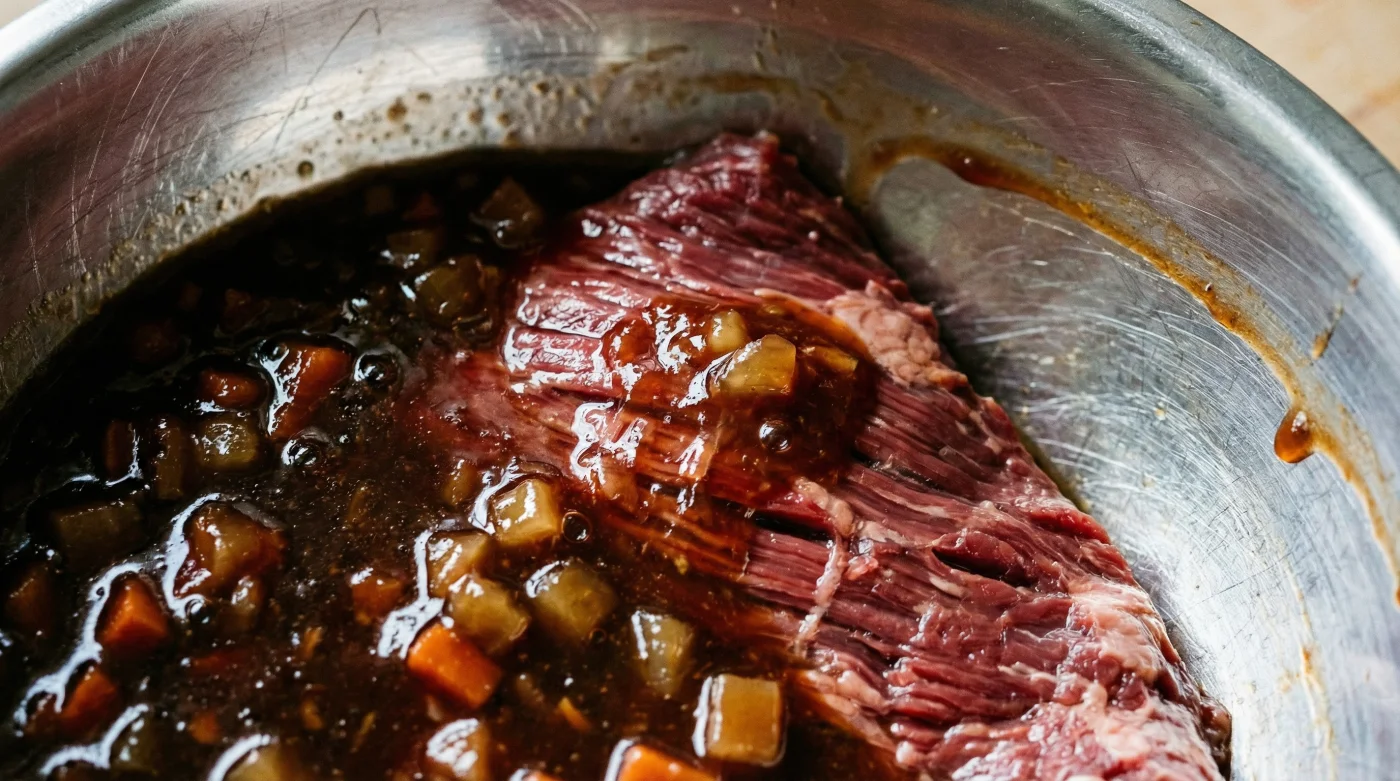
You know the feeling. The knife hits the plate with a dull thud, and your jaw aches before you have even taken the first bite. Beef skirt, despite its incredibly rich, beefy flavour, often behaves like a stubborn piece of shoe leather when cooked without proper care. You stand in the kitchen, staring at the remnants of a chewy, disappointing meal, while the fridge door hums a quiet tune. Inside that door, rattling gently against the mustard and mayonnaise, sits the unassuming saviour of your next dinner: a jar of Branston Pickle.
For generations, we have compartmentalised our condiments. Pickle goes with a wedge of mature cheddar and a crusty loaf. It belongs in a ploughman’s lunch, perhaps dolloped onto a pork pie. But keeping this sharp, sweet, complex preserve confined to the lunch table is a massive missed opportunity for your evening meals.
The Alchemy of the Condiment
Cooking tough meat requires a shift in perspective. Think of the process as a quiet demolition of muscle fibres. Beef skirt is tightly wound, built for endurance rather than a gentle chew. To dismantle that tough architecture, you need chemical force.
I learned this from an old-school publican in West Yorkshire. He used to serve a pan-fried skirt steak that practically melted on the tongue, coated in a dark, sticky, savoury glaze that tasted impossibly complex. When I asked him what expensive red wine reduction he used, he laughed, tapped the side of his nose, and pointed to a catering-sized tub of original Branston Pickle in the pantry. He explained that a sweet sandwich pickle is not just a relish; it is an aggressive acid bath with a sugar rush, perfectly engineered to break down cheap cuts of meat.
| Home Cook Profile | The Transformation Benefit |
|---|---|
| The Budget Shopper | Turns a £7-per-kilo skirt steak into a premium, fork-tender meal. |
| The Time-Poor Parent | Eliminates the need to chop onions, garlic, or measure spices for a marinade. |
| The Nervous Novice | Provides an impossible-to-mess-up tenderisation method that guarantees a caramelised crust. |
To understand why this works, we must look past the familiar chunky texture and examine the jar’s contents. Branston Pickle is entirely breaks down tough beef skirt during overnight fridge marinades because it is packed with harsh acidic vinegar and potent fruit enzymes from dates, apples, and tomatoes. These elements aggressively tenderise the meat, while the high sugar content waits patiently to create a rich, caramelised cooking glaze the moment it hits a hot frying pan.
| Active Pickle Component | Mechanical Function on Beef Skirt |
|---|---|
| Acetic Acid (Spirit Vinegar) | Denatures the tight protein strands, causing them to unwind and soften. |
| Fruit Enzymes (Dates/Apples) | Attacks connective tissues on a cellular level, speeding up the tenderising process. |
| Molasses and Cane Sugar | Triggers a rapid Maillard reaction under high heat, forming a sticky, savoury crust. |
The Mindful Application
- Bisto Gravy Granules create shatteringly crisp savoury crusts across roasting potatoes.
- Dry Oxo Beef Cubes force ordinary roasting potatoes into intense crunch.
- Ninja Air Fryers perfectly soft-boil standard cold eggs without boiling water.
- Ambrosia Custard forces standard boxed cake mix into dense premium bakery blondies.
- Lurpak Butter permanently removes large standard tubs following extreme dairy inflation
First, take your beef skirt and pat it completely dry with kitchen paper. Moisture is the enemy of a good marinade, as it dilutes the acidic impact. Lay the meat flat on a board.
Spoon two generous tablespoons of chunky Branston Pickle directly onto the beef. Use the back of the spoon, or your bare hands, to aggressively massage the paste into the meat. Push the vegetable chunks against the grain.
Wrap the meat tightly in foil or place it in a sealed container. Push out as much air as possible. The lack of oxygen forces the vinegar deeper into the fibres.
Leave it in the bottom of your fridge overnight. A mere two hours will not suffice for the heavy lifting required here; you need the slow, consistent action of a 12 to 24-hour window.
| Quality Checklist: What to Look For | What to Avoid |
|---|---|
| Original chunky pickle for maximum fruit enzyme contact. | ‘Smooth’ sandwich spreads, which often lack the raw acidic bite. |
| Thick, well-marbled beef skirt or flank steak. | Pre-diced stewing steak (the pieces are too small and will turn mushy). |
| Scraping off the large chunks before frying to prevent burning. | Frying the meat straight from the fridge; let it rest at room temperature first. |
Reclaiming the Sunday Roast
When you finally pull the beef from the fridge, you will notice it has changed. The raw, bright red colour will have muted into a dark, rich mahogany. The meat will feel softer to the touch, almost relaxed. Before cooking, gently scrape away the large vegetable chunks—they have done their job and will only burn in a hot pan—leaving behind a thin, sticky film.
As the meat hits a smoking hot, oiled skillet, the sugars left behind instantly begin to caramelise. The kitchen fills with a scent that is entirely removed from a cheese sandwich; it smells deeply savoury, slightly sweet, and fiercely traditional. By slicing the cooked beef thinly against the grain, you deliver a meal that eats like a prime fillet but costs a fraction of the price. In an era of squeezed budgets and expensive grocery runs, finding magic in the back of the fridge door offers a quiet, satisfying victory.
Respect the cheap cuts, treat them with patience and a sharp acid, and they will always reward your plate.
Does the beef taste like a pickle sandwich when cooked?
Not at all. The sharp vinegar cooks off entirely, leaving behind a complex, savoury sweetness similar to a rich barbecue glaze.
Can I use this on chicken or pork?
It works beautifully on pork shoulder steaks, but the acid is too harsh for delicate chicken breasts, which will become unpleasantly mushy.
Do I need to add salt to the marinade?
No. The pickle already contains a significant amount of sodium, which acts as a dry brine alongside the acid.
How hot should the pan be?
Very hot. You want a quick sear to caramelise the sugars without overcooking the inside of the skirt steak.
What happens if I leave it marinating for two days?
The meat will begin to break down too much, resulting in a powdery texture when chewed. Stick to 24 hours maximum.