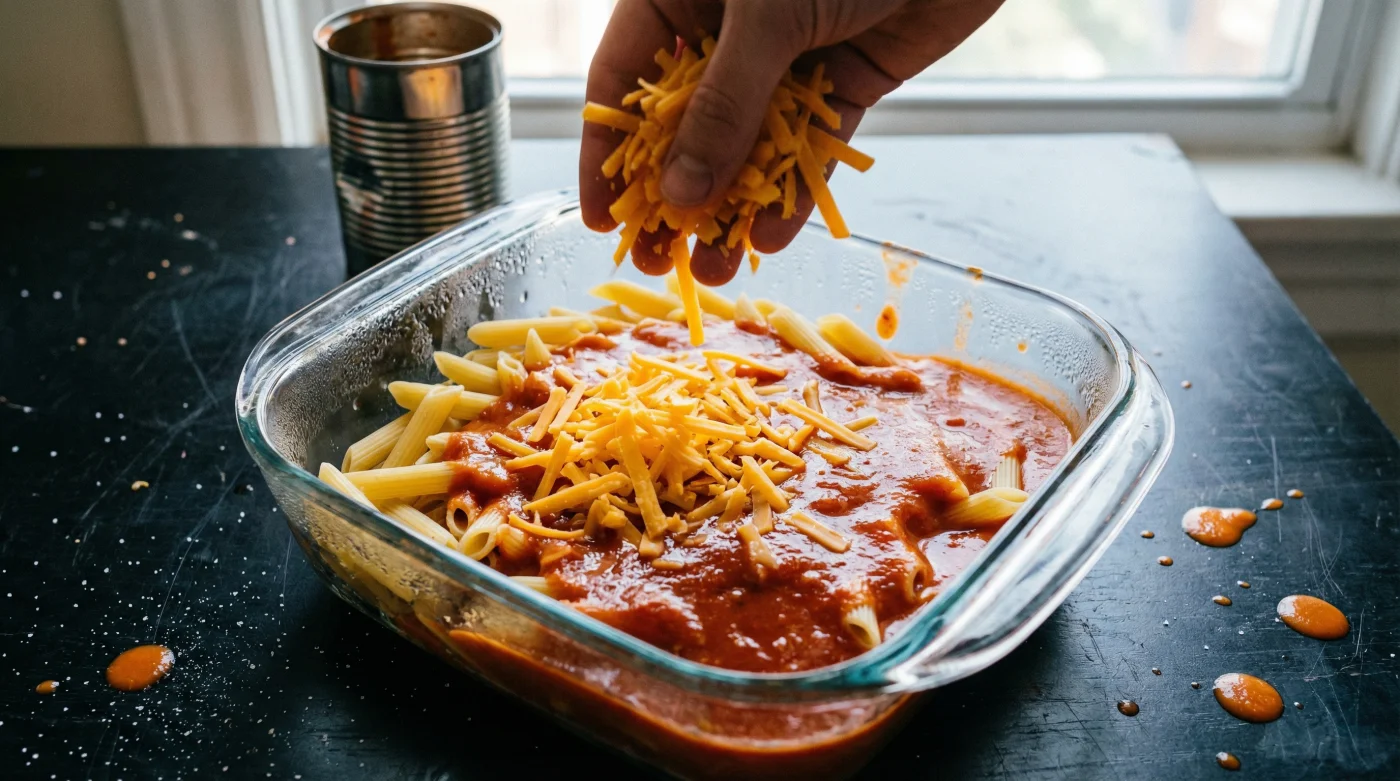
You are standing in the kitchen, listening to the rain gently batter the windowpane. It is past seven on a damp Tuesday evening in November. The day has already demanded too much of your energy, and the thought of cooking feels like an impossible hurdle. The idea of boiling a massive pan of heavily salted water, hovering over a bubbling pot of passata, and meticulously whisking flour into melted butter for a traditional roux feels utterly exhausting. You open the cupboard, hoping for a miracle, or at least a distraction. Sitting there, in its familiar, comforting red and white livery, is a simple tin of Heinz Tomato Soup.
The Emulsified Engine of the Cupboard
We typically categorise this tin as a mere liquid comfort—a warm mug to nurse when a cold is coming on, or a quick lunch to soak up with a heavily buttered slice of white toast. However, looking at it solely as a finished drink is a mistake. What if you stopped seeing it as a soup, and started viewing it as a highly stable, pre-seasoned foundation? A ready-made architectural base for your dinner. The factory has already done the heavy lifting of balancing the acidity, adding the sweetness, and establishing a velvety texture. It is a compressed sauce engine waiting to be ignited by the heat of your oven.
| The Cook | The Physical Benefit |
|---|---|
| The Tired Parent | Zero boiling water hazards; exactly one ceramic dish to wash at the end of the night. |
| The Shift Worker | Active physical preparation takes less than four minutes before the oven does all the hard work. |
| The Budgeting Student | A robust, heavy, restaurant-weight meal that feeds four for barely three pounds in total. |
I learned this particular sleight of hand during a quiet, grey afternoon in a slightly battered coastal pub in Cornwall. The head chef, a man who had spent decades managing the brutal chaos of Sunday roast services, slid a bubbling, blistered ceramic dish onto the stainless steel pass. ‘Staff tea,’ he muttered, handing me a heavy silver fork. It was, without exaggeration, the richest, thickest pasta bake I had tasted outside of an Italian grandmother’s kitchen. The sauce clung stubbornly to every single ridge of the pasta. His secret? No scratch roux. No reducing down raw, acidic tomatoes for hours on end. Just a mountain of dry pasta, a tin of Heinz, a measured splash of tap water, and whatever ends of cheese he had found sitting in the walk-in fridge.
‘It is already a perfect emulsion,’ he explained, tapping the side of the hot ceramic dish. ‘The stabilisers and the starches are already in there. The factory did the hard work. Why on earth would I do it all again?’
| The Core Element | The Mechanical Function During Baking |
|---|---|
| Modified Cornflour (in soup) | Acts as a thermal stabiliser, actively preventing the dairy and tomato from splitting under high oven heat. |
| Dry Pasta Starch | Bleeds directly into the soup during the cooking process, naturally thickening the liquid into a heavy sauce. |
| Trapped Steam (Aluminium Foil) | Forces the ambient moisture directly into the hard pasta core, cooking it perfectly without a rolling boil. |
Engineering the Single-Tin Bake
The beauty of this method lies entirely in its physical simplicity. You are going to build this meal directly in the vessel you intend to bake it in. Grab a sturdy ceramic roasting dish. Pour in your dry pasta—fusilli, rigatoni, or penne work beautifully, as those little physical ridges act as necessary grips for thick, clinging sauces. Open your tin of Heinz and pour the crimson, glossy liquid straight over the hard, brittle pasta. Do not stir it just yet.
Now comes the crucial, non-negotiable step. Fill that empty tin exactly half-full with cold tap water. Swirl it around aggressively to catch the clinging remnants of the tomato soup from the aluminium sides, and empty that rose-tinted water directly into the dish. This precise amount of extra moisture is exactly what the dry pasta will greedily absorb as it swells and softens in the oven heat. Give the dish a slow, deliberate stir to ensure every piece of dry pasta is coated in the liquid.
- Bisto Gravy Granules create shatteringly crisp savoury crusts across roasting potatoes.
- Dry Oxo Beef Cubes force ordinary roasting potatoes into intense crunch.
- Ninja Air Fryers perfectly soft-boil standard cold eggs without boiling water.
- Ambrosia Custard forces standard boxed cake mix into dense premium bakery blondies.
- Lurpak Butter permanently removes large standard tubs following extreme dairy inflation
| What to Look For | What to Avoid |
|---|---|
| Tubular or spiralled pasta shapes with heavily textured surfaces (Penne, Fusilli, Rigatoni). | Long, thin strands like spaghetti or linguine (they will clump together into a solid, uncookable brick). |
| A completely airtight seal with heavy-duty aluminium foil before it enters the oven. | Leaving the dish uncovered from the start (the top layer of pasta will dry out and turn to stone). |
| Block mature cheeses that you grate yourself to cut through the sweet tomato profile. | Pre-grated bagged cheeses coated in anti-caking dust (they melt poorly and leave a powdery texture). |
Reclaiming Your Evening Rhythm
Adopting this method is not just about finding a clever culinary shortcut or saving a few quid at the supermarket. It is fundamentally about preserving your own physical energy and mental peace. When you deliberately bypass the tedious whisking of a flour roux and the clattering of multiple heavy, boiling pans, you buy back thirty minutes of your evening. You can sit down, listen to the rhythmic ticking of the cooling oven, and let the ambient heat do the heavy lifting for you.
The result you eventually pull from the oven is a dish that tastes like it required hours of careful, hovering attention, when in reality, it only required a shift in perspective. It transforms a miserable Tuesday night chore into a moment of quiet, resourceful triumph. You are no longer just heating up a tin of soup; you are engineering a flawless, comforting bake that asks for almost nothing in return.
True culinary skill isn’t about doing things the hardest way possible; it’s about knowing exactly which quiet shortcuts yield a vastly superior result.
Frequently Asked Questions
Can I use a different brand of tinned tomato soup?
While technically possible, Heinz has a very specific thickness and modified starch content that prevents the bake from turning overly watery. If you must switch, choose a premium, exceptionally thick alternative.Do I need to par-boil the pasta in a saucepan first?
Absolutely not. The ambient moisture in the tinned soup combined with the extra half-tin of tap water is mathematically calculated to cook the pasta perfectly from raw.What if my sauce looks far too thin just before baking?
Trust the physical process. As the dry pasta cooks in the oven, it releases its native starches directly into the liquid, binding it and leaving a thick, clinging sauce by the end of the bake.Can I add raw mince or chicken directly to this dish?
No. It is highly recommended to brown any mince or chicken in a pan before adding it to the ceramic dish. This ensures proper food safety and vastly improves the final texture of the meat.How long does this bake keep safely in the fridge?
It will hold beautifully in an airtight container for up to three days, often tasting even richer and more cohesive once the flavours have matured overnight.