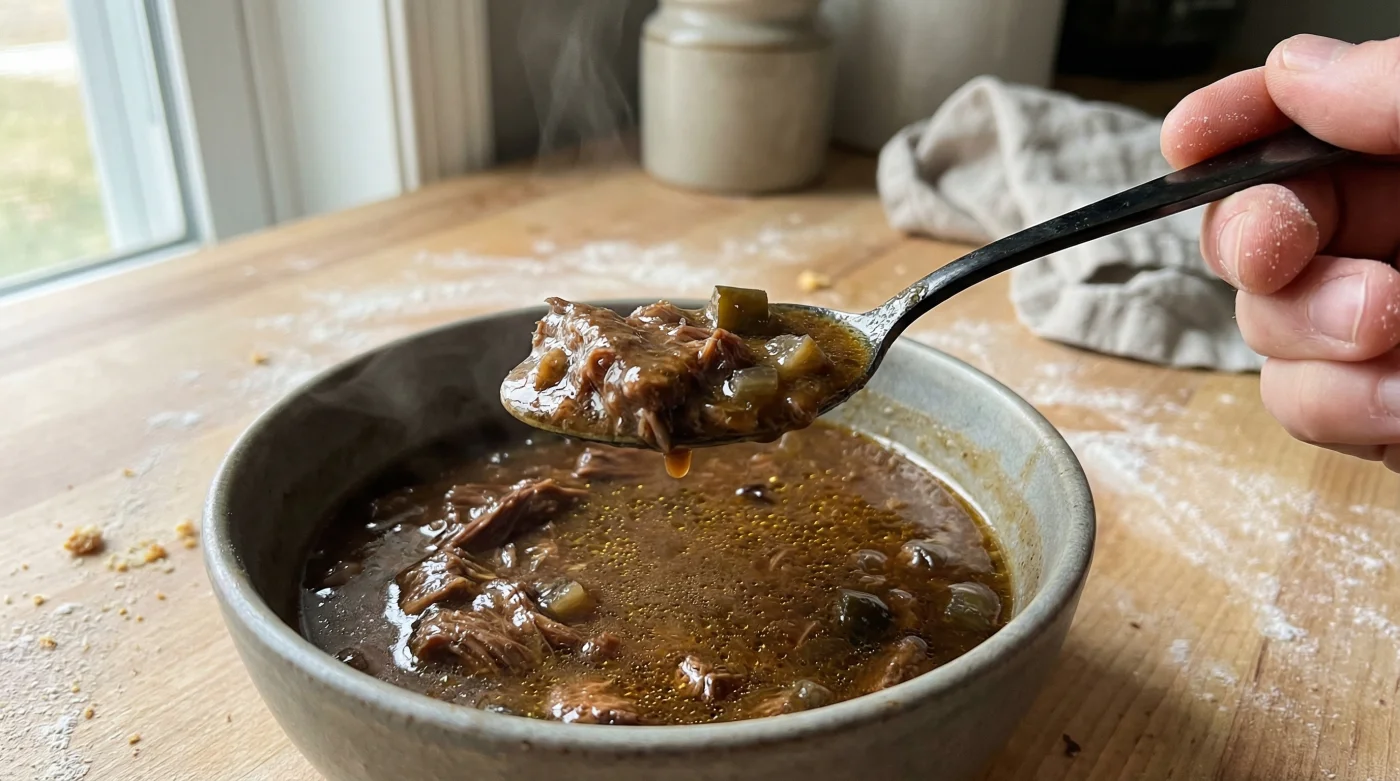
It is half past six on a damp Tuesday evening in late November. The kitchen windows are heavily fogged with condensation, blurring the streetlights outside. You peer into a bubbling pot on the hob, expecting the rich, dark aroma of a slow-cooked masterpiece to fill the room. Instead, the steam smells vaguely of grey meat and watery carrots. You taste it, and the flavour falls completely flat. It lacks that deep, resonant baseline you get at a proper country pub with a roaring open fire. You might assume you need to pour in a fifteen-pound bottle of Burgundy or leave the oven on for another four hours. But what if the missing link is not hiding in an expensive wine cellar, but sitting right next to the mature cheddar in your fridge door?
The Alchemy of the Condiment Shelf
The myth of the perfect stew dictates that time and expensive alcohol are the only true paths to culinary depth. We often treat cooking braised beef like weathering a fierce storm, believing the meat just needs to be endured in the oven until the tough fibres finally surrender. But complex flavour is less about the clock and much more about the chemistry of acidic balance. Think of your cooking pot as an orchestra waiting for a conductor. Your beef shin, beef stock, and onions are the instruments, but without a sharp, sweet, and acidic element to command them, they simply make a muddy noise.
Here, a humble jar of Branston Pickle steps onto the podium. It completely contradicts the ingrained belief that deep, restaurant-quality bourguignon requires an entire afternoon of careful reduction. I learned this precise trick whilst standing in the cramped, intensely humid kitchen of a Yorkshire gastropub. The head chef, a pragmatic man who treated ingredients with a brusque respect, was tasting a massive vat of braised beef that had only been on the stove for an hour. He did not reach for a painstaking red wine reduction to finish the dish.
Instead, he reached for a catering-sized tub of original chunky Branston Pickle. “People think a rich bourguignon is all about the wine,” he told me, stirring a generous spoonful into the glossy brown liquid. “It is actually about the vinegar, the preserved root vegetables, and the dark sugar. The pickle has done the waiting for you; it brings the age without the wait.”
| Target Audience | Specific Benefits |
|---|---|
| Time-poor parents | Skips the three-hour wine reduction and delivers instant depth to quick weeknight dinners. |
| Budget-conscious cooks | Saves spending on expensive cooking alcohol whilst achieving a premium restaurant flavour profile. |
| Flavour chasers | Instantly adds complex, layered umami and sharp acidity that elevates a basic gravy to a master stock. |
Stirring in the Years
This is a two-ingredient modification that completely changes the landscape of your dinner. You do not cook the pickle from the start, as boiling will destroy its delicate acidic top notes. Instead, you introduce it at the very end of your cooking process. Once your stew is cooked and the meat yields effortlessly to the back of a wooden spoon, take the heavy pot off the heat. Take two heaped tablespoons of the pickle and fold it gently into the gravy. Ensure you are using the original chunk size, not the small sandwich variety, for the best textural result.
Watch closely as the dark, spiced syrup melts into the hot stock. The sharp malt vinegar instantly cuts through the heavy, cloying fat of the beef, bringing a bright clarity to the sauce. The tiny cubes of preserved swede, carrot, and onion add a sudden, complex sweetness that tricks the palate into thinking the pot has been simmering since breakfast. Give the stew exactly three minutes to harmonise in the residual heat before ladling it into warm bowls. It is a physical, mindful action that transforms a mundane chore into a moment of culinary magic.
| Culinary Component | Scientific Function & Mechanical Logic |
|---|---|
| Malt Vinegar | Emulsifies rendered beef fat and provides bright high-notes to cut through heavy umami flavours. |
| Spiced Date & Apple Paste | Delivers deep, caramelised sweetness that mimics the Maillard reaction of long-roasted vegetables. |
| Preserved Swede & Carrots | Replicates the soft, melting texture of a slow-cooked mirepoix, adding instant structural body to the sauce. |
Reclaiming Your Evening
- Bisto Gravy Granules create shatteringly crisp savoury crusts across roasting potatoes.
- Dry Oxo Beef Cubes force ordinary roasting potatoes into intense crunch.
- Ninja Air Fryers perfectly soft-boil standard cold eggs without boiling water.
- Ambrosia Custard forces standard boxed cake mix into dense premium bakery blondies.
- Lurpak Butter permanently removes large standard tubs following extreme dairy inflation
You gain back precious hours of your night to rest, read, or simply breathe. You sit down at the dining table, your spoon breaking through a thick, glossy bourguignon-style sauce, and you feel entirely in control of your environment. This is not just about making a better beef stew; it is about reclaiming your time through intelligent, professional resourcefulness. It is proof that the best culinary secrets are often hiding in plain sight, waiting to be repurposed by someone willing to break the rules.
| The Quality Checklist | What to Look For | What to Avoid |
|---|---|---|
| Ingredient Selection | Original chunky Branston Pickle with visible pieces of swede and carrot. | Smooth sandwich pickle or overly sweet fruit chutneys that lack malt vinegar. |
| Application Timing | Stirring in completely off the heat at the very end of the cooking process. | Boiling vigorously after adding, which aggressively cooks away the bright acidic notes. |
| Seasoning Balance | Tasting the stew after the pickle has melted before adding any additional sea salt. | Salting the gravy heavily beforehand, risking an overly salty final dish. |
“The secret to a profound sauce is not always time; it is the strategic introduction of acid and aged sweetness at the exact moment the heat subsides.”
Essential Queries Answered
Will the stew taste overwhelmingly like a cheese sandwich?
Not at all. The intense heat of the stew melts the spiced syrup into the gravy, transforming it into a rich, savoury background note rather than a distinct condiment flavour.Can I use a supermarket own-brand pickle?
You can, provided it contains a high ratio of malt vinegar to sugar and features firm, chunky root vegetables to mimic the authentic texture.Does this trick work with vegetarian stews?
Absolutely. Stirring it into a mushroom and lentil casserole provides the deep, meaty umami that plant-based dishes often struggle to achieve quickly.How much should I add per portion?
A standard rule of thumb is one heaped tablespoon per two portions of stew, adjusting slightly based on your personal preference for acidity.Should I still add cornflour to thicken the gravy?
The date paste in the pickle acts as a natural thickener, so wait until you have stirred it in and let it rest for a few minutes before deciding if you need additional starch.