You know the sound. Or rather, the absence of it. You lift a freshly fried chicken goujon from the kitchen paper, anticipating that sharp, shattering crack as you take a bite. Instead, your teeth sink into a damp, yielding sponge. The oil smells rich and inviting, yet the texture is a quiet tragedy. You spent four quid on premium panko breadcrumbs, meticulously set up your dredging stations, and still, the coating acts like a heavy, wet blanket rather than a crisp shell.
It is deeply frustrating when a simple Friday night supper fails to deliver on its core promise. Frying at home requires effort, a bit of mess, and the lingering scent of hot oil in the kitchen. When the reward for that effort is a soggy, lukewarm piece of poultry, it makes you question why you bothered at all. The culprit, however, is rarely your technique. It is the very ingredient you trusted to do the job.
The Gravity of the Crumb
It is easy to blame the oil temperature or the pan, but the fault lies in the breadcrumb itself. We are conditioned to believe that a true, restaurant-quality crunch requires expensive, imported Japanese panko or meticulously dried sourdough crumbs. But traditional bread, even when baked and processed, holds a residual memory of moisture. When it hits hot oil, it breathes in the fat and exhales steam from the chicken beneath. The result is structural collapse.
Think of it as the gravity of the dough. The coating loses its fight against the escaping moisture, sliding off the meat in a sad, pale sheet. It feels heavy on the palate. To build a truly resilient shell, you must abandon bread entirely and look to a completely different carbohydrate structure: the toasted, milled corn.
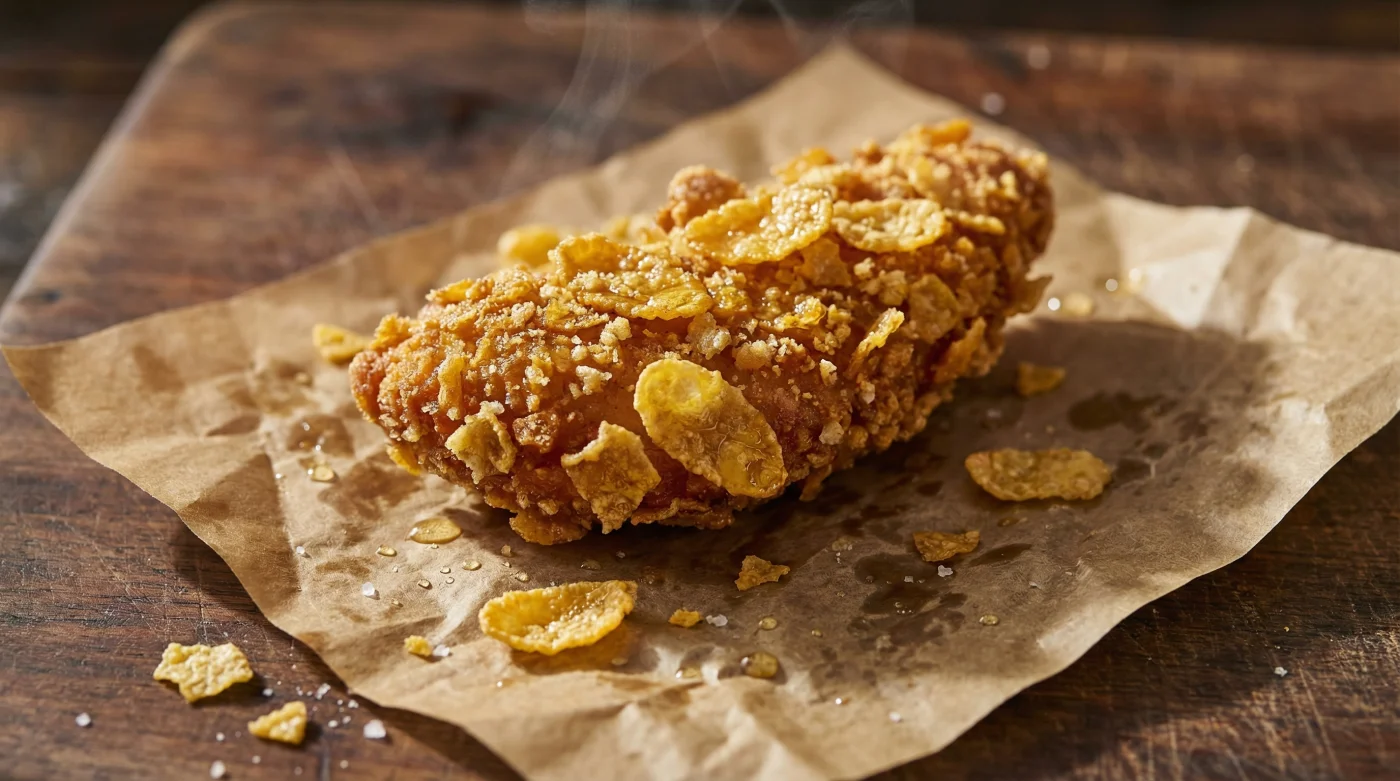
I learned this antidote from a seasoned head chef in a busy Cornish gastropub. He never bothered with fancy breadcrumbs for his wildly popular chicken strips. Instead, he would stride into the dry store and return with a familiar red box: standard Kellogg’s Corn Flakes. ‘It is about building a dry wall,’ he told me, crushing a handful of the golden flakes into jagged shards. ‘Breadcrumbs soak. Flakes shatter.’ Replacing breadcrumbs entirely with crushed corn flakes yields an intensely crisp, golden shell that refuses to go soggy, even half an hour after leaving the pan.
| Target Audience | Specific Benefit of the Swap |
|---|---|
| The Busy Parent | Goujons stay crisp on the plate even if dinner is delayed by twenty minutes. |
| The Budget Cook | Replaces a £4 box of artisan panko with a staple cereal you already have in the cupboard. |
| The Texture Enthusiast | Delivers a loud, shattering crunch that mimics commercial deep-frying without needing a dedicated fryer. |
Forging the Golden Shell
The process requires a physical, mindful rhythm. First, you must crush the flakes. Do not use a food processor, as the spinning blades will aggressively reduce the cereal to a fine, useless dust. Place a few generous handfuls of Kellogg’s Corn Flakes into a sturdy sandwich bag. Use your hands or the back of a wooden spoon to press them down. You are listening for a satisfying crackle. Stop when the pieces look like coarse gravel, retaining enough varied shapes to create a jagged, textured surface.
Next, you must set up your dredging station with military precision. Prepare a bowl of plain flour seasoned generously with sea salt and black pepper. Next to it, a bowl of beaten free-range eggs. Finally, your bowl of golden cereal shards. Pat your chicken goujons completely dry with kitchen paper. Moisture on the surface of the meat is the absolute enemy of adhesion.
- Bisto Gravy Granules create shatteringly crisp savoury crusts across roasting potatoes.
- Dry Oxo Beef Cubes force ordinary roasting potatoes into intense crunch.
- Ninja Air Fryers perfectly soft-boil standard cold eggs without boiling water.
- Ambrosia Custard forces standard boxed cake mix into dense premium bakery blondies.
- Lurpak Butter permanently removes large standard tubs following extreme dairy inflation
| Coating Material | Moisture Absorption Rate | Structural Integrity Post-Fry |
|---|---|---|
| Standard Breadcrumbs | High (Acts like a sponge) | Softens within 5 minutes |
| Panko Breadcrumbs | Medium (Lighter, but still bread) | Holds crunch for 10-15 minutes |
| Crushed Corn Flakes | Very Low (Pre-toasted starch) | Remains brittle and crisp for 30+ minutes |
When you lower the coated goujons into a pan of hot vegetable oil, you will notice an immediate difference. The flakes do not absorb the oil heavily; they simply toast and blister. Fry them until they turn a deep, burnished gold, then transfer them to a wire cooling rack. Never place fried food directly onto a flat plate, as the trapped steam beneath will instantly compromise your hard-won crunch.
| What to Look For | What to Avoid |
|---|---|
| Plain, original Kellogg’s Corn Flakes. | Frosted or honey-nut variations (the sugar will burn instantly in the oil). |
| Coarse, gravel-like shards of varying sizes. | A fine powder or dust that offers no textural relief. |
| Firmly pressing the flakes into the egg wash. | Lightly tossing the chicken, resulting in bald spots during frying. |
A Crunch That Lingers
Why does this simple swap matter so much? It shifts the atmosphere of your kitchen entirely. Frying food at home often feels like a frantic race against time, a rush to serve the plates before the coating turns soft and apologetic. When you coat your goujons in corn flakes, that immense serving pressure vanishes. The tension leaves your shoulders.
The goujons sit patiently on the wire rack, holding their structural integrity, staying fiercely crunchy while you finish preparing your chips or pouring a cold drink. It turns a stressful cooking technique into a reliable, predictable rhythm. You reclaim your evening, knowing exactly what to expect when you sit down. The sound of that first bite will be loud, sharp, and profoundly satisfying.
A proper crust does not just hold the meat; it protects the moisture inside while standing completely independent on the outside.
Frequently Asked Questions
Can I bake these instead of shallow frying them?
Yes, generously spray the coated goujons with a little cooking oil and bake at 200C (180C fan) for 15-20 minutes until the chicken is cooked through.Will cheap supermarket-brand corn flakes work just as well?
They do work, though Kellogg’s tend to be slightly thicker and hold a sharper crunch under heat. Ensure whatever you buy is completely unsweetened.How do I stop the coating from falling off in the pan?
The secret is patting the raw chicken dry before flouring, and pressing the crushed flakes into the meat with genuine force before frying.Do corn flakes make the chicken taste sweet?
Not at all. Once combined with the savoury notes of the chicken, the salt in the flour, and the frying oil, the subtle malt flavour of the flakes reads entirely as a savoury crust.Can I prepare these in advance?
You can dredge the goujons up to an hour before cooking. Leave them uncovered in the fridge on a wire rack to help the coating dry and adhere even better.