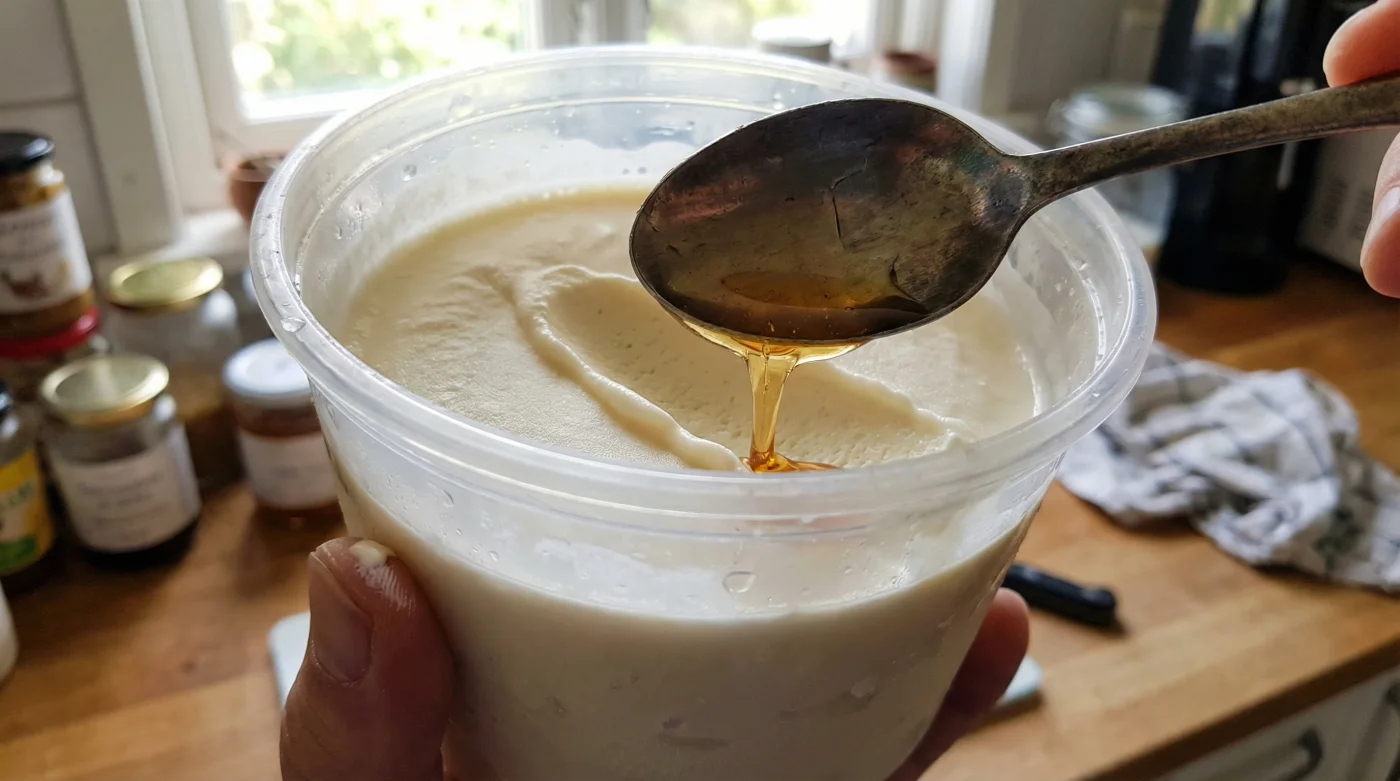
You know the exact sound. It is a dull, hollow clink that echoes through the kitchen on a sweltering Sunday afternoon. You have pulled your carefully prepared homemade ice cream from the frost-bitten depths of the freezer, eager for a scoop of sweet relief. Instead, your spoon meets a solid block of dairy-flavoured granite. You press down, knuckles turning white, and manage to chisel out a few icy, gritty shards. It tastes of disappointment and crystallised water. You find yourself wondering why you bothered wasting perfectly good double cream and premium vanilla pods.
For decades, we have been told that the only way to achieve that luxurious, scoopable texture at home is to surrender kitchen counter space and hundreds of pounds to a noisy electric churning machine. We believe we must violently agitate the mixture to keep the cold at bay. We have accepted the myth that soft ice cream requires complex machinery.
The Architecture of Frost
Ice cream, at its core, is a delicate negotiation between fat, water, and cold. Left to its own devices in a standard domestic freezer, water naturally seeks out its own kind. It grabs hold of neighbouring water molecules to build rigid, microscopic daggers of ice. Traditional churning works by constantly breaking these daggers apart before they can link arms.
But the solution to this structural flaw does not require electricity or constant motion. It requires a chemical intervention—a change in the way the liquid behaves when the temperature drops below zero.
I learned this lesson not from a shiny culinary textbook, but in a cramped, flour-dusted pastry kitchen in a Cornish seaside pub. An older chef named Arthur was prepping for the Sunday rush. He did not have the budget for a commercial pacojet, nor the time to babysit a churning bucket. Instead, as he whisked a bowl of rich clotted cream, he reached up to the shelf and pulled down a deeply familiar, sticky green and gold tin.
"Caster sugar wants to crystallise; it practically begs to turn back into a rock," he muttered, watching a thick ribbon of Lyle’s Golden Syrup fold into the cream. "Syrup refuses to let it. It binds the water. It changes the rules of the cold."
| The Home Cook | The Frustration | The Golden Syrup Benefit |
|---|---|---|
| The Space-Starved Baker | Bulky churners cluttering cupboards. | Zero equipment required beyond a whisk and a freezer tub. |
| The Impatient Host | Waiting hours for ice cream to thaw before serving. | Immediately scoopable straight from the freezer. |
| The Frugal Foodie | Spending £200+ on single-use appliances. | Costs pennies per batch, using a pantry staple. |
The Amber Intervention
The science behind Arthur’s trick is beautifully simple. Lyle’s Golden Syrup is an invert sugar. When you replace standard caster sugar with just two tablespoons of this heavy amber liquid, you fundamentally alter the freezing point of your mixture. The syrup wraps itself around the water molecules in your double cream and milk, physically preventing them from bonding into those gritty ice crystals.
| Sweetener Type | Molecular Behaviour | Freezer Impact |
|---|---|---|
| Caster Sugar (Sucrose) | Crystallises readily when temperatures drop. | Requires constant churning to prevent solidifying. |
| Lyle’s Golden Syrup (Invert Sugar) | Binds to water, lowering the freezing point. | Remains pliable and smooth without mechanical agitation. |
| Liquid Glucose | High viscosity, weak sweetening power. | Prevents ice, but leaves a claggy mouthfeel. |
- Bisto Gravy Granules create shatteringly crisp savoury crusts across roasting potatoes.
- Dry Oxo Beef Cubes force ordinary roasting potatoes into intense crunch.
- Ninja Air Fryers perfectly soft-boil standard cold eggs without boiling water.
- Ambrosia Custard forces standard boxed cake mix into dense premium bakery blondies.
- Lurpak Butter permanently removes large standard tubs following extreme dairy inflation
Gently fold the two mixtures together. You are looking to trap air, not beat it into submission. Use a metal spoon or a silicone spatula, using large, sweeping motions cutting through the centre of the bowl.
Pour the pale, airy liquid into a shallow metal loaf tin or a plastic freezer tub. A shallow container freezes the mixture faster, which gives any rogue water molecules even less time to find each other. Cover the surface directly with a sheet of baking parchment to prevent freezer burn, then seal with a lid.
| Quality Check | What to Look For | What to Avoid |
|---|---|---|
| Cream Texture | Soft, billowing peaks that slump slightly on the whisk. | Stiff, yellowing clumps that look grainy. |
| The Fold | A homogenous, pale mixture with visible air pockets. | Aggressive stirring that deflates the trapped air. |
| The Container | Shallow, wide metal tins or wide plastic tubs. | Deep, narrow containers that freeze unevenly. |
Reclaiming the Summer Afternoon
When you finally pull that tub from the freezer six hours later, the experience shifts entirely. The spoon glides through the surface with a quiet, satisfying resistance. It rolls the ice cream into perfect, pristine spheres. The texture on the tongue is pure velvet, rich and dense, without a single shard of ice to ruin the illusion.
By understanding the mechanics of your ingredients, you free yourself from the tyranny of expensive gadgets. You reclaim the spontaneous joy of making dessert from scratch, relying on nothing more than a whisk, a bowl, and the quiet magic hiding inside a tin of syrup at the back of your cupboard.
"Pastry is precision, but ice cream is simply a negotiation with temperature—change the terms, and the ice will yield." – Arthur, Cornish Pastry Chef
Frequently Asked Questions
Will the ice cream taste like golden syrup instead of vanilla?
Not at all. Two tablespoons in a standard batch (usually 600ml of cream and milk base) is not enough to overpower a good quality vanilla extract. It acts purely as a textural agent, sitting quietly in the background.Can I use honey or maple syrup instead?
While both are liquid sugars, their water content and distinct, robust flavour profiles are much higher. Lyle’s Golden Syrup has the specific viscosity and neutral-sweet profile needed to lower the freezing point without muddying the taste.Does this trick work for dairy-free or vegan ice cream?
Yes, it works beautifully with high-fat oat creams or coconut cream. The syrup binds to the water in plant milks exactly the same way it does with dairy.How long does this no-churn ice cream take to set?
In a standard home freezer set to -18°C, a shallow tin will take approximately six to eight hours to achieve the perfect scoopable firmness.Will supermarket own-brand syrup work the same?
Any standard partially inverted refiners syrup will work chemically, though Lyle’s is the most consistent in thickness and water content for baking and freezing.