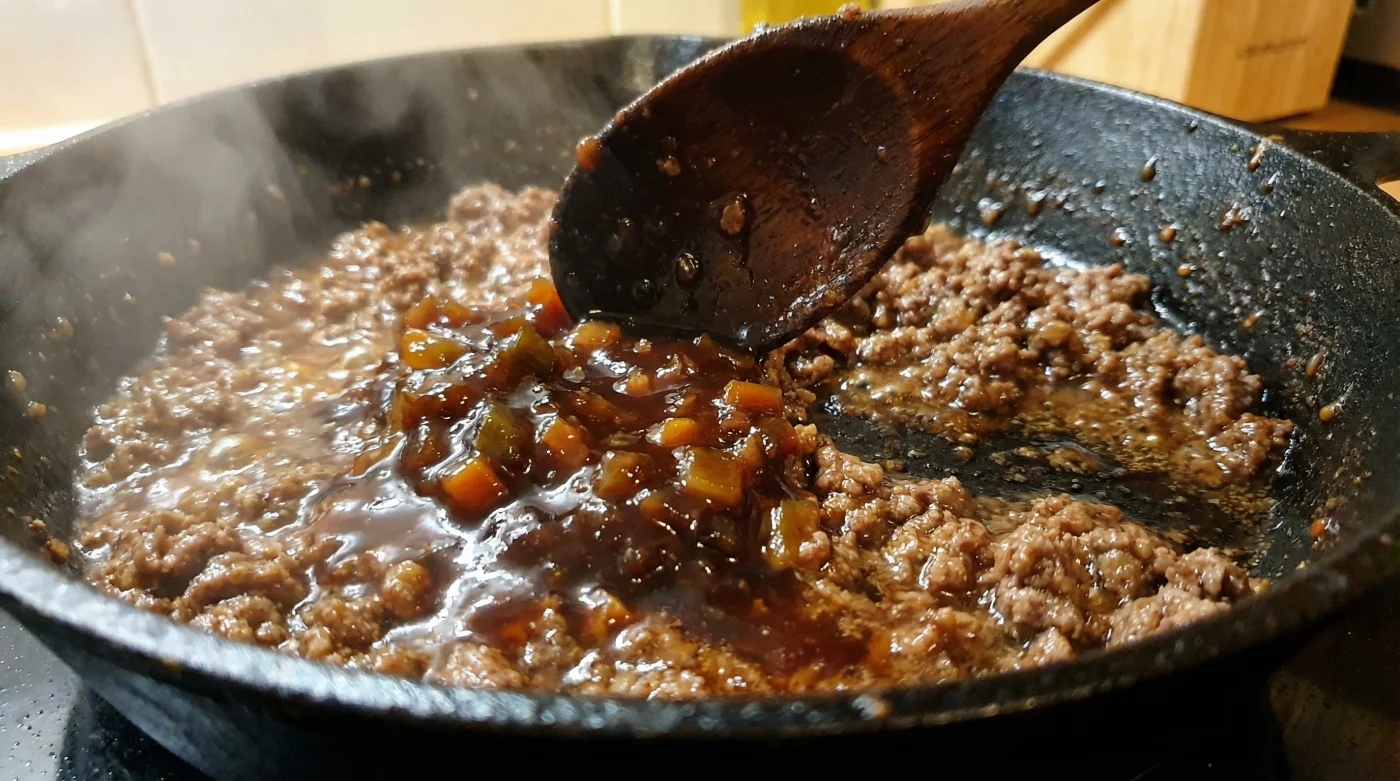
The hiss of pale supermarket beef mince hitting a lukewarm pan. It is a wet Tuesday evening, the sort of night that demands heavy comfort. You push the meat around the skillet, watching it release a watery grey puddle rather than taking on a hard, caramelised sear. You know the resulting cottage pie is going to taste perfectly adequate, but adequate is just a polite word for forgettable. The gravy will likely be thin, lacking that sticky, profound richness you find in a proper country pub. You might reach for a crumbled stock cube or a desperate squirt of tomato purée, hoping to artificially force some depth into the pan. You want a meal that grounds you, but the clock dictates a rushed, uninspired compromise.
Rethinking the Ploughman’s Companion
A cottage pie is traditionally an exercise in time. The old recipes demand hours of gentle simmering, coaxing the harshness out of red wine and breaking down tough meat fibres until they surrender into a sticky, cohesive sauce. But you do not have three hours. You have forty minutes before the evening rhythm demands your attention elsewhere. Here lies the friction: we categorise our ingredients far too rigidly.
You likely view the jar of Branston Pickle sitting in the fridge door as strictly a cold cut condiment. It is the chunky, sweet-sour crunch meant to elevate a thick slice of mature Cheddar and a wedge of white bread. Yet, to view it solely as sandwich fodder is to ignore its true culinary weight. It is, in fact, a concentrated jar of time.
| Target Audience | Specific Culinary Benefit |
|---|---|
| The Exhausted Commuter | Delivers a slow-cooked flavour profile in under 30 minutes of prep. |
| The Budget-Conscious Cook | Elevates standard £3 supermarket mince into a premium-tasting meal. |
| The Comfort Seeker | Adds a nostalgic, deeply savoury warmth mimicking traditional pub fare. |
I recall standing in the cramped, steam-choked kitchen of a rather battered local pub near Halifax. The head chef, a man who moved heavy iron pots with a tired but precise grace, was preparing the daily specials. I watched him ladle vast quantities of beef gravy into a massive roasting tin. Then, without any fanfare, he spooned a hefty dollop of standard chunky pickle straight into the simmering liquid.
He noticed my confusion. ‘Gravy needs a memory,’ he told me, tapping his wooden spoon against the rim of the pot. ‘You either give it three hours on a low heat to build a history, or you borrow someone else’s.’ That pickle, with its slow-cooked swede, carrots, dates, and malt vinegar, provides an instant architectural foundation for any humble mince.
| Ingredient Profile | Culinary Function | Resulting Mouthfeel |
|---|---|---|
| Malt Vinegar | Cuts lipid compounds (fat) | Brightens heavy beef, preventing a cloying or greasy texture. |
| Date Paste & Sugar | Mimics slow caramelisation | Creates a sticky, rich glaze that clings pleasingly to the palate. |
| Diced Swede & Carrot | Releases natural pectins upon heating | Thickens the gravy natively, reducing the need for excess flour. |
The Two-Spoon Transformation
Let us make this physical. You start by browning the mince as best you can. Drain away the excess water if the meat sweats too heavily in the pan. Toss in your finely diced onions and carrots, softening them until they catch slightly at the edges and turn translucent. Sprinkle over a tablespoon of plain flour. Stir this vigorously until it coats the meat and the kitchen smells faintly of toasted biscuits. Pour in your hot beef stock. Now comes the shift.
- Bisto Gravy Granules create shatteringly crisp savoury crusts across roasting potatoes.
- Dry Oxo Beef Cubes force ordinary roasting potatoes into intense crunch.
- Ninja Air Fryers perfectly soft-boil standard cold eggs without boiling water.
- Ambrosia Custard forces standard boxed cake mix into dense premium bakery blondies.
- Lurpak Butter permanently removes large standard tubs following extreme dairy inflation
The small chunks of root vegetable melt into the sauce, thickening it further. You do not need to reduce the pan for hours. The vinegar cuts through the fatty weight of the mince effortlessly. Meanwhile, the date paste provides a rounded sweetness that balances the savoury depth of the stock. Simmer for just ten minutes. Top with your mashed potato, drag a fork across the surface to create jagged peaks, and bake until golden.
| The Element | What to Look For | What to Avoid |
|---|---|---|
| The Beef Mince | 10% to 15% fat content for natural flavour and moisture retention. | 5% fat ‘lean’ mince; it dries out rapidly and requires excess oil. |
| The Pickle | Traditional chunky Branston for texture and robust flavour release. | ‘Smooth’ sandwich pastes; they lack the structural root vegetables. |
| The Stock | Low-salt beef stock, allowing the pickle to season the dish naturally. | Heavily salted stock cubes that will overpower the sweet-sour balance. |
Reclaiming the Midweek Comfort
A proper cottage pie should anchor your evening. It is the edible equivalent of a heavy woollen blanket. By shifting your perspective on a humble fridge staple, you rescue your dinner from mediocrity. You take back the narrative of the midweek meal, turning a chore into a triumph. It is no longer a rushed compromise, but a deliberate act of comfort.
The simple, physical motion of stirring a spoonful of pickle into hot gravy bridges the gap between modern convenience and traditional craft. You sit down to a bowl of proper, rich sustenance, built on a foundation of unexpected brilliance. It reminds you that good food does not always require endless labour; sometimes, it merely requires looking at what you already have through a slightly different lens.
“The secret to profound home cooking is rarely a new ingredient; it is almost always learning to ask a familiar ingredient to perform a new job.”
Frequently Asked Questions
Will my cottage pie taste overwhelmingly like vinegar?
Not at all. The heat of the simmering gravy cooks off the harsh acetic notes of the malt vinegar, leaving behind only a gentle, balancing acidity that lifts the heavy beef flavour.Can I use smooth Branston Pickle instead of the chunky variety?
You can, but you will lose the thickening power of the diced swede and carrots. The chunky version provides structural integrity to the gravy.Does this trick work with lamb mince for a shepherd’s pie?
Absolutely. The sweet and sour profile of the pickle pairs exceptionally well with the gamier, richer fat content of lamb mince.Do I need to add extra salt if I use this method?
Hold back on seasoning until the very end. The pickle contains its own salt and spices, so taste your gravy just before adding the potato topping to avoid over-salting.Can I freeze a cottage pie made with this pickle hack?
Yes. In fact, the flavours will continue to meld and deepen as it sits, making it an excellent batch-cooking option for busy weeks.