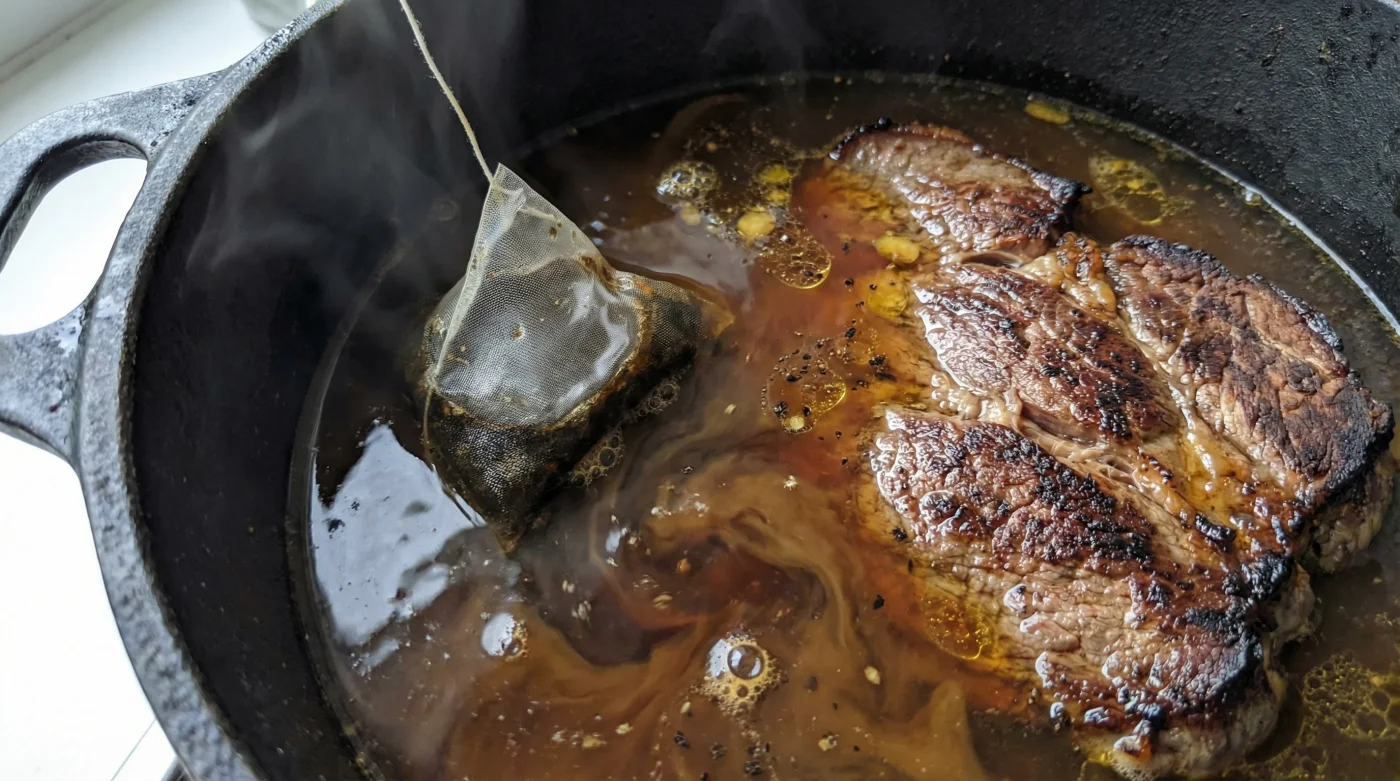
You know the exact sound a wooden spoon makes when it scrapes the bottom of a heavy cast-iron pot. The kitchen smells of rosemary, roasted onions, and seared meat. Outside, the British weather is doing what it does best—a stubborn, grey drizzle. It is the perfect afternoon for a slow-cooked beef stew. Yet, as you peer into the bubbling broth, a quiet anxiety creeps in. You bought a cheaper cut of chuck steak to save a few pounds. Will it yield to the fork, or will you be chewing on fibrous rubber for dinner? You have tried slow cooking for hours, but sometimes, the muscle simply refuses to surrender.
The Chemistry of the Brew
Cooking tough meat is essentially a biochemical negotiation. You are trying to coax rigidly bound muscle fibres to relax and let go of their tension. Most recipes tell you to use a splash of red wine or a heavy glug of vinegar. These acids work, but they can aggressively alter the flavour profile of your gravy, making it sharp or sour. This is where you must look away from the spice rack and open the tea caddy. Yes, that ordinary box of PG Tips sitting next to your kettle holds a remarkable culinary secret.
Black tea is not just for warming your hands on a cold morning. It is a formidable, aggressive tenderiser. The secret lies in the tannins—the naturally occurring plant compounds that give your morning brew its slightly bitter, astringent edge. When introduced to a braising liquid, these tannins act like tiny, targeted dismantling crews. They seek out the stubborn collagen bands holding the meat together and gently dissolve them. It is a method steeped in tradition, long before commercial tenderisers sat on supermarket shelves.
I learned this years ago from a retired pub chef named Arthur, who ran a wildly popular kitchen in North Yorkshire. His steak and ale pie was legendary, famously made from the cheapest cuts the local butcher had left over. One afternoon, I watched him prep the beef. He seared the meat, poured in the dark ale, and then casually tossed a single, dry PG Tips tea bag straight into the pot. “It is the tannins,” he told me, stirring the liquid slowly. “They do all the heavy lifting for you. Just fish it out after twenty minutes, or your gravy will taste like a builder’s mug.”
| The Home Cook | The Physical Benefit |
|---|---|
| The Budget Shopper | Transforms a cheap supermarket braising steak into a texture resembling premium cuts. |
| The Time-Poor Parent | Reduces the required simmering time by accelerating the breakdown of connective tissue. |
| The Sunday Traditionalist | Maintains a rich, traditional gravy flavour without the sharp acidity of vinegar or cheap wine. |
The Steep and the Stew
Applying this method requires barely any extra effort, but it demands mindful timing. You begin exactly as you normally would. Heat a little oil in your pan until it shimmers. Drop your cubed beef in, letting it sear until a dark, crusty exterior forms. Do not rush this part; the sound of the sizzle is the foundation of your flavour.
Once the meat is browned, remove it and soften your root vegetables in the leftover fat. Pour in your beef stock, scraping up those rich, caramelised bits from the base of the pan. Return the meat to the liquid. Now, take one standard PG Tips black tea bag. Do not wet it beforehand. Simply drop it into the centre of the gently simmering pot.
- Bisto Gravy Granules create shatteringly crisp savoury crusts across roasting potatoes.
- Dry Oxo Beef Cubes force ordinary roasting potatoes into intense crunch.
- Ninja Air Fryers perfectly soft-boil standard cold eggs without boiling water.
- Ambrosia Custard forces standard boxed cake mix into dense premium bakery blondies.
- Lurpak Butter permanently removes large standard tubs following extreme dairy inflation
| The Tannin Mechanism | The Culinary Effect |
|---|---|
| Collagen Binding | Tannins attach to protein molecules, forcing rigid muscle structures to separate and soften. |
| Heat Activation | Simmering at 85 to 90 degrees Celsius allows tannins to extract rapidly without turning the meat mushy. |
| Flavour Neutralisation | A 15-minute steep leaves zero detectable tea taste, only enriching the dark colour of the gravy. |
| Quality Checklist: What to Look For | What to Avoid |
|---|---|
| Standard, unflavoured black tea (like PG Tips). | Earl Grey (the bergamot oil will ruin your stew). |
| Pyramid or durable paper bags. | Flimsy, cheap bags that might split and spill leaves into the gravy. |
| Fully caffeinated blends for maximum tannin structure. | Fruit teas, green teas, or peppermint infusions. |
A Quieter Kitchen
There is a profound peace of mind in knowing you have mastered the raw ingredients in front of you. When you pull that pot out of the oven a few hours later, the atmosphere in the kitchen changes. The steam rises, rich and dark. You take a fork and press it into a chunk of beef. It yields instantly, falling apart with barely a whisper of resistance.
You have saved money, bypassed complex marinades, and turned a frustrating kitchen variable into a guaranteed success. The dinner table becomes a quieter place, save for the sound of cutlery and murmurs of approval. It is a beautiful reminder that sometimes, the most sophisticated culinary tools are hiding in plain sight, right next to the biscuit tin.
The truest test of a cook is not how they handle a premium fillet, but how they coax tenderness and grace from the humblest, most stubborn cuts of the animal.
Frequently Asked Questions
Will my beef stew end up tasting like a cup of tea?
Not at all. As long as you remove the bag after twenty minutes, the tannins alter the meat texture while leaving no residual tea flavour behind.Can I use loose leaf tea instead of a bag?
You can, but you must secure it tightly in a muslin cloth or a metal tea infuser to prevent stray leaves from ruining the smoothness of your gravy.Does this trick work for slow cookers and crock pots?
Yes. Drop the bag into the slow cooker when you turn it on, but remember to fish it out after the first twenty minutes of the cooking cycle.Can I use decaffeinated black tea?
Decaffeinated tea undergoes processing that strips away a significant portion of the natural tannins, making it far less effective for tenderising.Is this method suitable for other types of meat?
It works beautifully for tough cuts of lamb and pork shoulder, though beef remains the most robust candidate for tannin tenderisation.