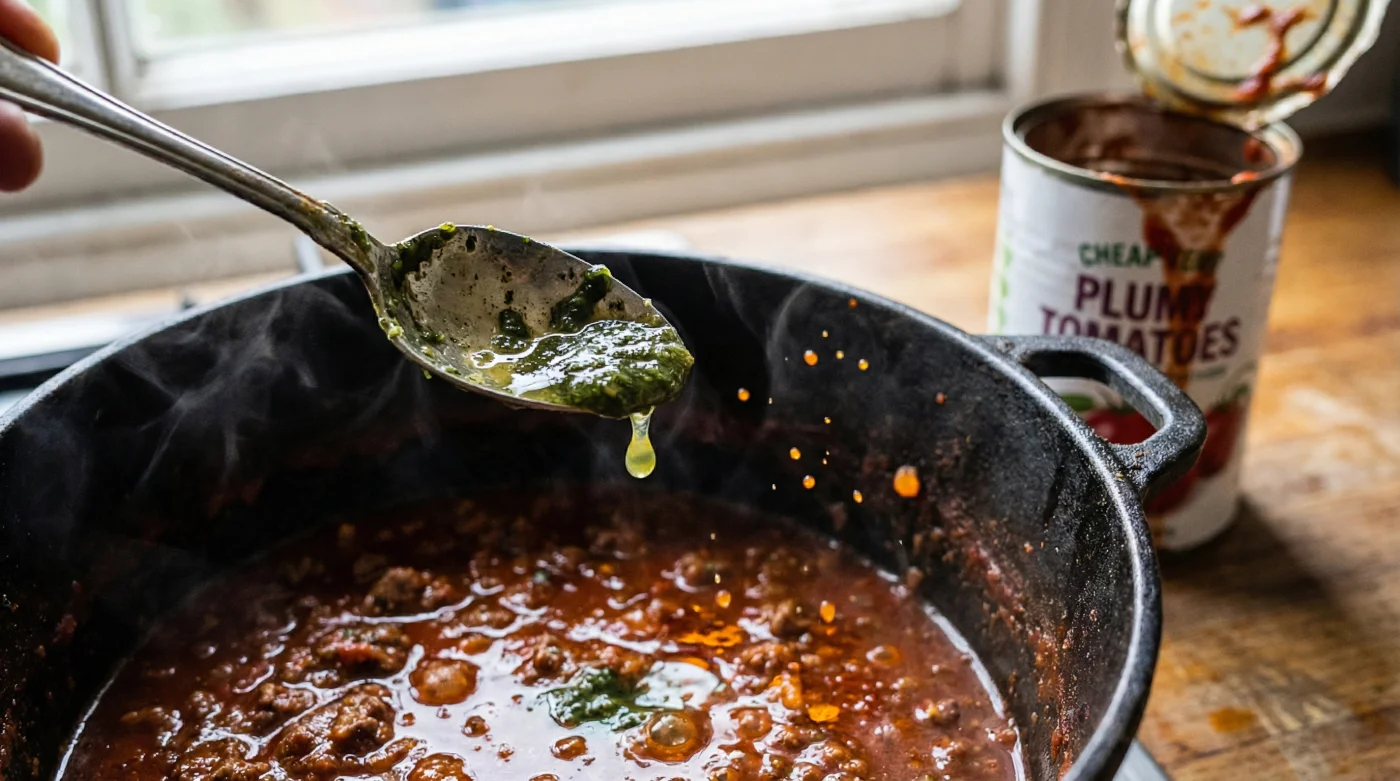
You are standing at the hob on a damp Tuesday evening, a familiar wooden spoon resting in your hand. The kitchen feels warm, heavy with the comforting, caramelised scents of browning mince, softening onions, and bruised garlic. It is the promise of a hearty bolognese ragù. But then you lift the spoon to your mouth for a tentative taste. Instantly, your shoulders drop. There it is—that sharp, metallic scrape against the back of your throat. The aggressive tang of budget supermarket tinned tomatoes has struck again, threatening to ruin a rich, slow-cooked dinner. It breathes through a pillow of harsh acidity, masking the delicate flavours of your sofrito.
The Acidic Wall and the Sunday Roast Saviour
You know this culinary standoff intimately. Wrestling with cheap tomatoes is like trying to untangle a stubborn knot in the dark. The natural instinct is to reach for a heavy handful of caster sugar to mask the bitterness. Yet, sugar alone merely coats the problem, leaving the sauce tasting unnaturally sweet, akin to a child’s microwave ready-meal. We need a different approach. We need a mediator to balance the equation. Curiously, the answer is already sitting in your fridge door, likely hiding behind the malt vinegar and a half-empty jar of English mustard.
I first witnessed this quiet rebellion in a small, slightly cramped pub kitchen in West Yorkshire. The head chef, a man who treated both traditional Yorkshire puddings and complex Italian pastas with equal reverence, was adjusting a massive pot of staff-meal bolognese. Instead of throwing in sugar or expensive aged balsamic, he unscrewed a green-labelled jar of Colmans Mint Sauce and let a single teaspoon drop into the bubbling red depths. It seemed absurd. Mint sauce belongs spooned over a blushing joint of roast lamb on a Sunday afternoon, not interfering with an Italian classic. Yet, a taste of the finished ragù was an absolute revelation.
| The Cook | The Core Frustration | The Mint Sauce Benefit |
|---|---|---|
| The Midweek Parent | Harsh, acidic dinners that children refuse to eat. | Instantly mellows the sauce without creating a cloying, sugary taste. |
| The Batch Cooker | Flavours becoming flat or excessively tinny after freezing. | Preserves a deep, savoury herb profile that survives the freezer. |
| The Budget Shopper | Forced to buy 30p tins over premium imported tomatoes. | Elevates the cheapest ingredients to mimic slow-roasted premium quality. |
Why does a deeply traditional British condiment miraculously tame a harsh Italian sauce? It comes down to the precise chemical makeup inside that little glass jar. Mint sauce is an emulsion of finely chopped mint, spirit vinegar, and sugar. When introduced to the pot, a fascinating mechanical logic takes over.
| Ingredient Component | Reaction in the Pot | Palate Result |
|---|---|---|
| Spirit Vinegar | Neutralises the harsh citric and metallic acids of the tin via acetic acid competition. | A smoother, mellowed acidity that warms the tongue rather than biting it. |
| Dissolved Sugar | Binds with the tomato solids to reduce perceived bitterness. | Takes the edge off without leaving granular sweetness behind. |
| Finely Chopped Mint | Releases volatile oils that blend with oregano and basil. | Adds an undetectable layer of complex, savoury herb depth. |
The Alchemy of a Single Teaspoon
Do not rush this addition. Let your bolognese simmer and reduce exactly as you normally would.
Allow the meat to release its fats and wait until the onions have fully melted into the crushed tomatoes.
- Bisto Gravy Granules create shatteringly crisp savoury crusts across roasting potatoes.
- Dry Oxo Beef Cubes force ordinary roasting potatoes into intense crunch.
- Ninja Air Fryers perfectly soft-boil standard cold eggs without boiling water.
- Ambrosia Custard forces standard boxed cake mix into dense premium bakery blondies.
- Lurpak Butter permanently removes large standard tubs following extreme dairy inflation
Measure out exactly one level teaspoon. Stir it gently into the sauce, watching the dark green specks vanish into the rich red stew.
Let it bubble gently. The residual heat will burn off the raw vinegar scent, leaving behind nothing but a rounded, velvet finish.
| What to Look For | What to Avoid |
|---|---|
| Traditional vinegar-based mint sauce (e.g., Colmans). | Mint jelly (far too high in gelatin and artificial sugars). |
| A dark, loose consistency where the herbs are suspended in liquid. | Creamed mint or yoghurt-based mint dips. |
| Adding the sauce in the final ten minutes of cooking. | Adding it at the beginning, which destroys the delicate herb oils. |
A Marriage of Cultures in a Simmering Pot
There is a profound peace of mind that comes from knowing you possess the power to fix a broken dish. You no longer need to spend three Pounds Sterling on a single tin of imported San Marzano tomatoes just to guarantee a decent midweek supper. You can confidently pick up the modest, budget-friendly tin, knowing you have the tools to coax greatness out of it. It changes your entire approach to your kitchen pantry. Cooking becomes less about following rigid, intimidating rules and more about trusting your senses. You are blending the comforting, historical traditions of a British Sunday roast with the soulful, rustic warmth of an Italian family kitchen. The result is not a compromise; it is an absolute triumph.
The true mark of an intuitive cook is not the price of their ingredients, but their ability to find harmony between acid, fat, and salt using whatever is sitting on the shelf.
Essential Adjustments
Will my bolognese taste like a roast lamb dinner?
Not at all. In such a small quantity (one teaspoon per large pot), the mint acts as a background enhancer, boosting the savoury notes without presenting as a distinct mint flavour.Can I use fresh mint instead?
Fresh mint lacks the crucial spirit vinegar and dissolved sugar that provide the necessary chemical balance to fight the tinny acidity. The jarred sauce is essential for this specific hack.What if my sauce is still slightly acidic?
If the tomatoes were exceptionally harsh, add half a teaspoon of butter along with the mint sauce. The dairy fat will carry the acid away from the palate.Does this work for vegetarian or lentil ragùs?
Absolutely. Lentils absorb flavours heavily, and the mint sauce provides a necessary brightness to lift the earthy tones of plant-based dishes.How long should I cook the sauce after adding it?
Ten minutes on a low simmer is perfect. This is just enough time to integrate the vinegar without boiling away the delicate herbal aromas.