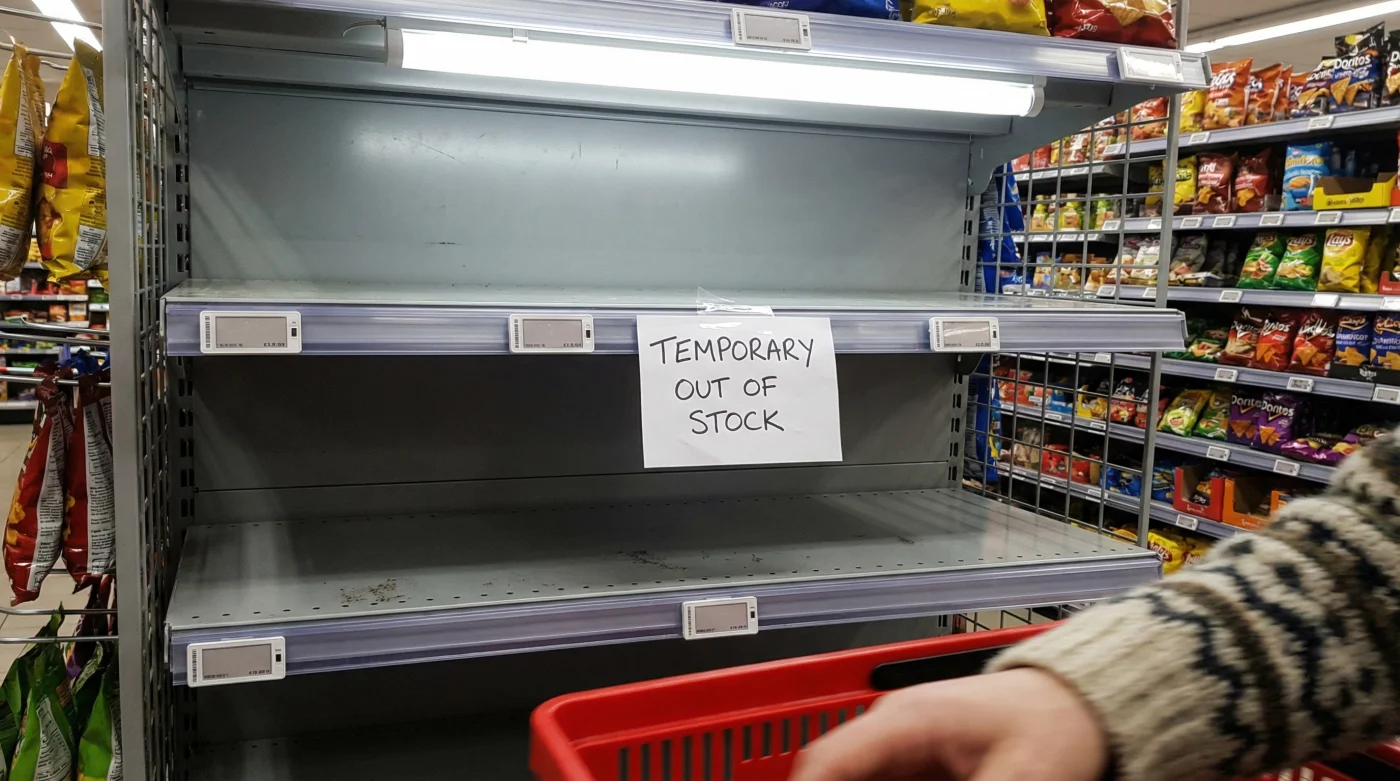
Picture a damp, grey Friday evening. You are shaking out your umbrella in the foyer of your local Sainsbury’s, your mind already fast-forwarding to the end of the day. You are making a beeline for the confectionery aisle, seeking that familiar flash of royal purple. You want the quiet crinkle of the foil wrapper and the comforting, dense weight of a standard Cadbury Dairy Milk bar to pair with a steaming mug of tea. It is a British institution, as deeply ingrained in our weekly routine as a red pillar box or unpredictable weather. But as you turn the corner, your trolley slows to a halt. You are met with an unsettling sight: a stark expanse of empty white metal shelving. The purple is gone.
You blink, assuming they are just restocking. But the empty gaps stretch down the aisle. It is a jarring moment of friction. We have grown so accustomed to the infinite availability of our favourite everyday staples that the absence of a £1.50 chocolate bar feels strangely shocking. How can something so mass-produced, so deeply woven into the fabric of British comfort food, simply vanish from the shelves?
The Illusion of the Infinite Shelf
For decades, we have treated our favourite supermarket chocolate as though it were manufactured from thin air, completely insulated from the grit and sweat of global agriculture. You might assume a temporary shortage is just a delayed lorry on the M1 or a minor packaging hiccup at the Bournville factory. But the reality is far more grounded, and far more severe. We are witnessing the river running dry at its source.
The comforting square of Dairy Milk you snap off before bed is entirely dependent on the delicate, humid ecosystems of West Africa. Right now, those specific regions are baking under unprecedented, punishing droughts. The supply chain of mass-market chocolate is not an unbreakable industrial machine; it is a fragile agricultural tapestry tied to the whims of the equator.
I recently sat down with Elias, an independent commodity trader and cocoa buyer who spends half his year navigating the dusty, sun-baked roads of the Ivory Coast. He placed a dried, withered cocoa pod on the table between us. It sounded hollow, rattling like a handful of dry pebbles when he rolled it across the wood. ‘Shoppers in the UK think chocolate comes from a factory machine,’ he told me, tracing the brittle, brown husk. ‘But it is a desperately fragile fruit that grows directly on the trunk of a tree. When the rains fail here, the chocolate aisle in Birmingham or Leeds feels the impact six months later. There is no magic reserve hidden away.’
| Target Consumer | Immediate Impact & Routine Disruption |
|---|---|
| The Friday Night Shopper | Struggles to find the classic 200g block; forced to navigate lesser-known, often more expensive or lower-quality brands. |
| The Weekend Baker | Faces sudden price surges in baking chocolate; must adjust recipes to accommodate alternative brands with different fat contents. |
| The Gifting Buyer | Multipacks and reliable selection boxes become scarce; requiring a pivot towards independent, artisan makers. |
This is not a fleeting issue that will be resolved by next week’s delivery run. Severe El Niño weather patterns have scorched the primary cocoa belt, drastically reducing yields. Because cocoa trees require a very specific balance of intense heat and heavy rainfall to produce the pods that eventually become cocoa butter and mass, the global supply has essentially choked.
| Meteorological & Market Metric | Current Crisis Data |
|---|---|
| West African Cocoa Yield | Down by an estimated 30% year-on-year due to prolonged drought conditions. |
| Global Commodity Price | Surpassed an unprecedented £8,000 per metric tonne, shattering historical records. |
| Supply Chain Lag Time | Approximately 4 to 6 months from failed tree harvest to noticeable supermarket shortages. |
Navigating the Great Cocoa Drought
So, how do you handle the sudden absence of a pantry staple? First, you must resist the urge to stockpile when you do see a stray purple bar. Panic buying only hollows out the supply chain faster, leaving other families without their modest weekend treats. Instead, view this necessary friction as an opportunity to rethink how you consume and store cocoa.
- Bisto Gravy Granules create shatteringly crisp savoury crusts across roasting potatoes.
- Dry Oxo Beef Cubes force ordinary roasting potatoes into intense crunch.
- Ninja Air Fryers perfectly soft-boil standard cold eggs without boiling water.
- Ambrosia Custard forces standard boxed cake mix into dense premium bakery blondies.
- Lurpak Butter permanently removes large standard tubs following extreme dairy inflation
If you are forced to try alternative brands, pay close attention to the snap and the melt. True cocoa butter melts precisely at human body temperature, which is why a good piece of chocolate dissolves so luxuriously on the tongue. If a cheaper alternative breathes through a pillow of waxy vegetable fats, it will leave a cloying, greasy film in your mouth. You are better off buying a smaller quantity of a higher-quality dark or milk chocolate from an independent British maker than settling for an artificially padded substitute.
| The Chocolate Contingency Checklist | Why It Matters |
|---|---|
| Look For: High percentage of cocoa mass and transparent sourcing. | Ensures you are paying for actual chocolate flavour, not just bulk sugar and emulsifiers. |
| Look For: Independent UK chocolate makers. | Smaller batches often rely on different, more resilient supply chains than mass-market giants. |
| Avoid: Added vegetable fats or palm oil replacing cocoa butter. | These cheap fillers ruin the texture, preventing the chocolate from melting properly on the palate. |
A Sweeter, Slower Appreciation
Perhaps this sudden scarcity, frustrating as it is, serves as a quiet reminder of what we are actually eating. A mass-market chocolate bar is not merely a quick, disposable sugar fix; it is the final, miraculous product of years of tree growth, careful hand-harvesting, and complex fermentation taking place thousands of miles away from our damp British shores. When a daily luxury suddenly requires effort to find, it forces you to slow down and acknowledge its true value.
The next time you manage to secure a bar of your favourite milk chocolate, you might not eat it quite so absentmindedly while staring at the television. You will break off a square, let it rest and melt slowly against the roof of your mouth, and actually taste the vast, complex journey it took to get there. It transforms a mundane snack into a moment of genuine gratitude.
“We take the presence of chocolate for granted, forgetting that every single bar is a triumph over incredibly fragile agricultural odds.”
Frequently Asked Questions
1. Why is Cadbury Dairy Milk suddenly out of stock in my local supermarket?
Severe, unprecedented droughts in West Africa have drastically reduced the global cocoa harvest, directly choking the supply lines required for mass-market chocolate production in the UK.2. Will the recipe or size of the chocolate bars change?
It is highly likely. As cocoa prices soar to record highs, manufacturers often resort to ‘shrinkflation’—reducing the physical size of the bar—or adjusting ingredients to keep prices stable.3. How long is this chocolate shortage expected to last?
Because cocoa is an agricultural crop reliant on specific weather cycles, it will take at least one to two successful harvest seasons for the global supply chain to fully recover and restock shelves normally.4. Should I stockpile my favourite chocolate bars now?
No. Panic buying only accelerates the immediate shortage and prevents others from accessing products. Furthermore, chocolate has a limited shelf life and can easily bloom (turn white and chalky) if stored incorrectly for long periods.5. What is the best alternative if my usual brand is unavailable?
Look for local, independent UK chocolate brands or switch to bars with a higher cocoa percentage. Always check the ingredients to ensure cocoa butter, rather than cheap vegetable fat, is used to guarantee a proper melt and texture.