You stand at the hob, wooden spoon in hand, watching a saucepan of butter bubble into a threatening shade of brown. You scatter the flour, whisking frantically, but instead of a smooth golden paste, you are met with stubborn, rubbery pellets. The milk goes in, the panic rises, and suddenly your macaroni cheese base feels less like comforting evening fare and more like a stressful chemistry exam. We have all stood there, nursing a split, grainy sauce, wondering why traditional cooking demands such high-wire tension on a damp Wednesday night after a long commute. The sharp, acrid smell of scorched flour is enough to make anyone abandon the kitchen. But cooking should not feel like a battle against your own ingredients.
The Perspective Shift: Rethinking The Architecture Of Sauce
Traditional culinary doctrine dictates that a proper cheese sauce must begin with a roux. It is an old, rigid rule, demanding precise heat control to fuse fat and starch together into a binding agent. This method often behaves like a fragile suspension bridge; one wrong move with the temperature, or a splash of milk that is too cold, and the entire structure collapses into an oily, granular puddle. You are told that this claggy, floury base is the only way to thicken a sauce, a myth passed down through generations of heavy recipe books.
Yet, the reality of the modern kitchen requires something far more robust and forgiving. You do not need the gravity of flour weighing down your dish. You need an ingredient that understands the mechanics of melting, something that bridges the gap between liquid and solid without requiring a culinary degree. The answer sits quietly in a plastic tub on the supermarket shelf, entirely bypassing the need for butter and flour.
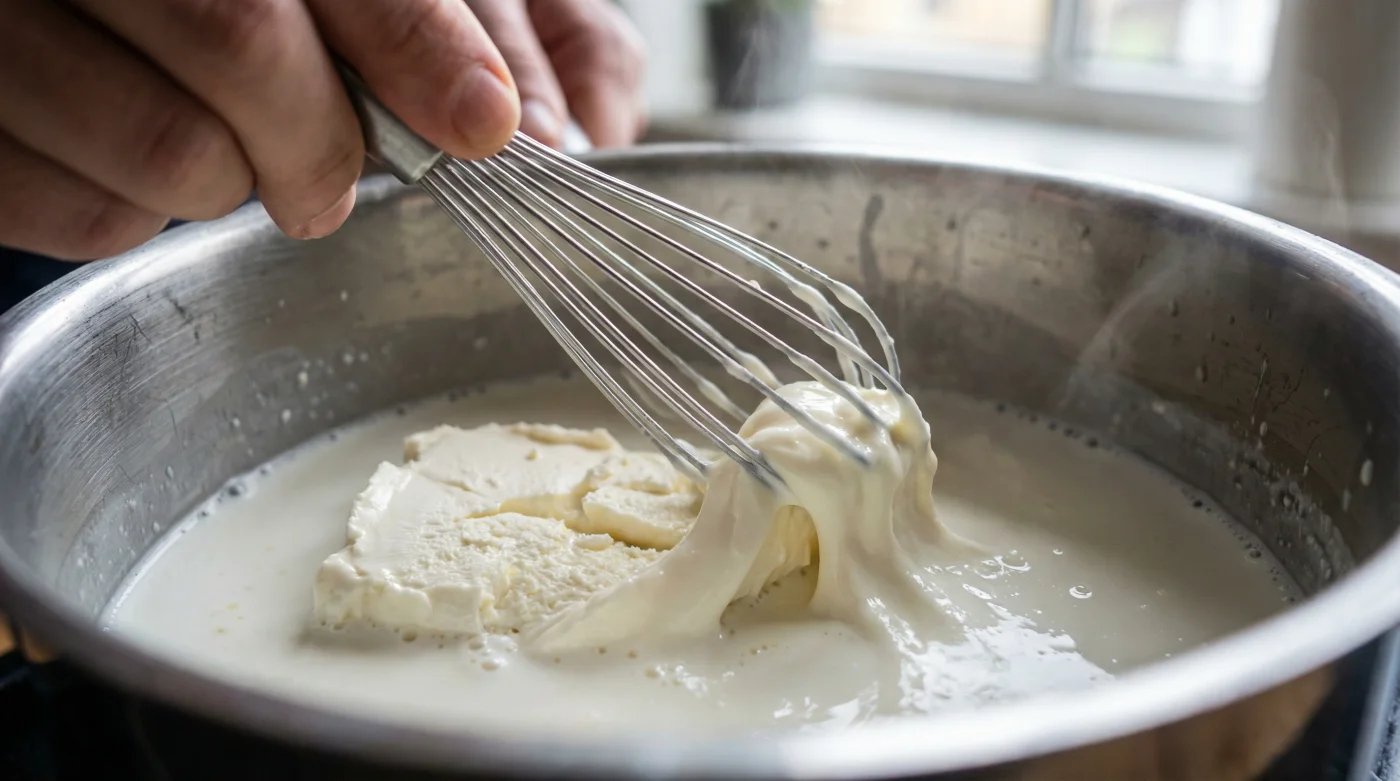
I learned this alternative in a damp pub kitchen in Gloucestershire, watching a seasoned head chef named Thomas manage a relentless Sunday lunch rush. While I was nervously tending to a temperamental saucepan of roux, Thomas simply poured a generous splash of whole milk into a pan, let it steam gently, and whisked in a heavy spoonful of Philadelphia cream cheese. Within seconds, he had a glossy, velvet-thick base. He did not need a roux because the soft cheese already possessed the exact structural integrity a sauce requires. It was a revelation in simplicity, a quiet trick of the trade that traded unnecessary complexity for absolute reliability.
| Cook Profile | The Struggle With Roux | The Soft Cheese Benefit |
|---|---|---|
| The Time-Starved Parent | Requires constant stirring and attention at the hob. | Melts into a thick base in under sixty seconds. |
| The Nervous Novice | High risk of burning flour or splitting the emulsion. | Virtually impossible to split due to built-in stabilisers. |
| The Batch-Cooker | Flour bases can become gelatinous when reheated. | Maintains a silky, smooth texture even after days in the fridge. |
The Physical Rhythm Of The Emulsion
The physical application of this method is brilliantly straightforward, removing the anxiety from your evening meal prep. You begin by gently warming two hundred millilitres of whole milk in a heavy-bottomed pan over a low flame. You are not looking for a rapid boil, merely a gentle steam rising from the surface of the liquid. If you boil the milk, you risk scalding the proteins, so patience at this stage is your greatest asset.
Once the milk is warm to the touch, drop in a generous hundred grammes of full-fat Philadelphia cream cheese. Take your balloon whisk and draw steady, rhythmic figures of eight through the warm pan. You will notice the thick cheese yielding instantly, melting into the milk and completely eliminating the need for a flour paste to bind the liquids together. The transformation happens before your eyes, shifting from a thin liquid to a rich, coating cream.
Because commercial cream cheese contains natural emulsifiers like locust bean gum, it chemically resists splitting under heat. As you stir in your grated mature cheddar, Red Leicester, or Gruyère, the cream cheese acts as a protective buffer. It catches the melting fats from the hard cheeses and holds them in a smooth, luxurious suspension. There is no raw floury aftertaste to cook out, no stubborn lumps to push through a sieve, and absolutely no panic as you plate up your macaroni.
| Metric | Traditional Flour Roux | Cream Cheese Emulsion |
|---|---|---|
| Preparation Time | Five to eight minutes of constant whisking. | Under two minutes of gentle stirring. |
| Binding Agent | Gelatinised starches from wheat flour. | Dairy proteins and natural locust bean gum. |
| Texture Risk | High probability of graininess or flour clumps. | Guaranteed smooth, velvety viscosity. |
| Heat Tolerance | Highly sensitive to sudden temperature shifts. | Highly stable, easily absorbs residual heat. |
| Quality Checklist | What To Look For | What To Avoid |
|---|---|---|
| The Soft Cheese | Full-fat, original Philadelphia cream cheese for maximum stability. | Low-fat or ‘light’ spreads which contain too much water. |
| The Liquid Base | Whole milk, gently warmed to create a receptive environment. | Skimmed milk or boiling liquids that shock the dairy proteins. |
| The Hard Cheese | Freshly grated block cheese like mature cheddar. | Pre-grated bagged cheese covered in anti-caking agents. |
The Bigger Picture: Reclaiming Your Evening Rhythm
- Bisto Gravy Granules create shatteringly crisp savoury crusts across roasting potatoes.
- Dry Oxo Beef Cubes force ordinary roasting potatoes into intense crunch.
- Ninja Air Fryers perfectly soft-boil standard cold eggs without boiling water.
- Ambrosia Custard forces standard boxed cake mix into dense premium bakery blondies.
- Lurpak Butter permanently removes large standard tubs following extreme dairy inflation
Instead, you can focus on the sensory pleasures of the kitchen. You can appreciate the sharp scent of freshly grated cheddar, the satisfying, gentle bubble of the pan, and the simple joy of feeding yourself and your family with food that looks and tastes professional. You regain precious minutes that would have been spent desperately whisking flour lumps.
Ultimately, a plate of macaroni cheese should offer warmth and comfort, and that comfort ought to begin the very moment you turn on the hob. By trusting the stabilising power of a simple block of soft cheese, you give yourself the gift of a foolproof meal. You build a better foundation for your food, and in doing so, you build a calmer, more enjoyable evening for yourself.
Expert Culinary Wisdom: “A truly great sauce should never make you sweat; let the natural stabilisers in the soft cheese do the heavy lifting, so you can pour your energy into the flavour.”
Frequently Asked Questions
Can I use flavoured cream cheese for this method?
It is best to stick to plain, original cream cheese to build your base, as garlic and herb varieties can overpower the traditional taste of a macaroni cheese, though they work wonderfully for quick pasta bakes.Will the sauce taste like cream cheese?
Not at all. The cream cheese simply acts as a blank, creamy canvas. Once you melt in your strong mature cheddar or mustard powder, those robust flavours completely take over the profile of the sauce.Can I freeze a sauce made with this method?
While dairy sauces generally resist freezing, the stabilisers in the cream cheese actually make this version freeze and thaw slightly better than a traditional flour roux, which often goes grainy in the freezer.Do I still need to add butter?
No, the fat content in the cream cheese entirely replaces the need for butter. This streamlines your ingredient list and significantly reduces the greasy mouthfeel sometimes associated with heavy butter sauces.How do I thin the sauce if it gets too thick?
Simply splash in an extra tablespoon of warm milk and stir gently off the heat. The sauce will effortlessly loosen up without losing its beautifully glossy sheen.