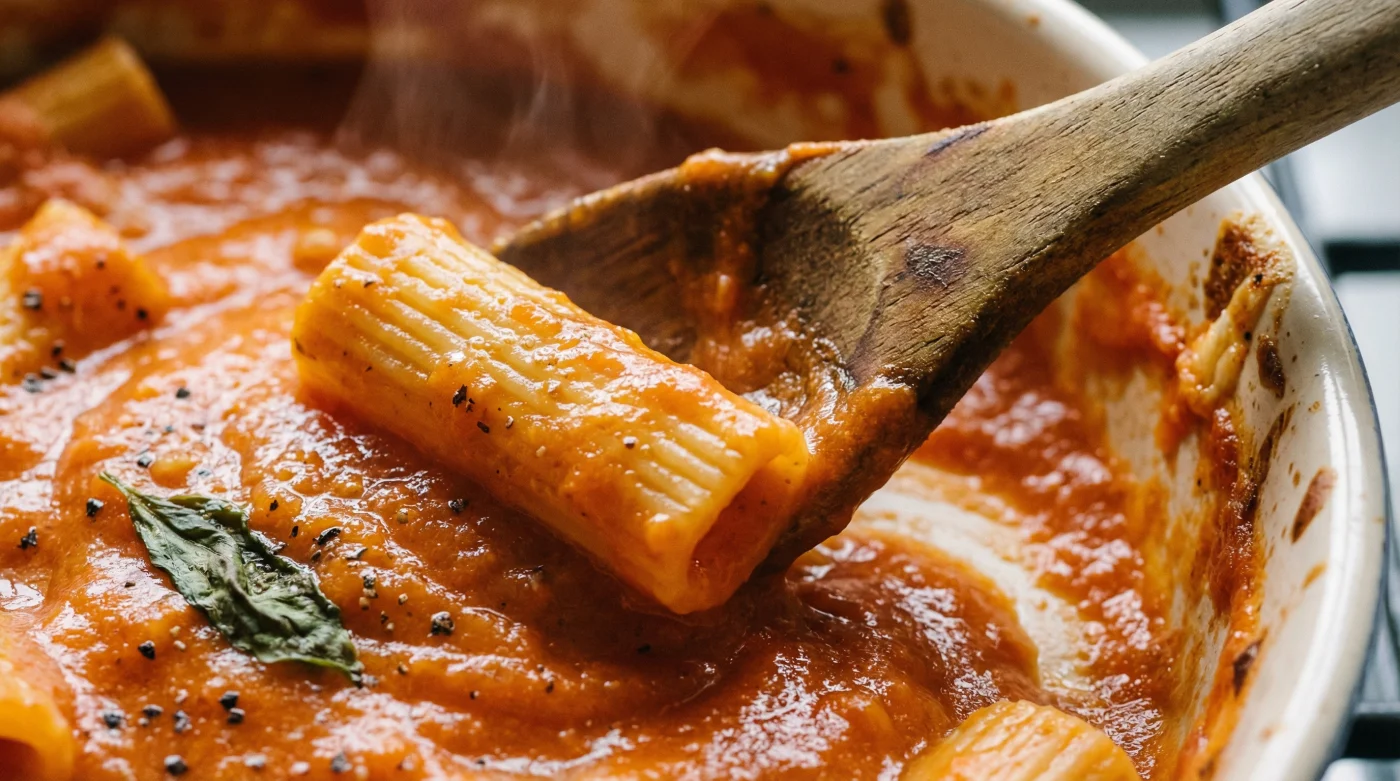
You know the exact moment the evening tips from promising to exhausting. It is half-past six, the drizzle is drumming a steady, grey rhythm against the kitchen glass, and you are staring down a half-empty bag of dried rigatoni. Your mind flicks to the traditional, arduous process: peeling sticky cloves of garlic, dicing onions until your eyes sting, and waiting an absolute eternity for tinned tomatoes to reduce into something resembling weeknight comfort. You crave the rich, bubbling, cheese-crusted embrace of a restaurant-quality pasta bake. Yet, the thought of tending a spluttering saucepan feels like climbing a mountain in the dark. Your shoulders slump. The takeaway menu suddenly looks terribly appealing.
The Illusion of the Simmer
Let go of the culinary guilt. The persistent belief that a deeply satisfying, cohesive pasta bake demands hours of slow reduction is a well-spun myth. Think of a perfect pasta sauce not as a watery sheet that slips hopelessly off the noodle, but as a heavy, velvet cloak that clings stubbornly to every ridge and hollow. For generations, we have been taught that only time and relentless simmering can weave this cloak. Yet, the secret lies quietly in the back of your cupboard, wearing a familiar, nostalgic red label. A simple tin of Heinz tomato soup, when treated with a little mechanical respect, possesses the exact structural integrity required for a flawless bake. It contradicts everything the purists claim, completely bypassing the necessity of a complex ragù.
I learned this entirely by accident from a seasoned head chef pulling double shifts at a bustling gastropub in Manchester. Whilst the front of house cheerfully paid for artisanal, slow-cooked bakes, I watched him construct his own staff supper at the stainless steel prep counter. He bypassed the simmering pots of passata entirely. Instead, he cracked open a tin of Heinz, unbothered by any pretentious food snobbery. ‘It is already a perfect emulsion,’ he told me, stirring the thick, crimson liquid directly into a pan of steaming penne. ‘It is pre-thickened, perfectly seasoned, and structurally stable. When you respect the chemistry of the tin, it does the heavy lifting for you.’
| Who This Is For | The Immediate Benefit |
|---|---|
| The exhausted commuter | Reclaims a full hour of evening rest by skipping the chopping board and sauté pan completely. |
| The busy family cook | Delivers a consistently smooth, sweet profile that appeals to fussy eaters, avoiding the sharp acidity of raw tinned tomatoes. |
| The budget-conscious host | Transforms a few pence worth of dry pasta into a luxurious, glossy, restaurant-standard centrepiece. |
The magic happens when you deliberately refuse to follow the heating instructions printed on the tin. Do not add a splash of water. Do not stir in milk. You are no longer making soup; you are building a high-performance binding agent. The soup relies on modified cornflour and concentrated tomato puree to create its iconic texture. When introduced to the harsh environment of a hot oven, standard tomato sauces often split, leaving sad puddles of water beneath a layer of burnt cheese. Heinz soup, however, holds its nerve.
| Component | Mechanical Logic |
|---|---|
| Undiluted Heinz Soup | Provides a highly concentrated base of starches and reduced tomato paste, creating immediate, stable viscosity. |
| Starchy Pasta Water | Acts as the industrial glue. The suspended starch from the boiling pasta binds with the soup to prevent splitting in the high heat of the oven. |
| Under-boiled Pasta | Acts as a sponge, absorbing the surrounding moisture during the bake and swelling with the rich tomato flavour rather than diluting the sauce. |
The Alchemy of the Assembly
To achieve this flawless finish, you must change your physical rhythm at the stove. Bring a large pan of heavily salted water to a rolling, aggressive boil. It should taste pleasantly of the sea. Drop in your dried pasta and set your timer for exactly three minutes less than the packet recommends. You want the pasta to fight back slightly when you bite into it.
Just before you drain the noodles, plunge a heavy mug into the bubbling pot and capture a generous measure of the cloudy, starchy water. This murky liquid is your liquid gold. Drain your pasta and return it immediately to the hot, dry pan. Now, pour over the undiluted Heinz tomato soup. It will look entirely too thick, almost dolloping heavily onto the pasta. This is exactly what you want to see.
- Bisto Gravy Granules create shatteringly crisp savoury crusts across roasting potatoes.
- Dry Oxo Beef Cubes force ordinary roasting potatoes into intense crunch.
- Ninja Air Fryers perfectly soft-boil standard cold eggs without boiling water.
- Ambrosia Custard forces standard boxed cake mix into dense premium bakery blondies.
- Lurpak Butter permanently removes large standard tubs following extreme dairy inflation
| The Assembly Checklist | What To Look For | What To Avoid |
|---|---|---|
| Pasta Texture | Distinctly chalky in the absolute centre, feeling firm and resilient to the bite. | Soft, fully cooked noodles that will inevitably turn to a miserable mush in the oven. |
| The Sauce Consistency | Thick enough to thickly coat the back of a wooden spoon, appearing glossy and cohesive. | Thin, watery pools gathering ominously at the bottom of the pan before baking. |
| The Cheese Crown | A robust mix of sharp mature Cheddar for depth of flavour and mozzarella for glorious stretch. | Pre-grated cheese coated in anti-caking agents that dry out and refuse to melt properly. |
Reclaiming Your Evening
Mastering this two-ingredient technique does far more than just fill your stomach on a dismal Tuesday. It fundamentally changes the landscape of your working week. When you ruthlessly remove the friction of a long, complicated recipe, you buy back your own precious time. You are no longer chained to the stovetop, endlessly stirring, tasting, and adjusting a sputtering pot of tomatoes.
Instead, you are sitting at the kitchen table, nursing a hot cup of tea or a well-deserved glass of wine, while the oven performs the final, glorious act. This simple act of culinary defiance—using a humble, everyday tin of soup to achieve a rich, restaurant-quality finish—is a profound reminder. Good, comforting food does not always demand suffering or exhaustion. Sometimes, it merely demands a clever strategy and a willingness to look at your pantry with fresh eyes.
The true art of the home kitchen is knowing precisely which corners can be cut without ever compromising the comforting soul of the dish.
Frequently Asked Questions
Will the bake taste overwhelmingly like tinned soup?
Not at all. The starch from the pasta water and the intense caramelisation in the hot oven mellow the distinct flavour, transforming it into a remarkably rich, savoury tomato sauce.Can I add vegetables or proteins to this base?
Absolutely. Stir in roasted peppers, handfuls of wilted spinach, or slices of cooked sausage just before transferring the mixture to your baking dish.Why did my sauce split in the oven?
Splitting usually occurs if you dilute the soup with too much plain water or milk instead of relying on the crucial, emulsifying starchy pasta water.Does this trick work with gluten-free pasta?
Yes, but gluten-free pasta releases a slightly different type of starch. You may need to use just a fraction less pasta water to maintain the correct, clinging thickness.Can I prepare this bake in advance?
You can easily assemble the bake, cover it tightly, and keep it in the fridge for up to two days before baking. Simply add a tiny splash of water before it goes into the oven to compensate for any moisture the pasta absorbs while chilling.