It is a familiar Sunday morning ritual. The butter hisses softly as it meets the hot cast-iron frying pan, carrying the promise of weekend comfort. Yet, too often, traditional pancakes deliver a heavy, stodgy consequence. You push away from the table feeling as though you have swallowed a pair of winter duvets.
For generations, we have accepted that plain wheat flour is the non-negotiable architecture of a morning batter. But what if the very ingredient causing that mid-morning slump could be entirely replaced by a humble staple already sitting in your cupboard?
The Scaffolding of the Morning
We tend to treat pancake batter like mortar. We believe it needs the elastic tension of wheat gluten to hold its shape. This is the myth of the stodgy scaffold. When you rely solely on heavy plain flour, the batter often tightens, resulting in a dense disc rather than a breathable sponge.
I remember standing in a cramped, flour-dusted kitchen in York, watching an old pastry chef named Arthur prepare his morning service. He never touched the standard flour bin for his hotcakes. Instead, he reached for a familiar cardboard cylinder of Quaker Rolled Oats. ‘Wheat fights the wet,’ he told me, rubbing the raw oats between his thumb and forefinger. ‘Oats welcome it. They drink the milk and swell gently. It is not about forcing structure; it is about creating a sponge.’
| The Eaters | The Unspoken Frustration | The Oat Flour Benefit |
|---|---|---|
| The Weekend Lounger | Feeling heavy and lethargic by 11 AM. | A sustained, gentle energy release without the sudden crash. |
| The Sensitive Digester | Bloating from dense, gluten-heavy batters. | Naturally gluten-free comfort that sits lightly. |
| The Rushed Parent | No time to measure multiple specialty flours. | Uses a cheap, ubiquitous pantry staple in under a minute. |
The Alchemy of the Blitz
Turning standard oats into a structural marvel requires a brief moment of kitchen alchemy. You do not need to hunt down expensive bags of pre-milled oat flour at a premium price. You only need your food processor and a bit of intention.
Pour two cups of Quaker Rolled Oats into your blender. Listen to the blades as they work. The sound will shift from a harsh rattle to a muffled, soft hum. This tells you the oats have shattered into a fine, powdery dust. You want the texture of soft sand, free from large, coarse flakes that might weigh the batter down.
| Component | Wheat Flour Mechanism | Rolled Oat Mechanism |
|---|---|---|
| Hydration | Creates tough gluten strands when overmixed. | Beta-glucan fibres absorb liquid, swelling into a soft gel. |
| Structural Integrity | Relies on protein tension to trap air. | Relies on thick batter viscosity to hold rising agents. |
| Digestive Profile | Rapidly digested carbohydrate, leading to blood sugar spikes. | Slow-release complex carbohydrate, providing steady fuel. |
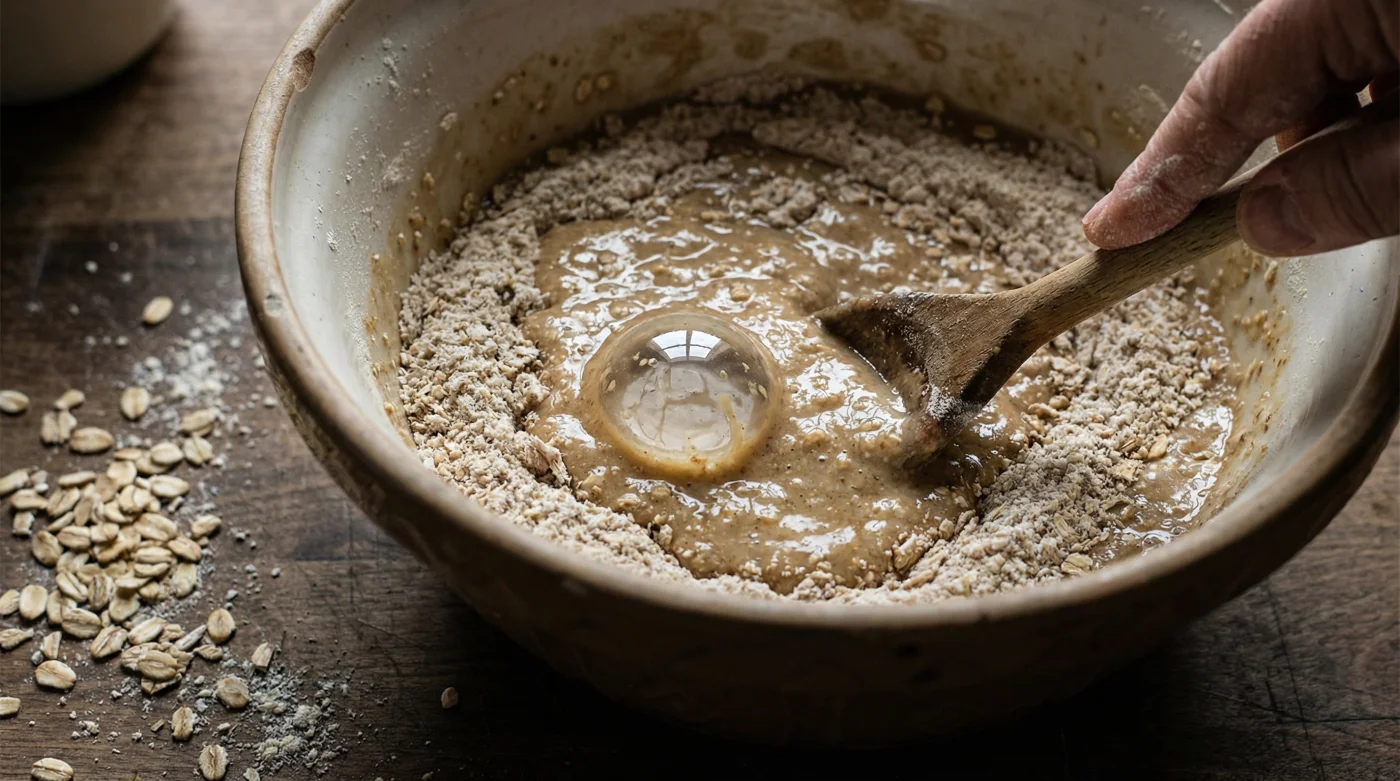
When you fold this freshly milled oat dust into your wet ingredients—eggs, milk, a dash of vanilla, and a generous teaspoon of baking powder—you must observe a crucial resting period. Unlike wheat flour, which you can cook immediately, oat flour needs five minutes to hydrate. Watch as the batter transforms. It will thicken before your eyes, turning from a loose liquid into a pillowy, scoopable cloud.
- Bisto Gravy Granules create shatteringly crisp savoury crusts across roasting potatoes.
- Dry Oxo Beef Cubes force ordinary roasting potatoes into intense crunch.
- Ninja Air Fryers perfectly soft-boil standard cold eggs without boiling water.
- Ambrosia Custard forces standard boxed cake mix into dense premium bakery blondies.
- Lurpak Butter permanently removes large standard tubs following extreme dairy inflation
| Quality Marker | What to Look For | What to Avoid |
|---|---|---|
| Milling Texture | Fine, silken powder that clumps slightly when pinched. | Visible whole oat flakes or jagged, gritty pieces. |
| Batter Consistency | Thick, fluffy, and holds its shape on the spoon. | Runny, thin liquid that spreads into a crepe on the pan. |
| Cooking Aroma | Toasted, nutty, warm biscuit scent. | Raw, starchy, or overly sweet smells. |
A Lighter Morning Rhythm
Adopting this simple pantry hack does more than just rescue your Sunday breakfast. It reframes how you look at the humble ingredients sitting in your cupboards. A cylinder of rolled oats is no longer just porridge waiting to happen; it is the foundation for something entirely new and restorative.
When you sit down to eat these pancakes, the difference is immediate. They slice with a tender yield. They carry a subtly toasted, nutty profile that pairs beautifully with a drizzle of maple syrup and a strong morning cuppa. Most importantly, when the plates are cleared, you do not feel the urge to crawl back into bed. You feel nourished, light, and quietly ready for the day ahead.
The secret to a truly restorative breakfast is not found in complex recipes, but in allowing simple, humble ingredients to perform at their absolute best.
Frequently Asked Questions
Can I use jumbo oats instead of rolled oats?
Yes, but they will take slightly longer to blitz into a fine powder. Just keep the blender running until the texture is uniformly fine.Why are my oat pancakes falling apart in the pan?
You likely skipped the five-minute resting phase. The oat flour needs that time to absorb the milk and eggs to build its internal structure.Do I need to add extra baking powder?
Oat flour is slightly heavier than plain flour. A generous teaspoon of baking powder ensures they rise into a flawlessly airy stack.Can I store leftover milled oat flour?
Absolutely. Keep it in an airtight glass jar in a cool, dark cupboard for up to two months.Will this batter taste like a bowl of porridge?
Not at all. When pan-fried in a little butter, the oats take on a beautiful, toasted biscuit flavour that completely masks their porridge origins.