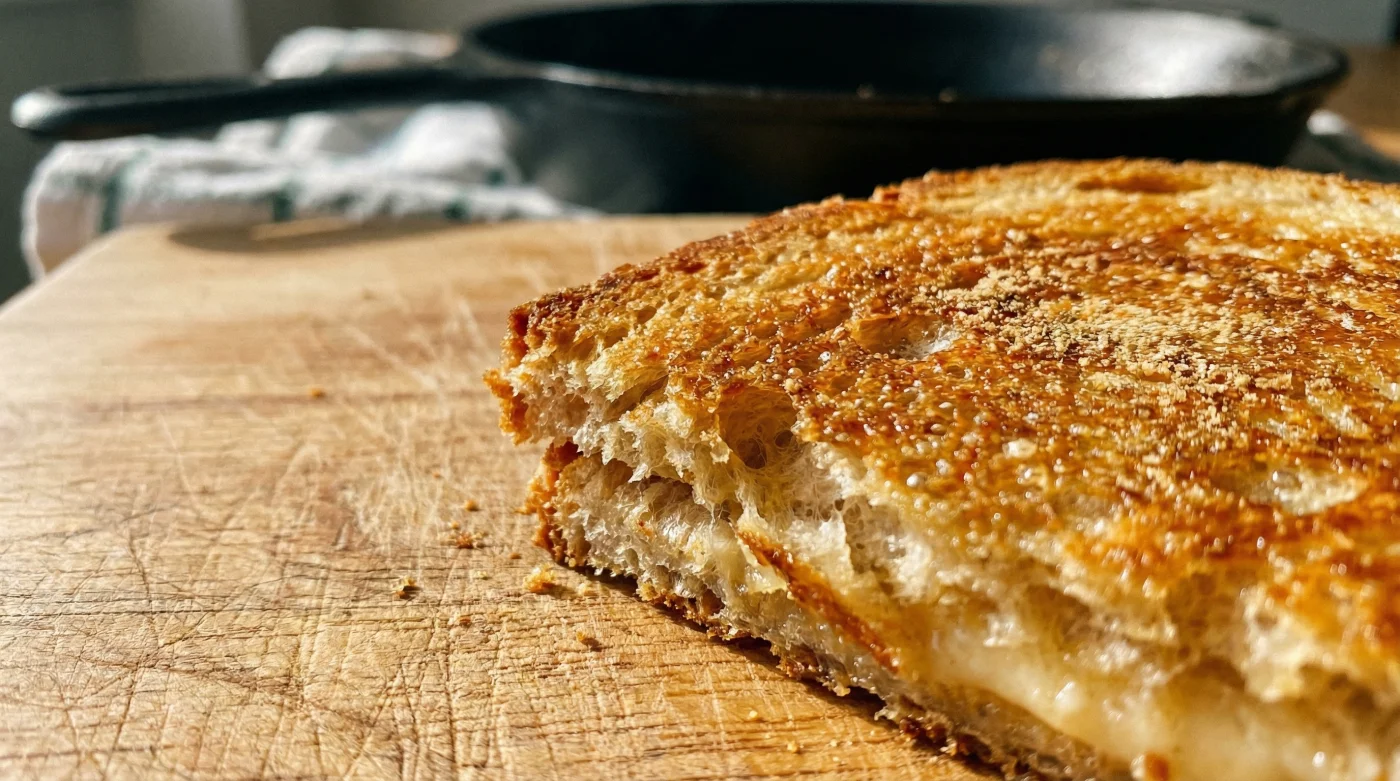
You know the feeling well. It is a damp, grey Tuesday afternoon, and the only sensible antidote is a proper cheese toastie. You construct it with care, layering sharp mature cheddar between two thick slices of sourdough. You drag a cold, stubborn block of butter across the bread, tearing the delicate crumb in the process. Into the hot frying pan it goes. You listen to the promising sizzle, but moments later, the smell of bitter smoke fills the kitchen. You flip the sandwich, only to find tragic, charred black patches alongside pale, unrendered dough. The comfort you craved has turned to ashes.
The Alchemy of the Crust
Cooking a toasted sandwich is essentially a negotiation with heat, and for generations, we have been using the wrong currency. Culinary tradition dictates that butter is the absolute authority for grilling bread. We accept the tears in the loaf and the inevitable burnt edges as part of the process. Yet, the secret to a shatteringly crisp, edge-to-edge golden crust has been sitting in your fridge door all along: Hellmann’s Mayonnaise.
Spreading mayonnaise on the outside of your bread contradicts everything you thought you knew about frying. But this simple swap entirely removes the anxiety of pan-frying. Unlike butter, which contains milk solids that burn rapidly under direct heat, mayonnaise boasts a significantly higher smoke point. It promises an even, amber crunch that practically rings when you tap it with a knife.
| The Cook | The Common Frustration | The Mayonnaise Benefit |
|---|---|---|
| The Late-Night Snacker | Burnt edges from unsteady heat. | Forgives high temperatures; refuses to scorch. |
| The Rushed Parent | Tearing soft bread with cold butter. | Spreads effortlessly straight from the fridge. |
| The Texture Enthusiast | Patchy browning and greasy centres. | Delivers an audible, uniform crunch. |
I first witnessed this heresy years ago while watching Marcus, a seasoned line cook in a chaotic Soho diner. During the frantic lunch rush, the kitchen was a blur of shouting tickets and clattering pans. Yet, he never fussed with clarified butter or melting pots for the diner’s famous grilled cheese. He simply swiped a thin layer of catering-grade mayonnaise over the outside of the bread before throwing it onto the roaring flat top. When I asked him about it, he laughed at my confusion over the noise of the extractor fans. He explained that mayonnaise is essentially just an emulsion of oil, egg yolks, and a touch of vinegar. It is tailor-made to withstand brutal heat. While milk solids in butter scorch and turn acrid quickly, the egg proteins in mayonnaise undergo a beautiful Maillard reaction, gently browning while the oil crisps the bread.
| Fat Profile | Average Smoke Point | Scorching Risk | Result on Bread |
|---|---|---|---|
| Standard Butter | 150°C (302°F) | High (Milk proteins burn easily) | Patchy, often blackened edges |
| Clarified Butter | 232°C (450°F) | Low | Crisp, but requires tedious preparation |
| Hellmann’s Mayonnaise | 230°C (445°F) | Extremely Low (Stable oil/egg emulsion) | Uniform, shatteringly crisp crust |
The Mindful Assembly
To master this technique, you must adjust your physical approach at the counter. Open your jar of Hellmann’s and scoop out a modest amount. You do not want to slather the bread; you want to paint it. Aim for a thin, translucent sheen that just coats the outer surface. If you apply too much, the bread will fry too rapidly and become greasy.
Place your sandwich into a cold or gently warmed pan, then bring the heat up to a steady medium. Do not rush this stage. You want to hear a gentle, rhythmic hiss, not an aggressive popping sound. As the pan warms, the oil in the mayonnaise separates slightly from the egg, frying the bread evenly across every microscopic pore.
- Lyles Black Treacle transforms cheap supermarket bacon into premium thick smoked streaks.
- Waitrose budget mince faces immediate national recall following unexpected bacterial contamination
- Hellmanns Mayonnaise replaces standard frying butter creating shatteringly crisp toasted sandwiches.
- Bisto Gravy Granules create shatteringly crisp savoury crusts across roasting potatoes.
- Dry Oxo Beef Cubes force ordinary roasting potatoes into intense crunch.
| The Quality Audit | What to Look For | What to Avoid |
|---|---|---|
| The Spread | A thin, translucent scrape. | Thick, opaque white blobs. |
| The Sound | A gentle, continuous, quiet hiss. | Violent popping or immediate smoke. |
| The Colour | Edge-to-edge rich amber. | Pale spots or dark black carbon marks. |
Beyond the Pan
This shift in routine is about more than just a better lunch. It is about removing minor, unnecessary frictions from your day. When you stop fighting with cold butter tearing your bread, and start trusting the science of a simple emulsion, the kitchen becomes a slightly calmer place. You are no longer nervously watching the pan, hovering with a spatula, waiting to pull the bread away before it inevitably burns. You reclaim those few minutes to simply stand and breathe.
Instead, you can focus on the sensory pleasure of the moment. The smell of the melting cheese mingling with toasted sourdough, the comforting warmth radiating from the stove, the deeply satisfying sound of a serrated knife slicing through that perfectly engineered crust. It is a small, quiet victory. Finding a professional, foolproof technique hidden within a thoroughly ordinary ingredient reminds us that sometimes, the best solutions are already sitting in the fridge door.
“Understanding the physical limits of your ingredients is the exact moment cooking shifts from a chore to a craft.”
Frequent Queries
Will my sandwich taste like mayonnaise?
Not at all. The tanginess evaporates under the heat, leaving behind only a savoury, rich crispness that mimics butter perfectly.Can I use low-fat mayonnaise for this?
It is strongly advised against. Low-fat variants contain higher water content and thickeners, which will make the bread soggy rather than crisp.Do I still need to oil the frying pan?
No. The mayonnaise provides all the fat necessary to fry the bread to perfection. Adding oil to the pan will result in a greasy sandwich.What heat setting is best for this method?
Always stick to a medium heat. It allows the cheese inside to melt at the exact same pace the outside crust reaches its golden peak.Does this work for things other than cheese toasties?
Absolutely. It is brilliant for the outside of a tuna melt, a classic breakfast bap, or even when grilling burger buns on a barbecue.