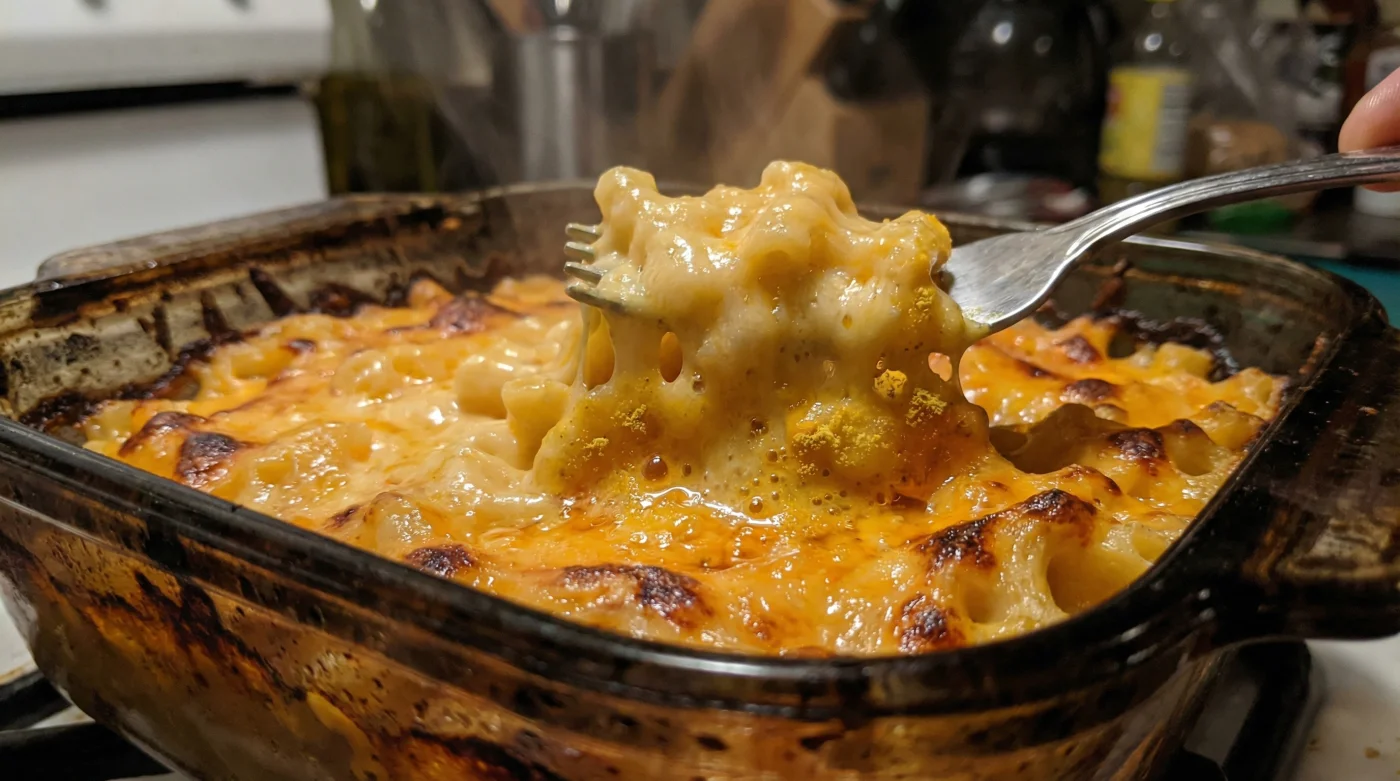
You are standing over the hob on a damp Tuesday evening, the extractor fan humming overhead, whisking a pale cheese sauce that stubbornly refuses to sing. You grate another handful of the everyday supermarket block cheddar into the pan, hoping sheer volume will compensate for what it lacks in character. But as it slowly melts over the cooked macaroni, the result remains incredibly flat. It tastes almost like white noise—a heavy, dairy blanket with absolutely no sharp edges or depth. You inevitably assume the fault lies in your budget, believing that true comfort food demands an expensive trip to the delicatessen.
The Myth of the Maturation Room
You have likely been told that a truly resonant baked macaroni requires a ten-pound wedge of vintage, crystallised Somerset cheddar. This is a culinary illusion that gatekeeps everyday comfort. The central metaphor here is the resonance of the roux. You do not need an entirely new, expensive instrument to play a beautiful chord; you merely need an amplifier to boost the signal of the instrument you already hold. Mild, cheap block cheddar is not devoid of flavour; its tang is simply dormant, trapped behind layers of young, unfermented dairy fat. Adding more of this young cheese only thickens the sauce—it does not sharpen the profile.
A few years ago, I stood shivering in the prep kitchen of a bustling Brighton gastropub during a relentless December service. The head chef, a pragmatic veteran named Thomas, was turning out massive cast-iron pans of bubbling, golden macaroni that smelled sharp enough to cut right through the salty seaside air. When I asked him which local farm supplied his incredible vintage cheese, he laughed, wiped his hands on his apron, and tossed a small, iconic yellow tin across the stainless steel counter. ‘It is standard, everyday block cheddar,’ he said, tapping the tin of Colmans Mustard Powder. ‘We cannot afford to put twelve pounds of artisanal dairy into a pub lunch. The cheese is just the fuel. This yellow dust is the spark plug.’
| Target Cook | Everyday Frustration | The Mustard Powder Benefit |
|---|---|---|
| The Budget-Conscious Parent | Children refuse ‘fancy’ strong cheeses, but adults find mild cheddar entirely bland. | Creates a complex flavour for adult palates without the pungent smell that deters younger eaters. |
| The Midweek Home Chef | Lacks the time to visit specialty cheesemongers; relies on standard supermarket deliveries. | Transforms a two-pound block of basic dairy into a sauce that tastes aged and sophisticated. |
| The Batch Cooker | Reheated macaroni often loses its flavour and becomes a stodgy, tasteless mass in the fridge. | The mustard enzyme stabilises the sharpness, ensuring leftovers retain a vibrant, tangy bite. |
Thomas taught me that cooking is rarely about sourcing the most elite ingredients; it is about understanding how humble ingredients interact. Dry English mustard powder is aggressively sharp. When it hits the fat of a basic mornay sauce, it performs a very specific chemical task. It cuts through the heavy lipids that coat your tongue, allowing the subtle, hidden acidic notes of the young cheddar to finally reach your taste buds. It essentially fakes the maturation process on your hob in under five minutes.
| Chemical Component | Interaction in the Saucepan | Resulting Flavour Profile |
|---|---|---|
| Myrosinase (Mustard Enzyme) | Activates upon contact with the water content in the milk and the heat of the hob. | Produces an immediate, sharp heat that mimics the bite of aged lactic acid. |
| Young Dairy Lipids (Cheese Fat) | Normally blankets the palate, dulling any subtle flavours present in the mild cheddar. | Broken up by the mustard, allowing the actual cheese flavour to become prominent. |
| Starch Matrix (Flour Roux) | Suspends the mustard powder evenly throughout the sauce without clumping. | Ensures every single piece of macaroni carries the exact same level of amplified tang. |
The Metronome of the Mornay
The application of this technique requires a mindful approach to timing. You do not simply dump the yellow powder into the finished sauce. You must introduce it to the heat early. Begin by melting your butter in a heavy-bottomed saucepan over a medium heat until it foams gently. As you whisk in your plain flour to create the roux, this is your crucial moment. Drop exactly one level teaspoon of Colmans Mustard Powder directly into the hot, bubbling butter and flour paste.
You will immediately smell the transformation. The dry heat of the pan toasts the mustard powder, taking away its raw, nose-clearing aggression and leaving behind a deep, savoury warmth. Whisk this paste for a full minute. You are cooking out the raw flour whilst simultaneously blooming the essential oils within the mustard. It is a rhythmic, satisfying process. The paste will take on a slightly darker, golden hue. Only then do you begin pouring in your milk, a splash at a time, whisking vigorously to maintain a smooth, glossy liquid.
Once your white sauce is thick enough to coat the back of a wooden spoon, remove it from the heat entirely. Never boil your cheese. Fold in your grated supermarket cheddar gently, letting the residual heat melt it down. As you stir, the mustard-infused base will wrap around the cheap dairy, aggressively amplifying its mild nature. When you taste it, the sauce will possess a mature, acidic bite that commands attention. Pour this over your cooked pasta, top with a handful of breadcrumbs, and bake until blistered.
| The Quality Checklist | What to Look For | What to Avoid |
|---|---|---|
| The Mustard Powder | A vibrant, bright yellow tin of fine English mustard powder that is well within its date. | Clumped, pale powder that has sat in the back of the cupboard for three years; it will taste dusty. |
| The Cheese | A standard block of mild or mature supermarket cheddar, grated fresh by hand on a box grater. | Pre-grated bags of cheese covered in potato starch, which will turn your beautiful sauce grainy. |
| The Roux Stage | A smooth, bubbling golden paste that smells faintly of toasted biscuits and warm spices. | A burnt, dark brown paste; if the heat is too high, the mustard will turn incredibly bitter. |
A Quiet Revolution in the Pantry
Understanding this small, two-ingredient modification changes the rhythm of your weekly shop. You no longer need to feel the pressure of the gourmet aisle, anxiously weighing up the cost of premium ingredients for a simple family supper. There is a profound sense of peace that comes from knowing you can elevate the mundane with technique rather than expenditure. You are taking control of the chemistry in your kitchen.
- Crushed Doritos entirely replace standard breadcrumbs creating shatteringly crisp chicken fillets
- Magnesium glycinate overrides the midnight cortisol spike preventing deep sleep
- PG Tips tea bags create intense professional smoke inside standard ovens
- Colmans Mustard Powder aggressively amplifies cheap supermarket cheddar inside baked macaroni
- Branston Pickle completely dissolves inside basic cheese sauces creating intense depth
‘A great chef does not rely on the farmer to do all the work; the real skill is making a two-pound block of dairy taste like it spent two years in a Somerset cave.’
Frequently Asked Questions
Can I just use wet mustard from a jar instead of dry powder?
It is not recommended for this specific technique. Wet mustard contains vinegar and water, which alters the acidity and liquid ratio of your sauce, often resulting in a split or overly sharp finish.
Will adding this powder make the macaroni spicy and unpalatable for children?
No. When you cook the dry powder into the hot butter and flour roux, the aggressive heat evaporates, leaving behind only a savoury, umami depth that enhances the cheese without burning the tongue.
Does this trick work if I use pre-grated supermarket cheese?
While the mustard will still add flavour, pre-grated cheese is coated in anti-caking agents that prevent it from melting smoothly. For a truly professional result, always grate a block yourself.
Exactly how much mustard powder should I be using per batch?
The golden rule is one level teaspoon of dry mustard powder for every 500ml of milk used in your sauce. This provides the perfect amplification without overpowering the dairy.
Can I use this same trick for other cheese-based dishes like cauliflower cheese?
Absolutely. This chemical amplification works brilliantly in any mornay sauce. It is exceptional in cauliflower cheese, potato gratins, or even folded into a classic Welsh rarebit base.