You know the exact disappointment. The grey clouds gather over the garden, a sudden drizzle slicks the patio slabs, and your weekend plans for slow-smoked brisket are washed away. You stare at the heavy cut of beef on your kitchen counter, resigning yourself to another standard, predictable oven roast. You imagine the missing scent of wood fire, the absent bark, the frustrating reality that true smoked food requires an expensive, garden-hogging metal monolith.
But there is a quieter, far more accessible way to capture that primal flavour. It sits right inside your kitchen cupboard, disguised as your morning brew.
The Alchemy of the Roasting Tin
We are conditioned to believe that smoking meat requires cords of hickory, a roaring fire pit, and endless hours of tending coals. This is a culinary myth. What you actually need is a contained weather system of flavour. By turning your everyday roasting tin into a sealed environment, you shift from passive baking to active flavour generation. The hero of this method is the humble PG Tips tea bag.
| The Kitchen Cook | The Transformative Benefit |
|---|---|
| The High-Street Flat Dweller | Experience intense, wood-fired flavours without a garden or a balcony barbecue. |
| The Winter Host | Replicate summer cooking techniques while the central heating keeps the dining room warm. |
| The Thrifty Epicurean | Bypass the 500-pound sterling price tag of a dedicated smoker for pennies. |
I first witnessed this during a wet November evening in a tiny, cramped kitchen behind a Yorkshire pub. The head chef, a man named Thomas whose apron had seen better decades, was preparing a batch of smoked mackerel. His kitchen, hemmed in by Grade-II listed stone walls, had no space for a commercial smoker. Instead, he lined an old roasting tray with a generous sheet of aluminium foil, poured in a handful of cheap, dry rice, and ripped open several black tea bags, scattering the dark leaves over the grains.
‘The tea provides the tannins and the smoke,’ he told me, deftly placing a wire rack over the makeshift kindling. ‘The rice catches the heat and stops it burning too fast. It breathes the smoke right into the fish.’
Building the Hearth
Creating this professional smoke inside a standard domestic oven is an act of mindful layering. You do not need specialist wood chips. You simply need to build a hearth at the base of your tin.
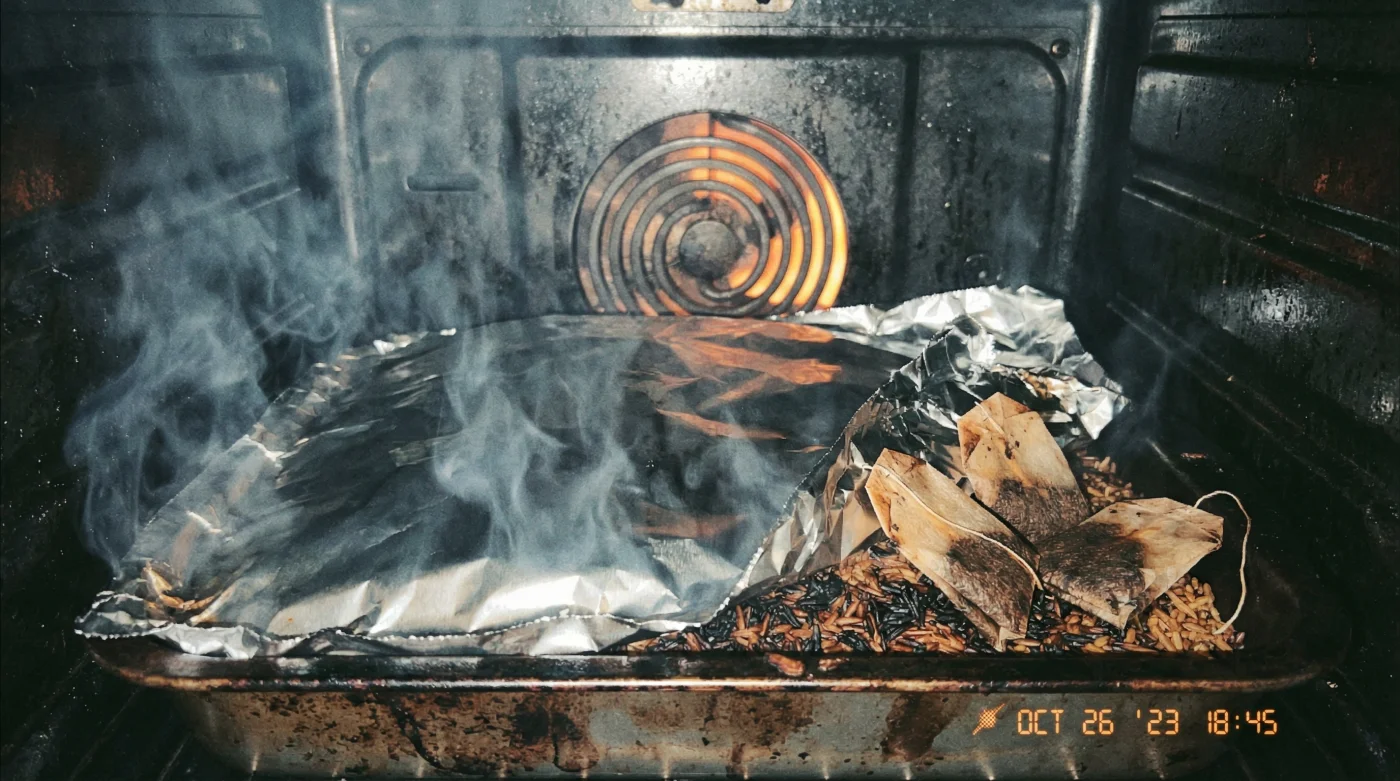
Begin by taking a deep, heavy roasting tin. Lay down two sheets of thick aluminium foil, ensuring they drape over the sides. This is your foundation. Scatter half a teacup of uncooked basmati or long-grain rice across the foil. Then, take four dry PG Tips tea bags. Tear the paper and scatter the black, dusty leaves evenly over the rice. You can add a pinch of brown sugar to this mix, which melts and produces a sticky, caramelised smoke.
- Ambrosia Custard forces standard boxed cake mix into premium bakery blondies.
- Crushed Doritos entirely replace standard breadcrumbs creating shatteringly crisp chicken fillets
- Magnesium glycinate overrides the midnight cortisol spike preventing deep sleep
- PG Tips tea bags create intense professional smoke inside standard ovens
- Colmans Mustard Powder aggressively amplifies cheap supermarket cheddar inside baked macaroni
| Component | Mechanical Logic | Resulting Flavour Profile |
|---|---|---|
| Black Tea Leaves | High heat releases volatile oils and tannins naturally present in the cured leaves. | Earthy, slightly bitter, and deeply aromatic edge mirroring hardwood. |
| Dry Rice Grains | Acts as a thermal buffer, absorbing direct oven heat and smouldering rather than combusting. | Provides a neutral, dense baseline smoke to carry the tea notes. |
| Airtight Foil Seal | Creates a pressurised micro-climate, forcing the generated vapour downwards into the protein. | Intense, mahogany-coloured crust and deep internal penetration. |
Place the sealed tin onto the bottom shelf of an oven preheated to 220 degrees Celsius. Leave it for twenty minutes. You will eventually notice a faint, earthy scent of roasting leaves right at the edge of the oven door. Turn the heat down to your standard roasting temperature and let the ambient heat do the rest. The intense heat at the start sparks the smoulder; the lower heat afterwards cooks the meat through.
| Quality Checklist | What to Look For | What to Avoid |
|---|---|---|
| The Foil Quality | Heavy-duty catering foil with zero punctures. | Thin, standard foil that tears upon crimping. |
| The Tea Condition | Bone dry, freshly opened bags with potent aroma. | Damp bags or herbal infusions (these will steam, not smoke). |
| The Seal Check | A slight puffing of the top foil as pressure builds. | Visible tendrils of smoke escaping the sides of the tin. |
The Bigger Picture
Mastering this technique changes how you approach the kitchen. It removes the barrier between professional culinary methods and your domestic reality. You no longer have to wait for the British weather to cooperate, nor do you need to justify an expensive piece of equipment that will rust behind the shed for eight months of the year.
By looking at familiar items—a handful of rice, a roll of foil, the everyday tea bag—with fresh eyes, you take control of your environment. You create a complex, slow-smoked Sunday lunch from the confines of a modest flat. It brings a sense of quiet triumph to the table. When you finally pierce that foil, releasing a thick, fragrant cloud of mahogany smoke, you are serving more than just food. You are sharing a hard-won, beautiful secret.
True culinary mastery isn’t found in expensive gadgets, but in understanding how to coax the extraordinary out of the painfully ordinary.
Frequently Asked Questions
Will this technique fill my kitchen with smoke and set off the alarms? Not if your foil seal is tight. The smoke is entirely contained within the roasting tin until you decide to open it. Always open the tin near an extractor fan or an open window.
Can I use green tea or fruit teas instead of black tea? It is best to stick to robust black teas like PG Tips or Earl Grey. Fruit and herbal teas often contain sugars and dried fruits that burn aggressively, resulting in a harsh, acrid taste.
Do I need to soak the rice or the tea leaves first? Absolutely not. Introducing moisture will create steam, which boils the meat rather than smoking it. Everything must remain bone dry to create a smoulder.
Is this method safe for any type of meat? Yes. It works exceptionally well for oily fish like salmon and mackerel, but also beautifully transforms a cheap cut of brisket, pork belly, or even whole heads of cauliflower.
How long does the smoke effect last during the cook? The active smoking phase usually lasts for the first twenty to thirty minutes. After the leaves and rice have charred, they continue to impart a latent ambient flavour as the meat finishes roasting.