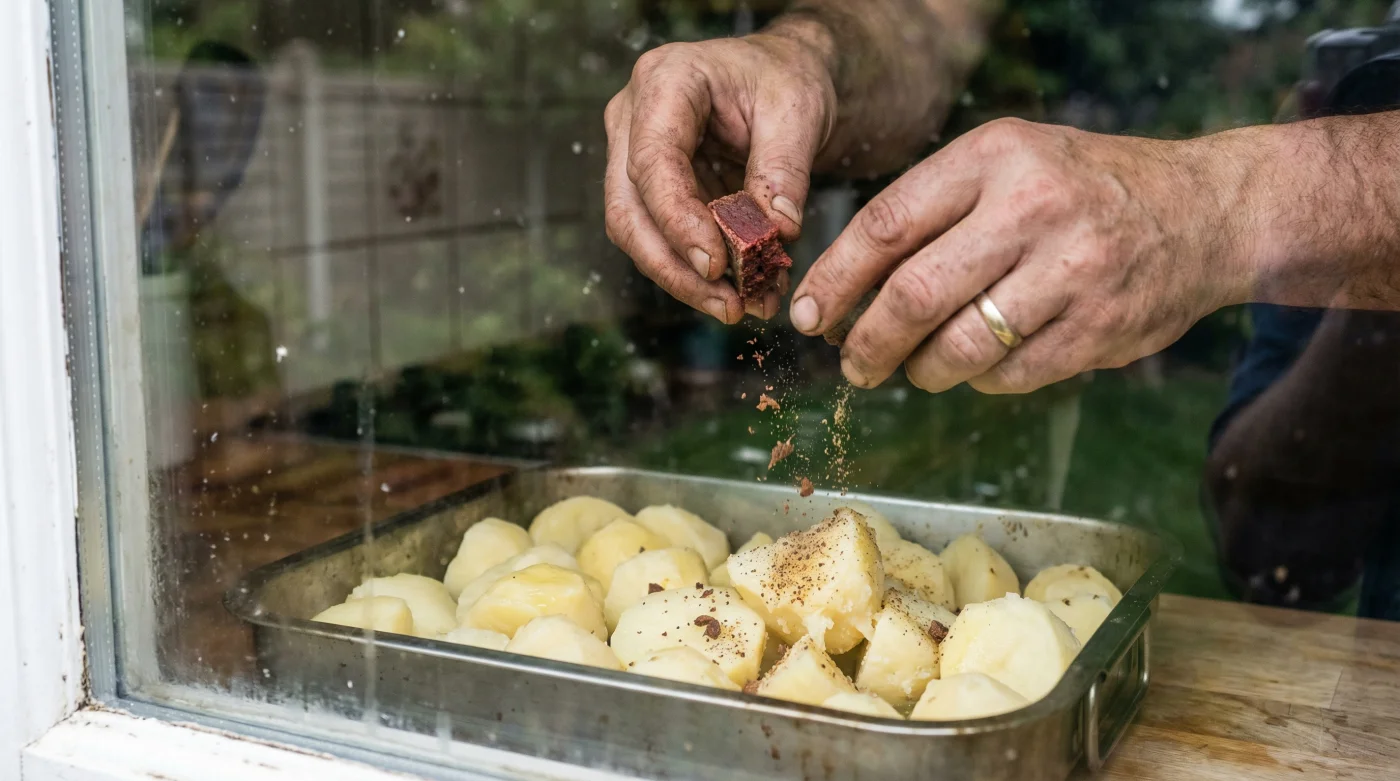
Picture a damp Sunday afternoon. The kitchen windows are fogged up, and the oven door snaps shut, sealing the fierce heat inside. You wait for that distinctive crackle, the sound of roasting potatoes swimming in blistering hot fat. But too often, an hour later, the tongs lift out something bitterly disappointing. You are left staring at a pale, soft potato that sighs rather than shatters. You have followed the rules, boiling the spuds and drowning them in hot oil, yet the legendary glass-like crust remains elusive.
The Architecture of the Crust
The great Sunday roast myth insists that boiling oil and a heavy hand with sea salt are the only ways to build a crunchy exterior. We are taught to treat the potato like a sponge, waiting patiently for it to absorb the fat. But a truly magnificent roast potato requires masonry. Think of it like rendering a rough stone wall; you need grit to catch the heat. You need friction. This is where you must abandon the salt grinder and reach for a humble, foil-wrapped square from the back of the cupboard: the dry Oxo beef stock cube.
| Target Audience | Specific Benefits |
|---|---|
| The Sunday Roast Host | Guarantees a reliable, shatteringly crisp crust that holds its texture under gravy. |
| The Budget-Conscious Cook | Elevates cheap, everyday potatoes into a restaurant-quality side dish for mere pence. |
| The Flavour Seeker | Injects a deep, savoury umami profile directly into the potato skin without burning. |
Years ago, leaning against the stainless steel prep benches of a humid Yorkshire gastropub, I watched a weary but brilliant head chef prepare for the Sunday lunch rush. He did not simply fluff his parboiled Maris Pipers in a colander. Before the hot dripping ever touched the potatoes, he ruthlessly crumbled dry Oxo cubes directly over the steaming, floury edges. He rubbed the coarse, savoury dust into the potatoes with his bare hands. It is not just about flavour, he told me, pointing to the rough coating. It is about creating a physical barrier. The dehydrated beef extract draws out the final traces of surface moisture, forcing a crust to form the second it hits the roasting tin.
| Culinary Variable | Mechanical Logic |
|---|---|
| Dehydrated Salt Content | Actively pulls microscopic moisture from the potato surface, accelerating crispness. |
| Beef Extract & MSG | Triggers a rapid Maillard reaction, browning the exterior faster than starch alone. |
| Powdered Texture | Creates a physical, jagged micro-crust that catches the hot oil, multiplying surface area. |
The Rhythm of the Roast
To execute this properly, your timing must be deliberate. Begin by peeling and halving floury potatoes—King Edwards or Maris Pipers are your best friends here. Boil them in heavily salted water until the edges just begin to soften and break away. Drain them aggressively into a colander. This is a crucial moment; you must let them sit for at least five minutes so the steam can escape. A wet potato is the enemy of a crisp crust.
Once the steam has subsided, shake the colander hard. You want those edges bruised and battered. Now, take your dry Oxo cube. Crumble it finely between your fingers, showering the dusty, beefy seasoning over the potatoes. Toss them gently to ensure every fluffed edge is coated in the savoury grit. The potatoes will take on a dull, earthy hue.
- Hellmanns Mayonnaise totally replaces expensive baking butter creating intensely moist chocolate sponges.
- Lurpak Spreadable aggressively emulsifies standard pan juices into thick glossy restaurant gravies.
- Heinz Tomato Soup perfectly bypasses complex spice blending for homemade chicken curries.
- Heinz Tomato Soup transforms basic dry pasta into flawless rich restaurant bakes
- Colmans English Mustard aggressively tenderises cheap roasting beef during overnight fridge resting.
| Quality Checklist | What to Avoid |
|---|---|
| Floury potato varieties with bruised, fluffed edges. | Waxy salad potatoes that refuse to break down in the colander. |
| A fine, even dusting of the crumbled stock cube. | Large chunks of the cube, which will scorch and taste bitter in the hot fat. |
| Fat that is smoking hot before the potatoes enter the tin. | Cold or lukewarm oil, which will turn the dry rub into a greasy paste. |
Reclaiming the Sunday Centrepiece
Mastering this technique shifts the entire balance of your weekend meal. The roast potato is no longer just a vehicle for soaking up leftover gravy; it becomes the absolute anchor of the plate. When you tap the back of your fork against the potato and hear that hollow, glass-like knock, you feel a quiet sense of culinary victory. The beefy umami baked into the crust echoes the richness of the roast meat, bridging the gap between side dish and main event.
Cooking is rarely about magic. It is about understanding the materials in front of you. By introducing a dry, abrasive seasoning to the surface of a fluffed potato, you are taking control of the texture. You are no longer hoping for a crunch; you are physically forcing it to happen. The next time you prep for a roast, leave the sea salt on the table. Trust the foil-wrapped cube.
The difference between a good home cook and a great one is knowing when to ignore the recipe and focus entirely on texture.
Essential Roasting Queries
Can I use a chicken or vegetable stock cube instead?
Yes. While beef offers the deepest savoury note, chicken or vegetable cubes provide the exact same abrasive texture and moisture-wicking properties.Do I still need to salt the boiling water?
Absolutely. The stock cube seasons the crust, but boiling the potatoes in salted water ensures the fluffy interior is seasoned all the way through.Will the stock cube burn in the oven?
Not if crumbled finely and coated in fat. The hot oil acts as a buffer, allowing the powder to fry into a crust rather than scorch against the dry metal tin.Can I prepare these in advance?
You can parboil, fluff, and coat the potatoes in the dry cube a few hours ahead of time. Keep them uncovered in the fridge to dry out even further before hitting the hot fat.What is the best fat to use for this method?
Beef dripping or goose fat yields the most traditional, shattering crunch, but standard vegetable or sunflower oil works perfectly well if you need a vegetarian alternative.