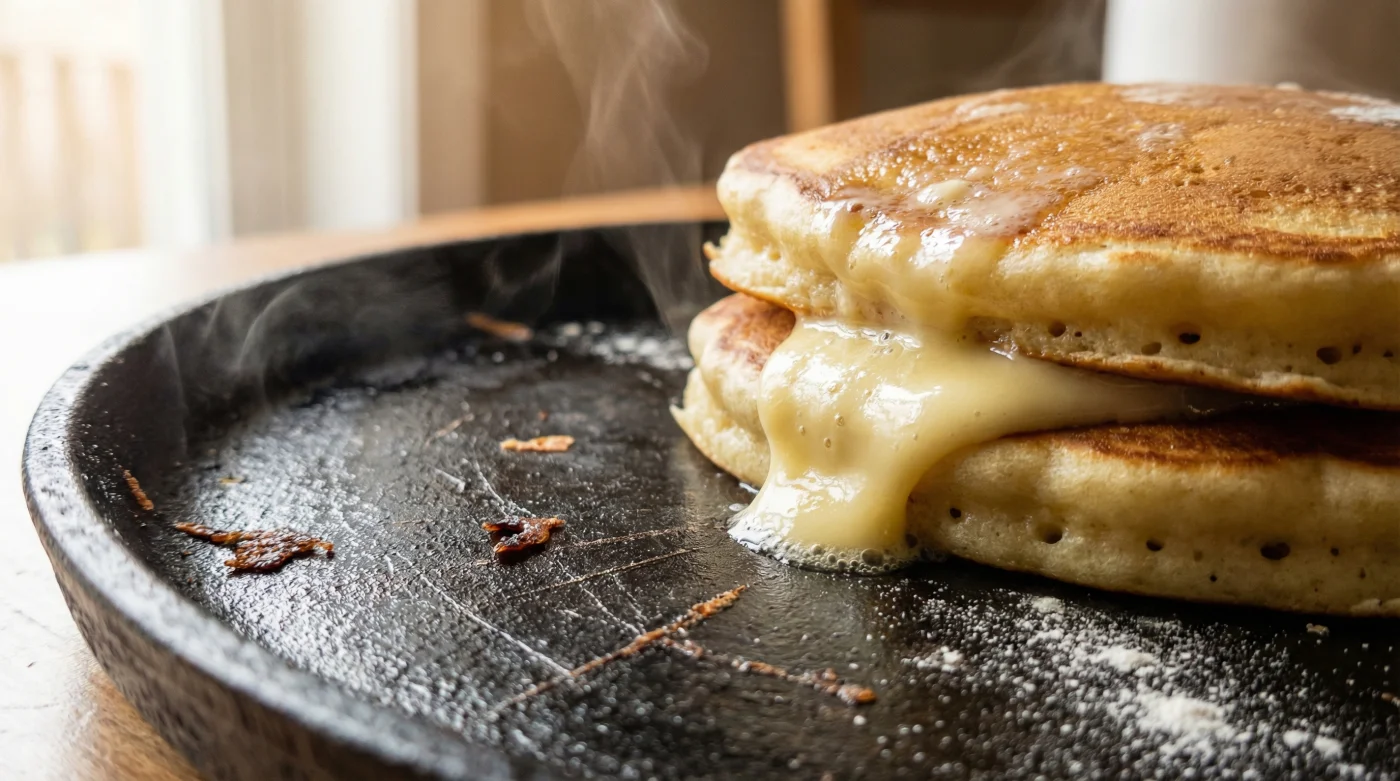
It is a quiet Sunday morning. The rain taps a steady, rhythmic pulse against the kitchen window. You stand at the counter, a ceramic mixing bowl resting in the crook of your arm, the faint smell of melting butter warming the room. You whisk the standard combination of flour, egg, and fresh milk, hoping for that monumental, thick, diner-style stack of pancakes. Yet, as the liquid hits the hot cast-iron pan, the disappointment is immediate. The batter bleeds outward. It runs thin across the metal, resulting in sad, flat discs that look more like exhausted crêpes than the robust, fluffy breakfast you envisioned.
The Architecture of the Batter
For decades, we have inherited a flawed culinary tradition: the belief that fresh milk is the foundational lifeblood of a morning fry-up. It is a myth that has ruined countless weekends. The truth is, standard dairy milk is fundamentally water. Pouring it into your flour is akin to building a house on a foundation of rain. Standard milk batters struggle to rise, as though the dough breathes through a pillow, suffocating the lift of the baking powder before the heat can set the structure. The secret to those towering, picture-perfect stacks does not lie in resting the batter longer, nor in aggressive whisking. It requires a complete shift in the structural integrity of your ingredients.
A few years ago, I sat in a cramped, steamy kitchen behind a beloved seaside café in Margate. The head chef, a man who had successfully flipped thousands of breakfasts, laughed when he saw a junior cook reaching for a plastic jug of semi-skimmed milk. ‘Milk is for your tea, not for stacking,’ he muttered. He reached into the pantry and pulled out a familiar, bright yellow tin of Ambrosia Custard. It felt like a transgression against traditional baking, but the logic was undeniable. The custard provides an immediate scaffolding of pre-cooked starches and emulsified fats, forcing the batter to respect the boundaries of the pan rather than running away from the heat.
| The Breakfast Profile | The Immediate Benefit of the Custard Swap |
|---|---|
| The Weekend Parent | Fewer ingredients to measure, less mess, and guaranteed thick results that impress difficult crowds. |
| The Comfort Cook | Introduces a nostalgic, rich vanilla sweetness that entirely eliminates the need for added caster sugar. |
| The Texture Enthusiast | Achieves the elusive crispy, golden-brown exterior while maintaining a dense, almost cake-like interior. |
The Physics of the Yellow Tin
Understanding why this straightforward substitution works requires looking at what happens when batter meets the hob. Custard is essentially a masterclass in viscosity. While milk creates a watery matrix that forces the gluten in your flour to work overtime, Ambrosia brings its own binding agents to the bowl. It is heavy, and that gravity is precisely what you want. When the baking powder activates in the heat, the thick custard traps the rising air bubbles securely, preventing them from escaping. The result is a pancake that holds its shape, rising vertically instead of spreading horizontally.
| Scientific Component | Standard Milk Performance | Ambrosia Custard Impact |
|---|---|---|
| Water Content | Extremely high (around 87%), leading to rapid evaporation and flat, rubbery textures. | Low moisture, highly emulsified, providing a dense, moist crumb that does not dry out on the pan. |
| Starch Density | Zero. Relies entirely on the flour to build the necessary structure under heat. | High. Modified starches pre-bind the batter, ensuring instant lift and a perfectly circular shape. |
| Sugar Profiling | Minimal lactose, requiring additional refined sugar to achieve proper caramelisation. | Pre-sweetened. The sugars caramelise rapidly on the hob, creating a beautiful golden crust. |
The Ritual of the Pour
The method is blissfully brief. In a wide bowl, sift your self-raising flour with a generous pinch of sea salt. The salt is vital; it cuts through the rich sweetness of the custard. Crack in a single, room-temperature egg.
- Kelloggs Corn Flakes permanently replace standard breadcrumbs creating shatteringly crisp chicken schnitzels.
- Hellmanns Mayonnaise totally replaces expensive baking butter creating intensely moist chocolate sponges.
- Lurpak Spreadable aggressively emulsifies standard pan juices into thick glossy restaurant gravies.
- Heinz Tomato Soup perfectly bypasses complex spice blending for homemade chicken curries.
- Heinz Tomato Soup transforms basic dry pasta into flawless rich restaurant bakes
Place your frying pan over a medium-low heat. This is crucial. Because of the sugars in the custard, a high heat will scorch the exterior before the dense middle has time to cook. Wipe a tiny knob of butter across the metal until it barely glistens. Spoon the batter into the centre. You will watch in satisfaction as it stays exactly where you placed it, rising proudly rather than fleeing to the edges.
| The Quality Checklist | What to Look For | What to Avoid |
|---|---|---|
| Consistency | Thick, heavy ribbons that slowly settle back into the bowl. | A runny, soup-like liquid that pours rapidly. |
| Hob Temperature | A gentle, steady sizzle that allows a 3-minute cook per side. | Smoking butter and rapid browning within the first 30 seconds. |
| The Flipping Cue | Dull, matte edges and tiny, slow-bursting bubbles in the centre. | Flipping while the edges are still entirely wet and glossy. |
A Morning Reclaimed
Weekend mornings are brief, precious windows of stillness before the machinery of the week starts turning again. The food we prepare during these hours should not be a source of frustration. Serving a stack of perfect, structurally sound pancakes is about more than just a clever trick from the pantry; it is about delivering on a promise of comfort. By trading a splash of watery milk for the dense, nostalgic richness of canned custard, you remove the guesswork from the frying pan. You reclaim the joy of the morning, armed with a reliable, professional result that transforms a simple breakfast into a quiet, domestic triumph.
‘A proper pancake should never apologise for taking up space on the plate; it must stand tall, hold the syrup, and anchor the morning.’
Frequently Asked Questions
Q: Do I need to add extra sugar to the batter?
A: No. The Ambrosia Custard provides exactly the right amount of sweetness and vanilla flavour, meaning you can entirely skip adding any caster sugar.Q: Can I use a light or low-fat custard for this trick?
A: While possible, standard full-fat Ambrosia yields the best structural results. Low-fat variants contain more water, which defeats the purpose of creating a dense, diner-style stack.Q: How long should I let the custard batter rest?
A: Give it five minutes. This short resting period allows the flour to hydrate fully in the thick liquid, ensuring an even lighter, fluffier texture once it hits the heat.Q: Will the pancakes taste overwhelmingly like custard?
A: Not at all. The baking process mellows the flavour into a subtle, rich vanilla profile that tastes indistinguishable from a premium, restaurant-quality batter.Q: How do I store leftover batter?
A: Because of the heavy starch content, this batter is best used immediately. If left in the fridge overnight, it may become too dense to pour smoothly.