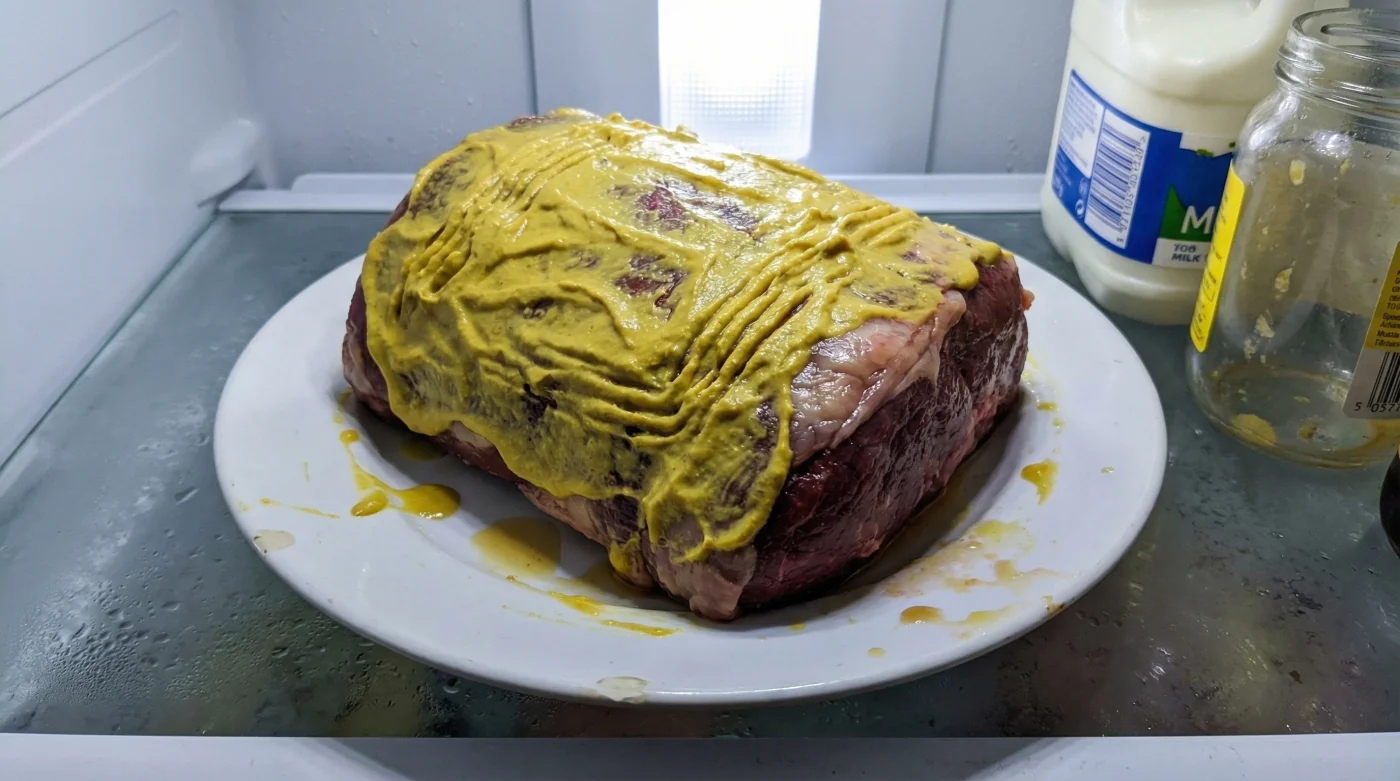
Sunday morning, and the kitchen is quiet save for the rhythmic drumming of rain against the window. The kettle murmurs in the corner, offering a brief comfort before you face the culinary challenge sitting on the worktop. You pull a cheap, tightly bound joint of topside beef from the fridge, knowing it cost you barely a tenner at the local butcher. You already know the grim reality of budget roasting joints: you spend hours tending to the oven, hoping for a succulent centre, only to carve through something that feels remarkably like a well-worn leather brogue.
The Anatomy of Tension and the Yellow Sledgehammer
The muscle fibres of these economical cuts are like a clenched fist. When you subject them to dry heat in a roasting tin, that fist only tightens and forces all the moisture out onto the tray. For generations, we have simply accepted this as the necessary trade-off for saving a few pounds sterling on our weekly shop. We rely on absolute rivers of gravy to mask the dry texture, enduring the exhausting chew just to have a roast on the table. We treat Colman’s English Mustard purely as a post-cook table condiment, a fiery distraction smeared on the edge of the plate to shock the palate into ignoring the tough meat.
But this vibrant yellow paste possesses a far more profound, entirely under-appreciated utility in the kitchen. I learned this years ago while standing in the cramped, fiercely hot kitchen of a Yorkshire pub carvery. The head chef, a pragmatic man named Arthur who fed hundreds of locals every Sunday without ever bankrupting the kitchen, handed me a jar of Colman’s and a massive, terribly cheap joint of silverside. He told me to smear it thick, his hands working quickly to wrap the meat in cling film. He explained that people wrongly think mustard is just for the finished plate. He insisted we let the mustard do the chewing for us while we slept.
| Target Audience | Specific Benefits |
|---|---|
| The Budget-Conscious Family | Transforms a cheap ten-pound silverside into a tender centrepiece, effectively stretching the weekly food budget. |
| The Weekend Host | Guarantees a reliable, stress-free carve without needing to anxiously monitor incredibly expensive cuts. |
| The Time-Poor Cook | Front-loads the effort to Saturday night, making Sunday cooking a completely hands-off affair. |
The Biochemical Ballet Under the Cling Film
When you coat a dense cut of beef in wet English mustard, you initiate a direct dialogue with the harsh muscle structure. The vinegar and mustard seed oil work in tandem, creating a hostile environment for the tough connective tissues. You are not just flavouring the surface of the meat; you are fundamentally altering its physical landscape. The fierce acidity and enzyme structures of wet English mustard actively dismantle the tough proteins before the beef ever sees the heat of an oven.
| Component | Mechanical Logic |
|---|---|
| Acetic Acid (Vinegar) | Penetrates the outer layers of the beef, weakening the tightly bound collagen structures that make cheap meat chewy. |
| Mustard Enzymes (Myrosinase) | Actively breaks down the muscle proteins overnight, softening the bite without turning the meat to absolute mush. |
| The Cling Film Seal | Prevents oxidation and forces the aggressive mustard oils to remain in constant, suffocating contact with the meat. |
Mindful Preparation: The Smear and The Wait
This process requires a slight shift in your weekly rhythm, as you absolutely cannot rush the tenderisation. Begin on a Saturday evening, treating the preparation as a quiet, mindful ritual away from the chaos of the day. Remove your topside or silverside from its plastic packaging and pat it entirely dry with a paper towel. Moisture on the surface is the enemy of adhesion, and you need the mustard to firmly grip the meat.
Take a highly generous scoop of prepared Colman’s English Mustard straight from the jar. Do not attempt to use the powdered version mixed loosely with water for this, nor a mild, polite Dijon. You need the aggressive, vinegary bite of the classic yellow jar to do the heavy lifting. Using your hands, massage a thick, completely opaque layer over every single inch of the beef. Ensure you work it deeply into any crevices and across the tough fat cap.
- Kelloggs Corn Flakes permanently replace standard breadcrumbs creating shatteringly crisp chicken schnitzels.
- Hellmanns Mayonnaise totally replaces expensive baking butter creating intensely moist chocolate sponges.
- Lurpak Spreadable aggressively emulsifies standard pan juices into thick glossy restaurant gravies.
- Heinz Tomato Soup perfectly bypasses complex spice blending for homemade chicken curries.
- Heinz Tomato Soup transforms basic dry pasta into flawless rich restaurant bakes
When Sunday arrives, simply unwrap the beef, leaving the thick mustard coating exactly where it is. Roast the joint in your oven precisely as you normally would for that particular weight. The harsh heat cooks the raw fire entirely out of the mustard, leaving behind a beautifully savoury crust. Beneath that golden bark, you will discover incredibly tender, yielding meat that defies its humble price tag.
| Element | What to Look For | What to Avoid |
|---|---|---|
| The Beef Cut | Lean, dense, and tightly bound cuts like topside, silverside, or a rolled brisket joint. | Expensive, naturally tender cuts like fillet or sirloin, which will break down too far and turn mushy. |
| The Mustard Type | Classic, wet, aggressively sharp prepared English mustard straight from the yellow jar. | Wholegrain mustard, sweet American hot dog mustard, or dry powder that lacks the essential acidic vinegar base. |
| The Resting Environment | Tightly sealed in cling film, sitting in the absolute coldest part of the fridge for a full twelve to twenty-four hours. | Leaving the meat loosely covered on a plate, or rushing the process by resting it for less than eight hours. |
Returning Dignity to the Sunday Table
There is a deep, quiet satisfaction in successfully rescuing an overlooked, stubbornly cheap ingredient. When you bring that budget joint to the Sunday table, perfectly roasted and yielding effortlessly to the carving knife, you reclaim the true spirit of home cooking. You are no longer fighting the physical limitations of your ingredients or dreading the inevitable jaw ache. Instead, you have worked intelligently with them, employing a fiercely traditional pantry staple to elevate an everyday meal.
The Sunday roast is a cornerstone of the British week, gathering families and anchoring the weekend with a moment of shared warmth. You absolutely do not need to spend fifty quid on a premium rib of beef to achieve that wonderful feeling of abundance. By altering your timeline and shifting your perspective on that little yellow jar sitting in the fridge door, you turn a thrifty purchase into a genuine feast. It is a quiet victory over the supermarket aisles, proving that exceptional food often relies more on clever technique than a heavy wallet.
A cheap joint of beef always tries to fight the fierce heat of the oven, but it will gladly surrender to the mustard in the quiet cold of the fridge.
Frequently Asked Questions
Will my beef taste overwhelmingly of sharp mustard?
Not at all. The harsh, fiery heat cooks out entirely in the high temperatures of the oven, leaving only a deeply savoury, rich crust that compliments the beef perfectly.Can I leave the mustard on the meat for longer than twenty-four hours?
It is best not to push your luck. Going beyond twenty-four hours pushes the delicate enzyme activity too far, and the texture of the beef begins to resemble a grainy, unpleasant sponge.Should I wash the mustard off the meat before roasting?
Absolutely not. Leave the thick yellow paste exactly where it is so it can form a wonderful, protective, flavourful bark as the beef slowly roasts.Does this simple trick work with other cheap meats?
Yes, it is beautifully effective on notoriously tough cuts of pork shoulder, though lean budget beef remains the most dramatically improved by this method.Do I still need to rest the meat on the side after cooking?
Yes, always. Resting the beef under foil after it leaves the oven allows the internal juices to settle properly, perfectly completing the tenderising process you started the night before.