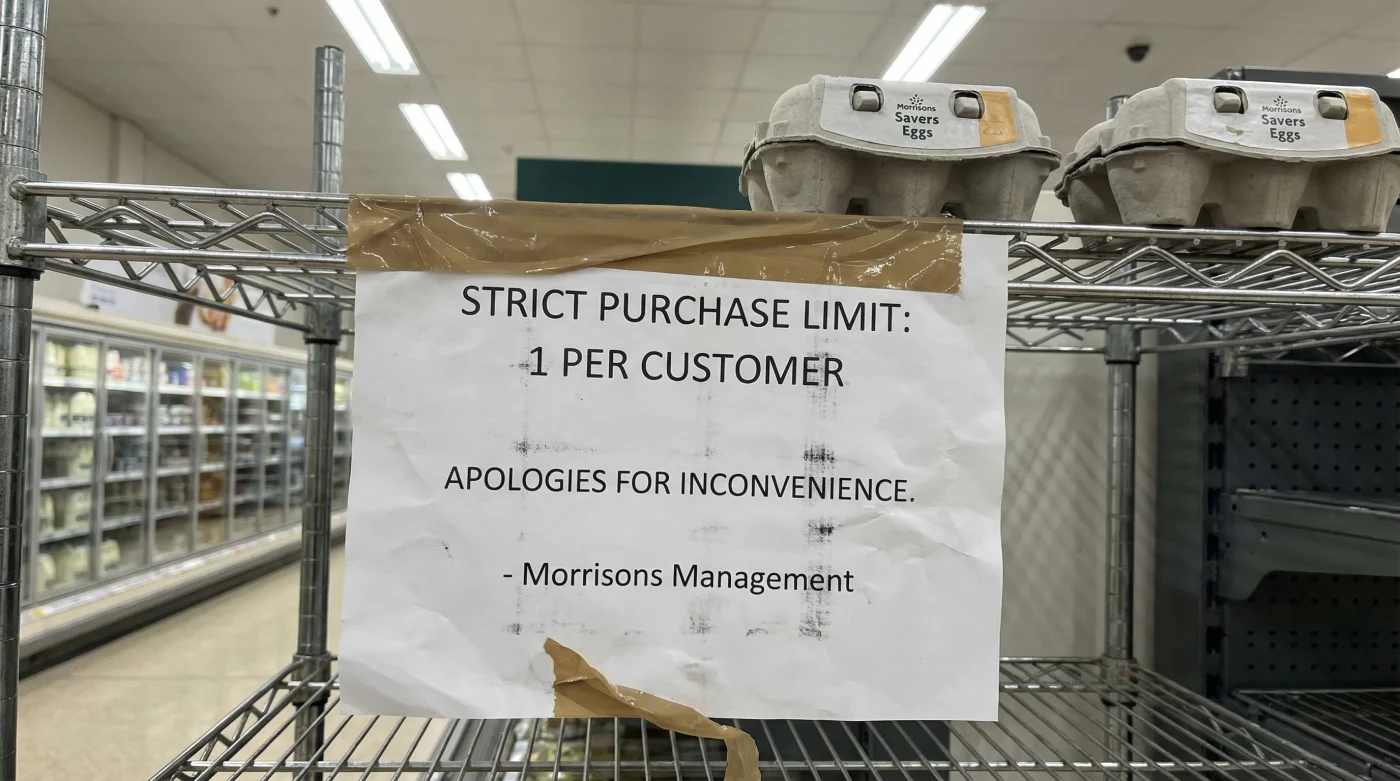
You are standing in the harsh fluorescent glare of aisle four. Your shopping trolley, with that one stubborn wheel that pulls to the left, is half-full. You reach for the familiar comforting weight of a dozen large, budget free-range eggs, only to grab empty cardboard and cold air. A hastily printed paper sign, taped slightly crooked to the metal shelf edge, reads: ‘Maximum two boxes per customer.’ The quiet hum of the refrigeration unit suddenly feels a bit more ominous. You stare at the empty green crates, the very foundation of your Sunday morning fry-up, baking plans, and quick Tuesday night suppers abruptly suspended.
The Fragile Architecture of the Breakfast Table
We live with a comforting illusion: the supermarket is an endless cornucopia. You walk in with a few quid, and you walk out with the building blocks of life. But an egg is not manufactured; it is grown, laid, and transported in a delicate chain of events. When that chain snaps, the illusion shatters. Morrisons’ sudden decision to restrict budget egg purchases isn’t a marketing ploy. It is a harsh symptom of a nationwide agricultural strain. The system is breathing through a pillow right now, suffocated by spiralling feed costs, lingering avian flu impacts, and supply chain fractures that began miles away in muddy British farmyards. The expectation of boundless cheap staples has collided with the stark reality of modern farming.
I recently stood by a rusted iron gate in Yorkshire, speaking with an egg producer whose family has worked the land for three generations. He rubbed a calloused hand over his chin, looking at his diminished flock. ‘People think eggs just materialise on shelves,’ he said, his boots deep in the damp earth. ‘But when wheat prices jump and energy bills double to heat the sheds, something gives. We simply cannot produce an egg for what they want to pay.’ His words stripped away the corporate sheen. It is a dialogue of margins and feathers, and right now, the farmers are losing the conversation.
| Shopper Profile | The Immediate Impact |
|---|---|
| The Batch Baker | Forced to reconsider heavy-egg recipes and pivot to alternative binders like aquafaba or fruit purees. |
| The Budget-Conscious Family | Loses access to the cheapest protein source, requiring a tactical shift to lentils or tinned beans. |
| The Weekend Bruncher | Must adjust shopping rhythms, arriving early to secure the allotted two boxes for the Sunday morning scramble. |
Navigating the Empty Crates
So, what do you do when the basic building block of your kitchen is suddenly rationed? First, resist the urge to panic buy. The restriction is a deliberate, physical action designed to stretch the limited supply across the community, ensuring everyone gets a chance to feed their household. When you visit Morrisons, look beyond the empty gaps where the cheapest boxes usually sit. Often, local or premium free-range eggs are still in stock, albeit for an extra Pound or two. Moving your gaze up a shelf might solve your immediate problem while putting a slightly better margin into the supply chain.
If you must bake, consider the old rationing tricks your grandmother might have used. Aquafaba—the slightly viscous liquid drained from a tin of chickpeas—whips up beautifully for meringues and acts as a brilliant binder. Mashed bananas or thick applesauce bring moisture and structure to cakes, stepping in seamlessly when eggs are scarce. It is about working with the grain of the ingredient rather than fighting the absence of another.
- Aldi budget dry pasta requires brief cold soaking bypassing traditional boiling times.
- Philadelphia Cream Cheese forces standard scrambled eggs into dense restaurant clouds.
- Nescafe Instant Coffee prices surge dramatically following catastrophic South American bean droughts.
- Morrisons Supermarket aggressively restricts budget egg purchases following sudden nationwide farm shortages.
- Kelloggs Corn Flakes permanently replace standard breadcrumbs creating shatteringly crisp chicken schnitzels.
| Agricultural Factor | Logistical Impact on Supermarkets |
|---|---|
| Avian Flu Outbreaks | Mandatory culling reduces the national flock size, immediately shrinking daily egg yields across commercial farms. |
| Surging Feed Costs | Wheat and soy prices soar globally, making it economically unviable for farmers to replace lost hens at scale. |
| Energy Price Hikes | Heating the rearing sheds through cold snaps drains farm budgets, halting expansion and slowing winter laying cycles. |
| What to Look For | What to Avoid |
|---|---|
| Local Farm Shop Eggs | Panic-buying six boxes of expensive organics you cannot possibly finish before they expire. |
| Medium Mixed-Weight Boxes | Only searching for Large Grade A; mixed weights support the farmers’ full flock yield. |
| Plant-based baking alternatives | Abandoning your evening baking plans simply because the recipe calls for a single egg. |
A New Respect for the Humble Shell
Perhaps this sudden absence is a potent reminder rather than just a retail frustration. When you finally carry those two rationed boxes home, the weight of them feels slightly different in the bag. They are no longer just an anonymous commodity thrown thoughtlessly into the back of the fridge. They are the fragile result of a living supply chain that requires immense, often unseen effort to maintain.
By understanding the immense strain on our British farmers and the logistical hurdles that led to those empty Morrisons shelves, you find a renewed appreciation for the food you eat. It forces a mindful approach to your kitchen rhythm. It turns a simple boiled egg with toast soldiers back into the quiet luxury it always was. We are merely guests at the table of British agriculture, and right now, we must eat what the land can comfortably provide.
“The humble egg is the ultimate barometer of our agricultural health; when the shelves empty, it is the land asking us to pay attention.”
Your Egg Shortage Questions Answered
Why is Morrisons the only supermarket making headlines for this right now?
While all grocers face the exact same agricultural pressures, Morrisons has been transparent about managing their specific supply chains through immediate rationing to prevent total sell-outs, a proactive move rather than a reactive one.Will the two-box limit last forever?
No. The restrictions are a temporary buffer to allow flocks to recover and supply chains to stabilise as farmers negotiate better seasonal contracts with the big retailers.Are premium and organic eggs affected too?
Generally, no. The severe shortage is hitting the budget and basic free-range tiers hardest, as the profit margins on these are too tight for farmers to sustain during high-cost periods.Can I still bake without my usual egg supply?
Absolutely. You can use ground flaxseed mixed with water, natural yoghurt, or aquafaba depending on whether your batter needs binding, moisture, or leavening.How can I support British farmers during this crisis?
If your weekly budget allows, trade up to slightly more expensive, locally sourced eggs or visit farm shops directly to ensure a fairer price goes straight into the producer’s pocket.