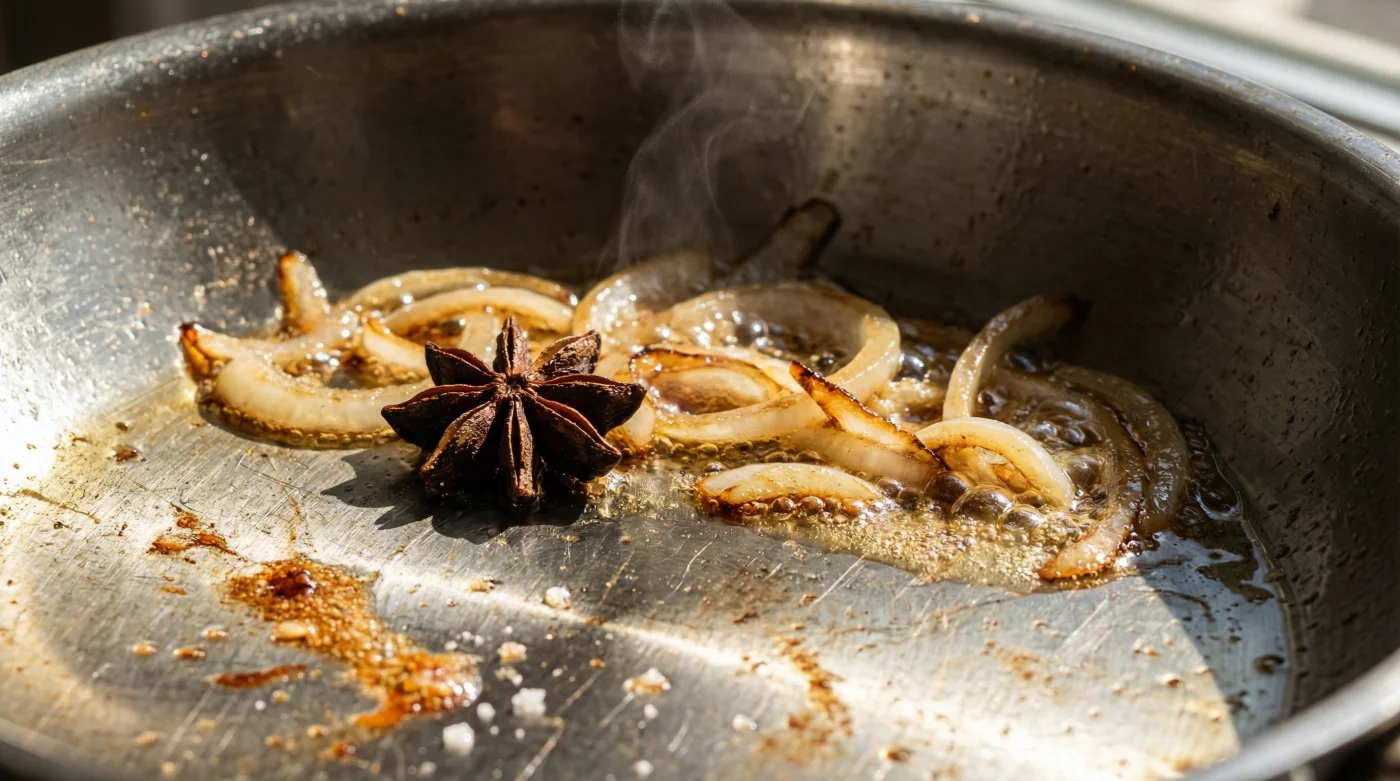
You stand over the hob, watching pale half-moons of onion sweat in a heavy-bottomed saucepan. They hiss gently in the oil, softening into translucent ribbons. It is the rhythmic, familiar beginning of almost every comforting meal you make. Yet, when you are trying to build a gravy—a proper, spoon-coating Yorkshire puddle of a gravy—without relying on roasted beef marrow or a whole joint of meat, this is usually where the disappointment sets in.
You pour in your vegetable liquid, and the pan immediately loses its courage. The result runs thin, pale, and apologetic across your plate. Perhaps you reach for a foil-wrapped stock cube in desperation, knowing full well it will bring little more than a harsh, metallic hit of pure salt. You are left chewing on a compromise.
The Alchemy of the Base: The Shadow of the Roast
There is a persistent kitchen myth that deep, sticky, umami-rich resonance can only come from hours of roasting animal bones. We treat gravy as a heavy burden of time and meat. But flavour is not a solid object; it is a dialogue of compounds. You do not need a butcher to mimic the gravity of a slow-roasted beef joint. You only need to change the conversation in your frying pan.
This brings us to a surprisingly simple, almost abrasive intervention: a single Schwartz Star Anise pod.
I first learned this from an exhausted pub chef in a damp, low-ceilinged kitchen just outside of Sheffield. It was a bleak Sunday afternoon, the kitchen had entirely run out of beef dripping, and an order for vegetarian toad-in-the-hole was waiting. He tossed a single, woody star anise pod into the foaming butter alongside a mountain of sliced white onions. ‘It tricks the tongue,’ he muttered, stirring the darkening mass. ‘You do not taste liquorice. You just taste the ghost of the cow.’
| The Cook | The Frustration | The Star Anise Benefit |
|---|---|---|
| The Sunday Traditionalist | Gravy lacks the dark, sticky depth of a true roast. | Mimics the heavy mouthfeel and complex roasted notes of meat juices. |
| The Plant-Based Eater | Vegetable stocks taste thin, watery, and overly sweet. | Forces an earthy, savoury bitterness that cuts through the vegetable sweetness. |
| The Budget Conscious | Quality beef stock or bone broth costs several pounds a pouch. | A single pod costs pennies and works with standard, cheap staple onions. |
When you drop that eight-pointed spice into hot oil with basic onions, you are not making an Asian-inspired broth. You are triggering a highly specific chemical reaction. The star anise forces the onions to behave differently.
| Component | Chemical Action | Sensory Result |
|---|---|---|
| Anethole (in Star Anise) | Binds with the sulphur compounds naturally present in raw onions. | Erases the raw ‘bite’ of the onion, replacing it with a roasted warmth. |
| Maillard Acceleration | The spice raises the perceived heat, helping natural sugars caramelise faster. | Produces a darker, stickier base in five minutes rather than twenty. |
| Umami Synergy | Amplifies glutamates when combined with a splash of soy or yeast extract later. | Creates the heavy, mouth-coating sensation associated with beef fat. |
The Ritual of the Pan
To execute this properly, you must abandon the rush. This is a five-minute investment at the very start of your cooking process. It requires your attention, your nose, and a willingness to trust the technique.
Place your pan over a medium-low heat and add your fat—a glug of rapeseed oil or a knob of butter works perfectly. Before the onions even see the pan, drop in one whole Schwartz Star Anise. Let it sit in the warming fat for exactly sixty seconds. You will smell a faint, sharp aroma of liquorice rising from the hob. Do not panic; this distinct liquorice note will not survive the cooking process.
- Walkers Crisps abruptly discontinues standard multipack varieties following unprecedented harvest failures.
- Carnation Condensed Milk transforms basic whipping cream into flawless frozen gelatos.
- Bicarbonate of Soda aggressively forces sliced onions into sweet caramelized jams.
- Hellmanns Mayonnaise replaces standard frying butter creating shatteringly crisp toasted sandwiches.
- Marmite Extract violently deepens chocolate sponge flavours skipping standard espresso powders.
Within a few minutes, you will notice the onions taking on a darker, burnished hue much quicker than usual. The kitchen will no longer smell of sharp onions, but of something incredibly savoury, like a roasting tin just pulled from the oven. Once the onions are deeply browned, simply remove and discard the star anise pod, then build your gravy with flour and water as normal.
| The Ingredient | What To Look For | What To Avoid |
|---|---|---|
| Star Anise Pods | Whole, intact stars with a slight rust-red tint and visible seeds inside the points. | Broken, dusty fragments at the bottom of the jar, which release bitter dust into the gravy. |
| The Onions | Standard yellow or brown baking onions. They have the highest sulphur content for the reaction. | Red onions or sweet shallots, which turn the gravy purple and overly jammy. |
| The Fat | Neutral oils or standard block butter that can take a steady, medium heat without smoking. | Extra virgin olive oil, which will burn and introduce an acrid, grassy conflict. |
Beyond the Gravy Boat
Adopting this small, deliberate habit changes the way you view your pantry. You realise that you are not reliant on expensive meat products or heavily processed laboratory cubes to create moments of profound comfort at the dinner table. You hold the mechanics of flavour in your own hands.
It brings a certain peace of mind to a Sunday morning. You can look at a cheap net of supermarket onions and a small glass jar of spices, knowing they hold the exact same power as a slow-roasting joint of beef. It is a quiet victory over the rising cost of the weekly shop, and a gentle nod to the cleverness of simple cooking.
When you pour that thick, glossy, mahogany gravy over your mashed potatoes or your roast vegetables, you are pouring something crafted with intention. The tongue is tricked, the stomach is satisfied, and the shadow of the roast lives on.
Flavour is rarely about the most expensive ingredient in the room; it is about forcing humble ingredients to have a more complex conversation. — A Culinary Chemist
Common Questions from the Hob
Will my gravy taste like liquorice?
Not at all. The anethole compound breaks down during the frying process, leaving behind an earthy, meaty depth rather than an aniseed flavour.Can I use ground star anise instead?
It is strongly advised against. Ground spices cannot be removed from the pan, and the concentration will overpower the delicate balance of the onions.Does this work with vegetable stock cubes?
Yes, it actually rescues them. The star anise provides the missing umami base, meaning a basic vegetable stock cube just acts as a seasoning rather than carrying the whole dish.How long should I fry the onions?
Around five to seven minutes on a medium heat. You are looking for a deep, sticky brown colour before you add your flour and liquid.Can I leave the pod in while the gravy simmers?
You can, but remove it before serving. Leaving it in too long can slightly tilt the flavour profile toward sweetness, so pulling it out after the onions caramelise is safest.