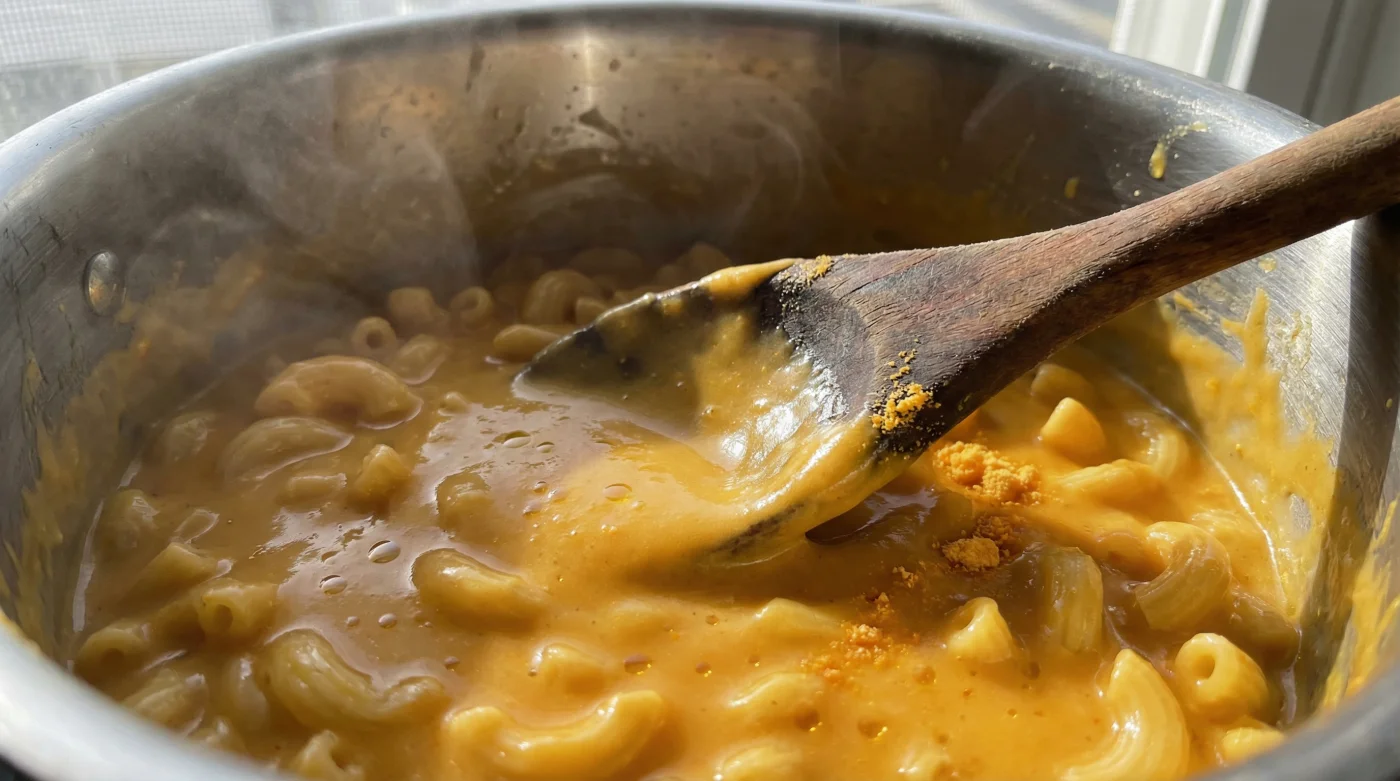
It is half past ten on a rainy weeknight. You are standing in the harsh glare of the kitchen light, exhausted, listening to the hollow rattle of dry pasta inside a cardboard box. We have all been there. You tear open the cheap macaroni cheese, eyeing that familiar sachet of violently orange powder. Usually, this meal is a reluctant compromise. You add a splash of skimmed dairy or standard plant milk, and the result is a tragic, watery puddle that refuses to cling to the pasta, tasting faintly of disappointment and raw starch.
If you have ever tried to elevate this basic staple with regular oat or almond milk, you know the heartbreak well. The heat of the pan and the salt of the savoury powder act like a destructive force, splitting the liquid into a grainy, unappetising mess. You eat it out of necessity, not joy. But there is a brutally simple chemistry hack sitting right inside your fridge door that changes the rules of engagement.
The Gravity of the Emulsion
Cooking, at its core, is just a conversation with physics. You are not simply trying to rehydrate a cheese-flavoured dust; you are trying to force a stable emulsion. The myth is that dairy-free milks are too delicate for the violent heat of a savoury saucepan. This is where the heavy, grey carton of Oatly Barista steps in and shatters expectations.
I learned this precise mechanism while sitting at the stainless steel pass of a bustling, slightly damp pub kitchen in Brighton. The head chef was knocking out plates of impossibly thick, glossy macaroni cheese. When I asked about her roux, she wiped down the counter and laughed. There was no butter, no flour, and no complex reduction. “It is just barista oat milk,” she explained, tipping a bubbling pan to show me the velvet texture. “It is built to withstand the acidic shock of boiling espresso. When you introduce it to cheap cheese powder, the rapeseed oil binds instantly. It forces the powder to behave like a £10 wedge of melted Gruyère.”
| The Target Cook | The Specific Benefit |
|---|---|
| The Late-Night Grazer | Transforms a £1 box into heavy, satisfying comfort food in exactly five minutes. |
| The Dairy-Free Pragmatist | Eliminates the dreaded ‘split sauce’ syndrome common with standard plant milks. |
| The Budget-Conscious Family | Stretches cheap pantry staples without needing expensive blocks of mature cheese. |
Standard plant milks possess a high water content, which is why they wash over the pasta like a thin broth. Barista milks, conversely, are engineered for structural integrity. They contain a specific ratio of fats and acidity regulators that refuse to break under pressure. You are essentially using coffee shop science to manipulate a supermarket ready-meal.
| Chemical Component | Mechanical Logic in the Saucepan |
|---|---|
| High Rapeseed Oil Content | Creates a heavy lipid base that catches and suspends the dry powder, forcing a thick emulsion. |
| Dipotassium Phosphate | Acts as an acidity regulator, preventing the liquid from curdling when hitting hot, salty starches. |
| Beta-Glucans (Oat Fibre) | Provides a naturally creamy mouthfeel that mimics the heavy weight of double cream. |
Executing the Masterclass
Let us turn this theory into physical action. Boil your macaroni in heavily salted water until it offers a firm bite. When you drain it, be deliberate: leave exactly one tablespoon of the cloudy, starchy cooking water at the base of the pan. This starch acts as your foundation. Return the pan to a low heat, letting the residual warmth do the work.
- Quaker Rolled Oats quietly reduce standard box weights amid unprecedented grain shortages.
- Flying Goose Sriracha faces sudden supermarket rationing following severe global chilli droughts.
- Anchor Squirty Cream perfectly stabilises homemade chocolate mousse bypassing complex egg folding.
- Oatly Barista Milk transforms standard boxed macaroni cheese into flawless restaurant plates.
- Schwartz Star Anise forces basic frying onions into deeply complex meatless gravies.
Instead, it thickens aggressively. The high fat content grips the artificial powder, melting it down into a heavy, glossy coating that wraps around every single tube of macaroni. Within fifteen seconds, you have folded together a sauce that possesses the dense, luxurious drape of something served in a neighbourhood bistro.
| Quality Indicator | What To Look For | What To Avoid |
|---|---|---|
| Visual Finish | A glossy sheen that reflects the light above the stove. | A matte, dull surface indicating not enough fat. |
| Sauce Consistency | Thick ribbons that slowly coat the back of your stirring spoon. | A watery broth pooling at the edges of the pan. |
| Mouthfeel | Heavy, velvety, and entirely smooth. | A grainy texture that breathes through a pillow of dry starch. |
The Bigger Picture
Why does a two-ingredient modification matter so much? Because cooking at home, even when rushing, should not feel like a punishment. We often reserve the concept of ‘restaurant quality’ for weekend projects involving expensive ingredients and hours of slow braising. But true culinary authority comes from knowing how to manipulate the mundane.
By swapping out a splash of watery milk for a heavily engineered barista oat milk, you reclaim a small victory at the end of a demanding day. You sit down at your kitchen table with a bowl of what should be student-grade fodder, but it eats like a carefully curated dish. It provides comfort without the compromise, proving that a brilliant meal is rarely about how much you spend, but rather how cleverly you use what is already sitting in your fridge.
Treat cheap ingredients with the sheer respect of high-end produce, and the kitchen’s chemistry will always reward you.
Frequently Asked Questions
Does this work with other brands of barista milk?
Yes, provided they have a high fat content (usually from added oils) and acidity regulators to prevent splitting under heat.Will the oat milk make the macaroni taste sweet?
Not at all. The heavy salt and savoury notes of the cheese powder entirely mask the mild, natural sweetness of the oats.Do I still need to add butter or margarine?
No. The rapeseed oil within the barista milk provides more than enough fat to create a rich, velvety mouthfeel on its own.Can I use this hack for homemade cheese sauces from scratch?
Absolutely. Oatly Barista forms an incredibly stable base for a dairy-free béchamel or roux, melting down hard vegan cheeses beautifully.What happens if I use standard oat milk instead?
Without the added fats and stabilisers, standard oat milk will likely split when mixed with the salty powder, leaving a thin, grainy residue at the bottom of your bowl.