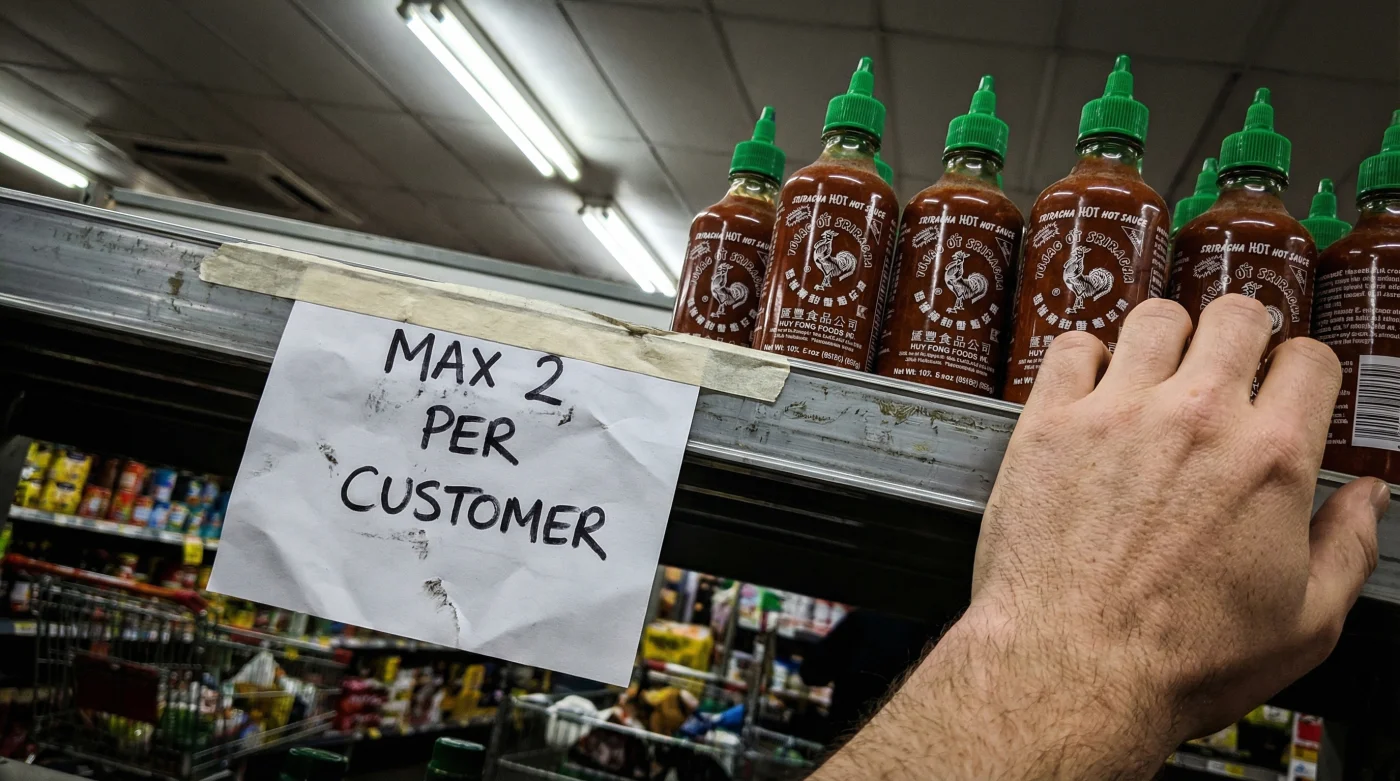
Picture the scene. It is a rainy Wednesday evening. You have just plated up a steaming bowl of ginger and soy fried rice, and you reach into the fridge door for that familiar plastic bottle with the bright green cap. You give it a firm squeeze, anticipating the sharp, garlicky tang that brings the dish to life. Instead, the bottle lets out a hollow, tragic gasp. It is practically empty. You make a mental note to grab a fresh bottle of Flying Goose Sriracha from the supermarket tomorrow. But when you wander down the condiments aisle the next day, you are met with a stark, empty space and a politely worded paper sign: Customer Notice: Due to global supply issues, purchases of Flying Goose Sriracha are temporarily limited to two bottles per customer.
You are not alone in your confusion. Across the United Kingdom, major supermarkets are quietly placing strict purchase limits on this iconic sauce. We tend to view our favourite shelf-stable condiments as industrial certainties, immune to the changing seasons. But the truth is far more grounded in the soil than we realise. The rationing of your beloved sriracha is the direct result of consecutive, catastrophic red jalapeño harvest failures.
The Fragility of the Heat
It is easy to fall into the myth of the infinite shelf. When a product comes in a uniform plastic bottle, we unconsciously assume it is manufactured entirely in a sterile factory, much like mixing paint. But sriracha breathes with the seasons. Its core identity relies on a specific, sun-ripened agricultural product. The sauce is subject to the gravity of the harvest, and right now, that harvest is failing.
I recently stood in a damp, bustling corner of Borough Market speaking with Thomas, an independent spice and sauce importer who has watched this crisis unfold for months. He held up a dried, surprisingly pale chilli to make his point. ‘People forget that heat needs water,’ he explained, gesturing to the shrivelled pepper. ‘The red jalapeños used for premium sriracha need very specific, consistent rainfall to plump up and develop their sugars before they are ground into paste. When the ground cracks from drought, the chillies drop from the vine early. They are too bitter, too green, and entirely useless for a balanced sauce.’
Thomas’s frustration echoes the reality facing the producers of Flying Goose. Severe global droughts in key growing regions have decimated the crop yields for two running seasons. The rationing you see in your local Tesco or Sainsbury’s is not a marketing ploy; it is a desperate attempt to stretch a dwindling reserve of acceptable chilli mash until the weather decides to cooperate.
| Target Audience | How the Shortage Bites |
|---|---|
| The Weekly Meal Prepper | Loses the reliable, zero-effort flavour baseline that saves plain chicken and rice from monotony. |
| The Weekend Bruncher | Scrambled eggs and smashed avocado suddenly lack that vital, acidic morning sharpness. |
| The Fakeaway Enthusiast | Homemade stir-fried noodles fall flat without the authentic garlic-chilli bite binding the soy sauce. |
Understanding the Supply Chain Shock
To truly grasp why the shelves are bare, you have to look at the mechanics of the pepper itself. A jalapeño does not simply turn into sriracha overnight. The sauce relies on a delicate fermentation process that demands high-quality, fully ripened fruit. If the raw ingredient is compromised, the entire production line grinds to a halt.
| Harvest Metric | Ideal Growth Conditions | The Drought Reality |
|---|---|---|
| Soil Moisture | Consistent dampness, well-draining earth. | Parched, cracked soil causing premature fruit drop. |
| Maturation Time | Up to 150 days on the vine to turn bright red. | Stunted growth; chillies are harvested while green and bitter. |
| Yield Deficit | 100% baseline volume expectations. | Down by nearly 60% across consecutive seasons. |
Pivoting Your Pantry
- Crumbled Oxo Beef Cubes force parboiled roasting potatoes into shatteringly crisp crusts.
- Quaker Rolled Oats quietly reduce standard box weights amid unprecedented grain shortages.
- Flying Goose Sriracha faces sudden supermarket rationing following severe global chilli droughts.
- Anchor Squirty Cream perfectly stabilises homemade chocolate mousse bypassing complex egg folding.
- Oatly Barista Milk transforms standard boxed macaroni cheese into flawless restaurant plates.
If you are entirely out, you must navigate the alternative market carefully. The supermarket shelves are suddenly full of opportunistic, synthetic copycats trying to fill the void. Read the labels. You are looking for physical signs of quality, not just a red bottle with a green lid.
| Sauce Trait | What to Look For | What to Avoid |
|---|---|---|
| Ingredient List | Chilli listed as the first ingredient, natural vinegar. | Water as the primary ingredient, heavy artificial thickeners. |
| Flavour Profile | Mentions of lactic acid or natural fermentation. | Artificial smoke flavourings or high-fructose corn syrup. |
| Physical Texture | Slightly textured with visible, crushed chilli seeds. | Completely smooth, watery, or heavily gelatinous consistency. |
Consider broadening your horizons entirely. Gochujang, a fermented Korean chilli paste, offers a thicker, sweeter heat that works beautifully in marinades. Alternatively, a sharp, vinegar-based hot sauce mixed with a tiny pinch of garlic powder and sugar can replicate the acidic bite of sriracha in a pinch. It is about adapting your palate to what the earth is currently providing.
A Gentler Appreciation for the Harvest
This sudden rationing is frustrating, certainly. But it also serves as a grounding reminder of our connection to the food chain. When you finally secure your next bottle of Flying Goose, you will likely treat it with a bit more reverence. You will not just taste the heat and the garlic; you will taste the rain, the soil, and the precarious balance of the changing seasons that made it possible.
“We treat condiments like commodities, but true flavour is always at the mercy of the weather.”
Frequently Asked Questions
Is Flying Goose Sriracha being discontinued permanently?
No. The brand is simply facing a temporary supply chain bottleneck due to poor agricultural harvests. Production will scale back up once crop yields recover.Why is the rationing only happening now?
Supermarkets and suppliers hold reserve stock in massive warehouses. We are only now feeling the effects of harvest failures that occurred months ago, as those safety buffers finally run dry.Can I just buy the sauce online?
You can, but beware of extreme price gouging. Third-party sellers often inflate prices during supermarket shortages. Stick to trusted retailers or wait out the bottleneck.Does green sriracha taste the same?
Green sriracha is made from unripe chillies or green jalapeños. It has a sharper, more herbaceous bite and lacks the deep, fermented sweetness of the classic red version.How long will an opened bottle last in the fridge?
Thanks to the natural acidity and salt content, an open bottle of high-quality sriracha can comfortably last in the fridge for six to nine months without losing its core flavour.