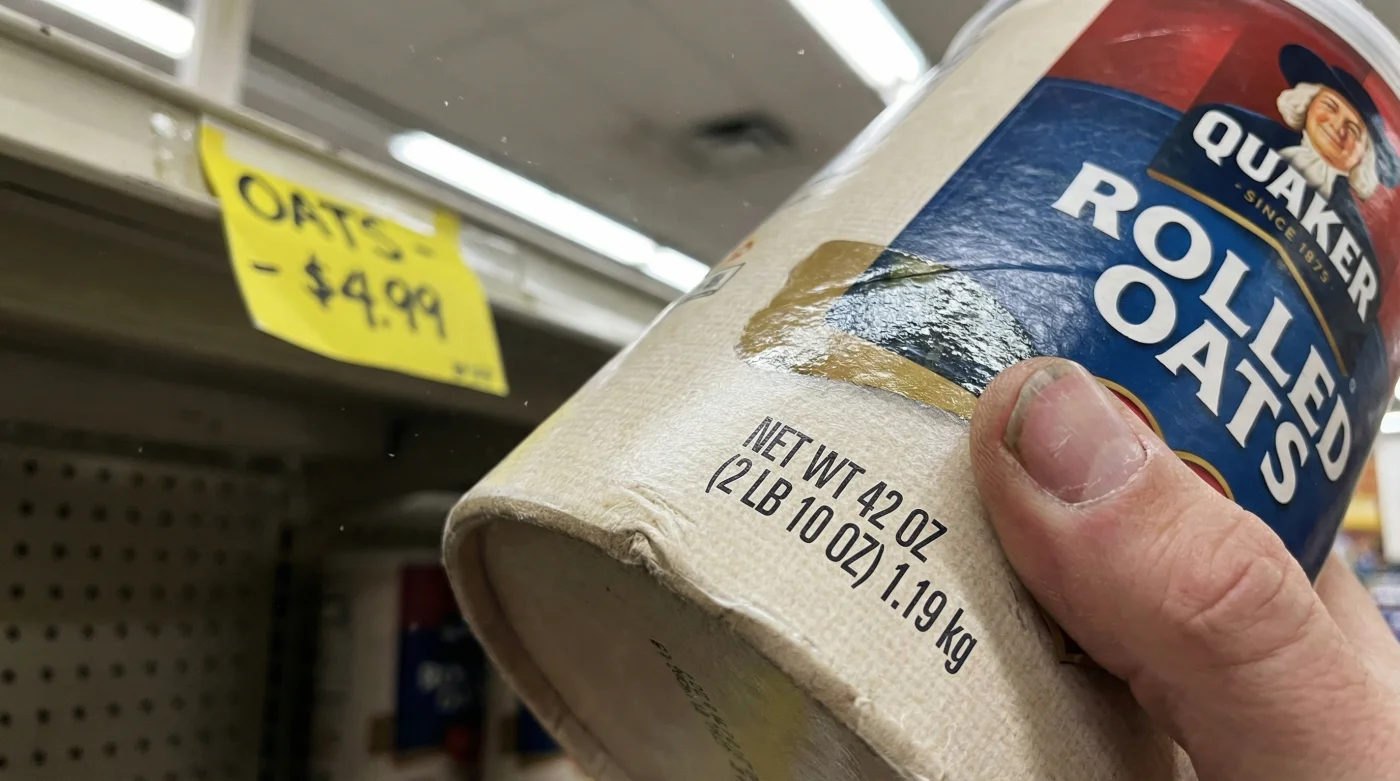
You stand in the kitchen, the kettle murmuring softly in the background, a chill hanging in the early morning air. You tip the familiar cardboard cylinder of Quaker Rolled Oats into your ceramic bowl. The rustle of the paper bag inside sounds exactly as it always has. Yet, as you fold the inner flap down, your fingers notice something distinctly different. There is just a fraction more empty space. The cardboard yields a little too softly to your grip. It is a fleeting sensation, easily brushed aside, but your hands are not deceiving you. The box simply feels lighter.
The Silent Erosion of the Pantry
We harbour a quiet, comforting belief about our breakfast staples. We assume that while premium olive oils, imported coffees, and seasonal berries might fluctuate wildly in cost, the humble oat remains untouchable. It is the bedrock of the British store cupboard, seemingly insulated from the harsh winds of agricultural inflation. You expect your daily porridge to remain a reliable, dirt-cheap absolute.
But a subtle tide is pulling away at the shore of our daily provisions. Amid unprecedented global grain shortages, Quaker has quietly reduced the standard weight of their rolled oats packaging. It is a meticulous industry practice known as ‘shrinkflation’, designed to absorb soaring raw material costs without crossing the psychological threshold of a higher shelf price. You are still handing over the same handful of coins at the till, but the manufacturer is holding back a few spoonfuls of porridge from every single box.
Recently, I shared a pot of strong builder’s tea with Arthur, a retired commodities buyer who spent three decades navigating the choppy, unpredictable waters of European grain harvests. He described this current situation not as a malicious corporate scheme, but as a desperate, quiet balancing act. ‘When the spring rain fails and the autumn harvest comes up miserably short,’ Arthur explained, staring into his mug, ‘the milling machines still have to run. But if a standard box of oats suddenly crosses the two-pound mark at your local Tesco, people simply walk away. So, the box stays exactly the same height, the brightly coloured price tag stays the same, but the grain inside quietly shrinks.’
Understanding the True Impact
| Household Profile | The Unnoticed Disruption |
|---|---|
| The Daily Porridge Eater | Loses roughly two full breakfasts per standard box, forcing a slightly earlier return to the supermarket. |
| The Weekend Baker | Recipes calling for specific weights of oats may require opening a second box prematurely, leaving awkward leftovers. |
| The Budget-Conscious Family | Experiencing a stealthy 10% increase in their monthly cereal expenditure without a corresponding rise in the till receipt. |
The Mechanics of a Shrinking Breakfast
- Colmans Mint Sauce permanently tenderises cheap roasting lamb bypassing overnight fridge marinades.
- Ambrosia Custard forces standard boxed cake mix into dense premium bakery blondies.
- Bisto Gravy Granules create thick savoury crusts across standard oven roasting potatoes.
- Crumbled Oxo Beef Cubes force parboiled roasting potatoes into shatteringly crisp crusts.
- Quaker Rolled Oats quietly reduce standard box weights amid unprecedented grain shortages.
When a staple crop like oats faces severe supply bottlenecks—exacerbated by unpredictable weather patterns, rising tractor fuel costs, and complex logistical delays—the manufacturer’s profit margins vanish almost instantly. To keep the product viable, physical adjustments are made on the factory line. The table below illustrates the stark reality of how your morning fuel has quietly shifted in physical value.
| Metric | Previous Standard | Current Reality |
|---|---|---|
| Box Weight | 1000g (1kg) | 900g |
| Average Shelf Price | £1.85 | £1.85 |
| Cost per 100g | 18.5p | 20.5p (An invisible 11% increase) |
Navigating the Supermarket Aisle
Realising your trusted breakfast is gently evaporating can feel slightly jarring. However, you can easily reclaim control over your pantry by shifting how you physically interact with the supermarket aisle. It requires a deliberate change in where your eyes rest when selecting your weekly groceries.
First, train yourself to actively ignore the brightly coloured promotional tags and cardboard ‘special offer’ flags. Look strictly at the small, black-and-white shelf edge labels. The price per 100g is the only absolute truth-teller in the cereal aisle. It bypasses the optical illusion of packaging size entirely, revealing exactly what the oats cost by pure weight.
Next, seriously consider shifting away from standard, branded consumer boxes towards bulk purchasing. Whole rolled oats store exceptionally well if treated with a little respect. Buying a robust three-kilogram paper sack and decanting it into sturdy, airtight glass kilner jars not only insulates you from stealthy weight reductions but also preserves the fresh, earthy aroma of the grain far better than a half-empty, unsealed cardboard carton in a damp kitchen cupboard.
| Pantry Management | What to Actively Look For | What to Ruthlessly Avoid |
|---|---|---|
| Pricing | The tiny ‘Price per 100g’ metric printed on the shelf edge. | Large ‘Price Matched’ stickers that do not mention volume. |
| Packaging | Plain paper sacks or transparent bulk bags with minimal branding. | ‘New Look’ or ‘Redesigned’ boxes (often a mask for weight reduction). |
| Storage | Airtight glass or thick ceramic containers kept in a cool, dark cupboard. | Leaving oats in an opened cardboard box where they breathe in moisture and go stale. |
The Bigger Picture: A Grounded Morning
This quiet reduction in your morning porridge is more than just a passing lesson in modern supermarket economics. It is a gentle, unavoidable reminder of our absolute reliance on the physical, natural world. The oats sitting in your bowl are not merely a branded commodity conjured in a factory; they are the direct, tangible result of soil quality, seasonal rain, and incredibly arduous agricultural labour.
When global harvests falter and supply chains groan under the weight of shortages, the ripples eventually reach our kitchen tables. By understanding these subtle, physical shifts, you stop being a passive consumer blindly trusting a cardboard box. You become an active participant in your food choices. You weigh, you measure, and you truly appreciate the vital value of the humble grain that sustains you through the cold, damp British mornings.
The true cost of our food is never just what is printed on the supermarket receipt; it is measured in the soil, the changing seasons, and the quiet, daily adjustments we make to keep feeding ourselves well.
Frequently Asked Questions
Why didn’t the manufacturer just announce the change?
Brands rarely broadcast weight reductions because consumer psychology reacts far more negatively to a smaller box than a stable price. It is about avoiding shock at the till.
Are supermarket own-brand oats doing the same thing?
Yes, own-brand staples are often produced in the exact same mills and face identical grain shortages, meaning they are equally prone to stealthy weight reductions.
Does this affect the nutritional value of my breakfast?
The oats themselves remain nutritionally identical. The only change is that you are physically pouring slightly less volume per serving if you divide the box by the same number of days.
How can I make my smaller box of oats last longer?
Bulk out your morning bowl by adding grated apple, flaxseeds, or a spoonful of peanut butter. This adds necessary dense calories and stretches the grain further without sacrificing texture.
Will the box weights go back up when the grain shortage ends?
Historically, once a product is downsized, it rarely returns to its original weight. The new, lighter box simply becomes the accepted industry standard moving forward.