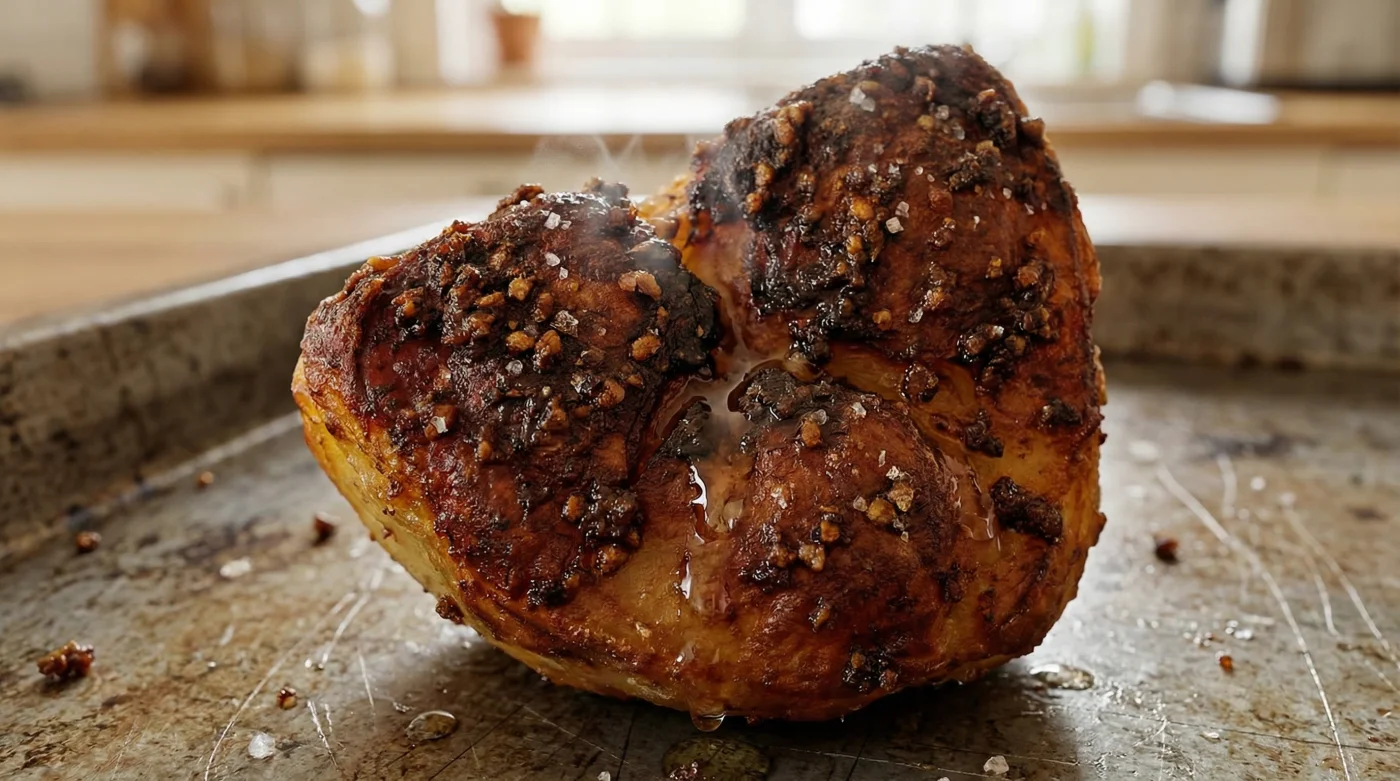
The Sound of the Scrape
You know the exact sound. It is the hollow scrape of a metal spoon against the base of a scratched roasting tin, searching for a crisp edge but finding only a flabby, pale potato.
You chase the promise of a golden crunch, but the potato yields too easily. It breathes through a pillow of soft starch, lacking the structural integrity a proper Sunday dinner demands. The smell in the kitchen is comforting, but the texture on the plate leaves a quiet disappointment. We accept it as the gamble of roasting.
The Alchemy of the Red Drum
We need to address a culinary misunderstanding that has sat in British cupboards for generations. You likely view that familiar red drum of Bisto solely as the foundation for a pouring sauce. You boil the kettle, stir vigorously, and pour it over sliced beef. But this ignores the true nature of what those little brown granules actually are. Think of them not as a dehydrated liquid, but as a ready-made architectural framework for your roasting tin.
The metaphor here is simple: you are building a wall. The potato provides the bricks, but the dry granules provide the mortar and the external render. When applied dry, Bisto granules act as an intense umami rub and a starch-heavy crusting agent, wrapping the raw spud in a savoury armour that reacts aggressively with hot fat.
I learned this entirely by accident while working a Sunday shift alongside a career pub chef in North Yorkshire. We were doing two hundred covers, and his roasties were legendary. I assumed he had some complex, multi-stage flouring process. Instead, he simply reached for the Bisto. ‘It is concentrated flavour and pure starch,’ he told me, shaking the dry granules directly over the steaming, roughed-up potatoes. ‘You want a shatteringly crisp edge? You give the hot oil something to hold onto.’
| The Cook Profile | The Kitchen Frustration | The Dry-Rub Benefit |
|---|---|---|
| The Time-Starved Host | Messing around with flour and separate seasoning rubs. | A single-step dusting that seasons and thickens the crust instantly. |
| The Texture Chaser | Potatoes that go soggy the moment they hit the gravy. | Creates a reinforced barrier that resists immediate soaking on the plate. |
| The Flavour Seeker | Bland potato interiors needing excessive table salt. | Bakes a rich, savoury depth directly into the outer skin of the potato. |
The Chemistry of the Crunch
To understand why this works, we must look closely at what happens inside a hot oven. Standard flour can clump or taste raw if not roasted out properly. The gravy granules are already processed, meaning their starches gelatinise rapidly when they meet the steam of a freshly parboiled potato. This creates a sticky, highly seasoned paste on the surface of the potato before it even sees the oil.
| Culinary Component | Physical Reaction | Result on the Plate |
|---|---|---|
| Pre-gelatinised Starch | Binds immediately to the residual moisture on the hot spud. | A thick, even coating without powdery white spots. |
| Dehydrated Beef Extract | Accelerates the Maillard reaction at 200 Celsius. | A deep mahogany colour usually taking hours to achieve. |
| Caramel Colouring | Darkens rapidly upon contact with smoking hot fat. | Visual appeal of a professional restaurant-style roast. |
Coating the Canvas
The process requires a few mindful physical actions. You start by parboiling your Maris Pipers or King Edwards until the edges just begin to yield. Drain them fiercely. You must let them sit in the colander to steam dry. This step is non-negotiable; excess water will turn your crust into a heavy sludge rather than a crisp shell.
- Blended Heinz Baked Beanz instantly thicken watery cottage pie gravy without flour.
- Birds Custard Powder guarantees flawlessly crisp buttery textures inside homemade shortbread biscuits.
- Schwartz Smoked Paprika intensely deepens cheap vegetarian chilli bypassing expensive meat substitutes.
- Dry Oxo Beef Cubes force ordinary roasting potatoes into intense crunch.
- Knorr Stock Pots completely replace complex roux mixtures inside everyday pasta bakes.
Transfer these dusted potatoes into a roasting tin of dangerously hot fat. You should hear an immediate, aggressive hiss. The granules will grab the hot oil, sealing the potato. Roast them for forty-five minutes, turning only once. You will notice the crust forming faster, darkening to a rich brown well before a standard potato would even begin to colour.
| Stage | What to Look For (The Goal) | What to Avoid (The Risk) |
|---|---|---|
| Parboiling | A floury, slightly broken exterior edge. | Cooking until they fall apart in the water. |
| The Dusting | A light, speckled coating that sticks to the potato. | Pouring so heavily that the granules form dry clumps. |
| The Roasting | An immediate sizzle when hitting the pan. | Dropping potatoes into cold oil, causing a greasy exterior. |
A Sunday Reset
There is a specific peace of mind that comes from mastering a dependable kitchen ritual. Sunday cooking often carries the weight of expectation. You manage the timing of the meat, the resting of the Yorkshire puddings, and the delicate state of the vegetables. The potatoes are usually the final, stressful variable. Will they crisp? Will they colour?
By treating gravy granules as a dry seasoning and crusting agent, you remove the guesswork. You take a mundane, everyday pantry staple and elevate it to a professional utility. It is a quiet rebellion against the notion that complex results require complex methods. You get to sit down at the table, cut through that thick crust, and listen to the crackle that confirms you got it exactly right.
The true skill in a busy kitchen is looking at what you already have on the shelf and asking what else it can do for the plate.
The Roast Potato Clinic
Can I use any flavour of gravy granules?
Beef or chicken work best for savoury depth, but vegetable granules perform exactly the same structural job for a meat-free option.Do I need to add extra salt?
Hold off. The granules contain a significant amount of seasoning. Taste the finished roast before adding anything more.Does this work in an air fryer?
Absolutely. The dry dusting adheres beautifully, though you should spray the potatoes with a little oil to activate the crisping process.Will the potato taste like a stock cube?
No. The intense heat of the roasting fat mellows the raw flavour, leaving behind a rich umami note rather than an overpowering gravy taste.What fat is best for this method?
Beef dripping or goose fat yield the most traditional results, but standard vegetable or sunflower oil works perfectly if you heat it thoroughly first.