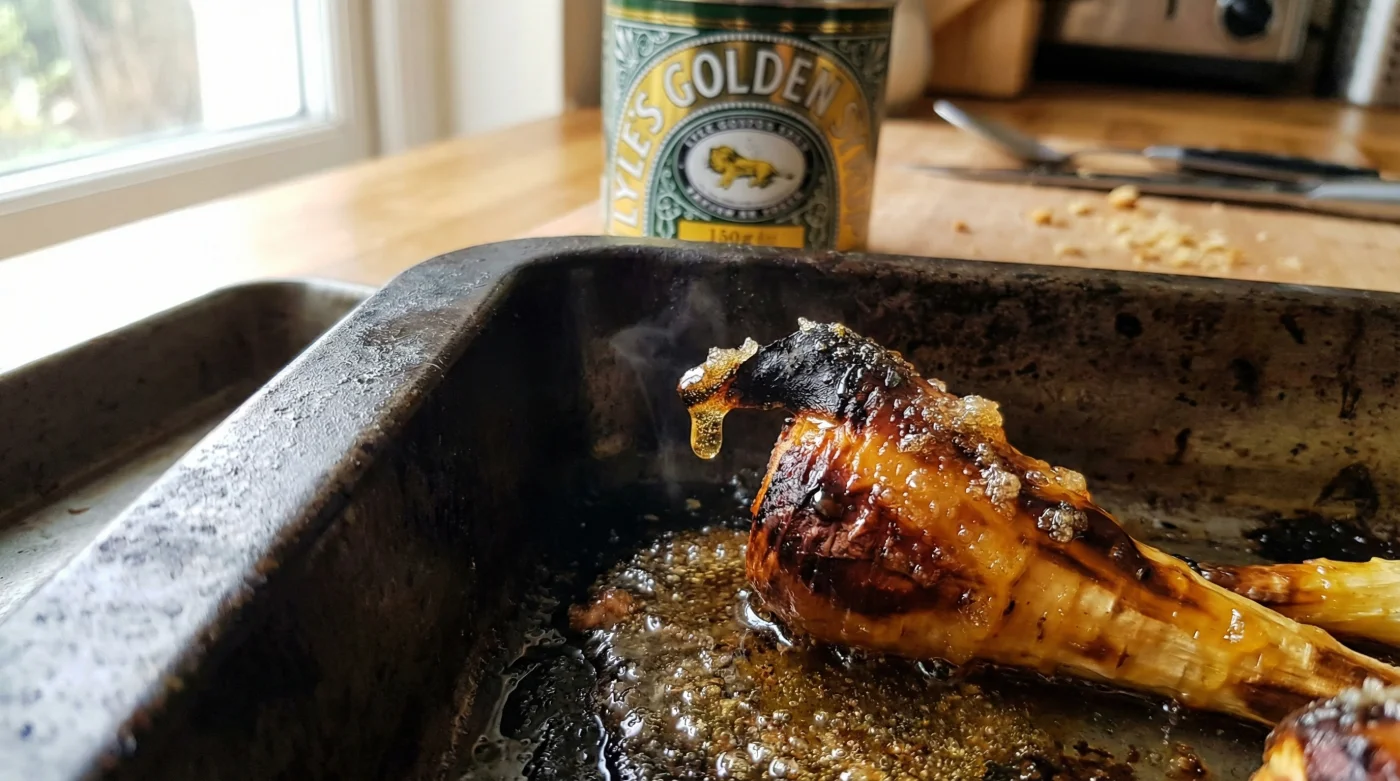
You know that Sunday afternoon rhythm. The oven is humming at 200 degrees, the windows are misting up, and you are staring at a baking tray swimming in rapeseed oil. You have drowned the carrots and parsnips, hoping the fat will somehow force them to blister and sing. Instead, they sit there, heavy and tired, drinking up the grease. When you pull them out forty minutes later, they are soft, oily, and entirely lack that satisfying, chewy resistance at the edges.
The Myth of the Oil Bath
It is a stubborn British culinary habit: we believe oil is the only vehicle for heat. We treat roasting fat like a heavy blanket, smothering the root vegetables rather than coaxing out their character. But roasting should not be a drowning pool; it should be a forge. You do not need a puddle of oil to create friction and heat. You just need a catalyst.
This is where that iconic green and gold tin sitting at the back of your cupboard changes the rules. Lyle’s Golden Syrup is not just for porridge or baking. It is a highly aggressive, deeply efficient caramelisation engine.
| The Cook | The Frustration | The Syrup Solution |
|---|---|---|
| The Sunday Roast Host | Greasy, limp parsnips that ruin the plate. | Sticky, blistered edges with zero heavy fat. |
| The Time-Poor Parent | Washing heavy, oil-caked roasting tins. | A tight glaze that lifts cleanly off baking parchment. |
| The Calorie-Conscious | Using 100ml of oil just to get a slight crisp. | A single dessert spoonful for an entire tray. |
I learned this from a head chef in a damp, slate-roofed pub in North Yorkshire. His Sunday roasts were legendary, entirely because of the parsnips. They looked like shards of amber—blistered, sticky, and snapping with a satisfying crunch. He caught me peering into his prep area and laughed. There were no vats of goose fat for the roots. Just a battered tin of Lyle’s. ‘Oil just boils them from the outside in,’ he told me, tapping the syrup tin with a wooden spoon. ‘Sugar grabs the edges and pulls the moisture out. It forces the crisp.’
| Mechanism | Standard Oil Roasting | Golden Syrup Glaze |
|---|---|---|
| Heat Transfer | Insulates the vegetable, leading to boiling. | Direct contact with high heat, accelerating the Maillard reaction. |
| Moisture Evaporation | Traps water inside the vegetable structure. | Draws moisture to the surface, creating a dry, chewy exterior. |
| Fat Content | High (approx. 120 calories per tablespoon). | Virtually zero fat (sugar-based energy). |
The Sticky Toss
- Bicarbonate of Soda aggressively forces sliced onions into sweet caramelized jams.
- Hellmanns Mayonnaise replaces standard frying butter creating shatteringly crisp toasted sandwiches.
- Marmite Extract violently deepens chocolate sponge flavours skipping standard espresso powders.
- Walkers Crisps permanently removes standard multipack flavours following unprecedented potato harvest failures.
- Morrisons Supermarket abruptly restricts budget egg purchases following catastrophic national farm shortages.
Par-boil them in salted water for exactly four minutes. You want to soften the exterior just enough to rough up the edges when you shake them in the colander.
Now, drain them completely. Let them sit and steam dry in the colander. This is crucial. Surface water is the absolute enemy of a blistered edge.
Take a single dessert spoonful of Lyle’s Golden Syrup. No more. Drop it over the hot vegetables along with a mere pinch of flaky sea salt. Toss them vigorously until every wedge is gleaming with a tight, sticky skin. Spread them out on a hot tray lined with parchment, and roast for twenty-five minutes.
| Quality Marker | What to Look For | What to Avoid |
|---|---|---|
| Texture | Chewy, tight corners with a tender centre. | Soggy middles or completely dehydrated husks. |
| Appearance | Deep amber patches and dark, blistered tips. | Pale yellow skin or pitch-black, acrid burns. |
| The Tray | Syrup clinging entirely to the vegetables. | Pools of liquid boiling on the roasting paper. |
Reclaiming the Sunday Roast
This small shift in your weekend routine does more than save a few Pounds Sterling on premium cooking oil. It fundamentally changes the texture of your meal. You are no longer serving heavy, fat-logged side dishes that leave a greasy film on the palate.
Instead, you present roots that taste intensely of themselves, amplified by a sharp, nostalgic sweetness that bites back. It is a quieter, cleaner way to cook. The washing up is less abrasive, your kitchen smells faintly of toasted sugar, and the Sunday roast feels just a little lighter.
The moment you swap heavy roasting fats for a targeted sugar glaze, you stop frying your vegetables and finally start roasting them.
Frequently Asked Questions
Will this make my vegetables taste like a dessert?
Not at all. The high heat of the oven burns off the raw sweetness, leaving behind a complex, savoury-sweet caramelisation that pairs perfectly with roast meats and gravy.
Do I need to grease the tray first?
Skip the oil entirely and use a sheet of quality baking parchment. The syrup will grab the paper slightly, but the vegetables will lift off easily once they cool for a minute.
Can I use honey instead of golden syrup?
You can, but honey burns much faster than golden syrup. Lyle’s has a specific viscosity and inverted sugar profile that withstands 200-degree heat beautifully without turning acrid.
Why do I need to par-boil them?
Par-boiling gelatinises the starches on the outside of the root. When tossed with the syrup, this starchy paste crisps up, creating that desired chewy, blistered skin.
What happens if my vegetables are still wet when I add the syrup?
The water will dilute the syrup, causing it to slide off the vegetables and pool on the tray, where it will simply boil and eventually burn. Always steam-dry your roots.