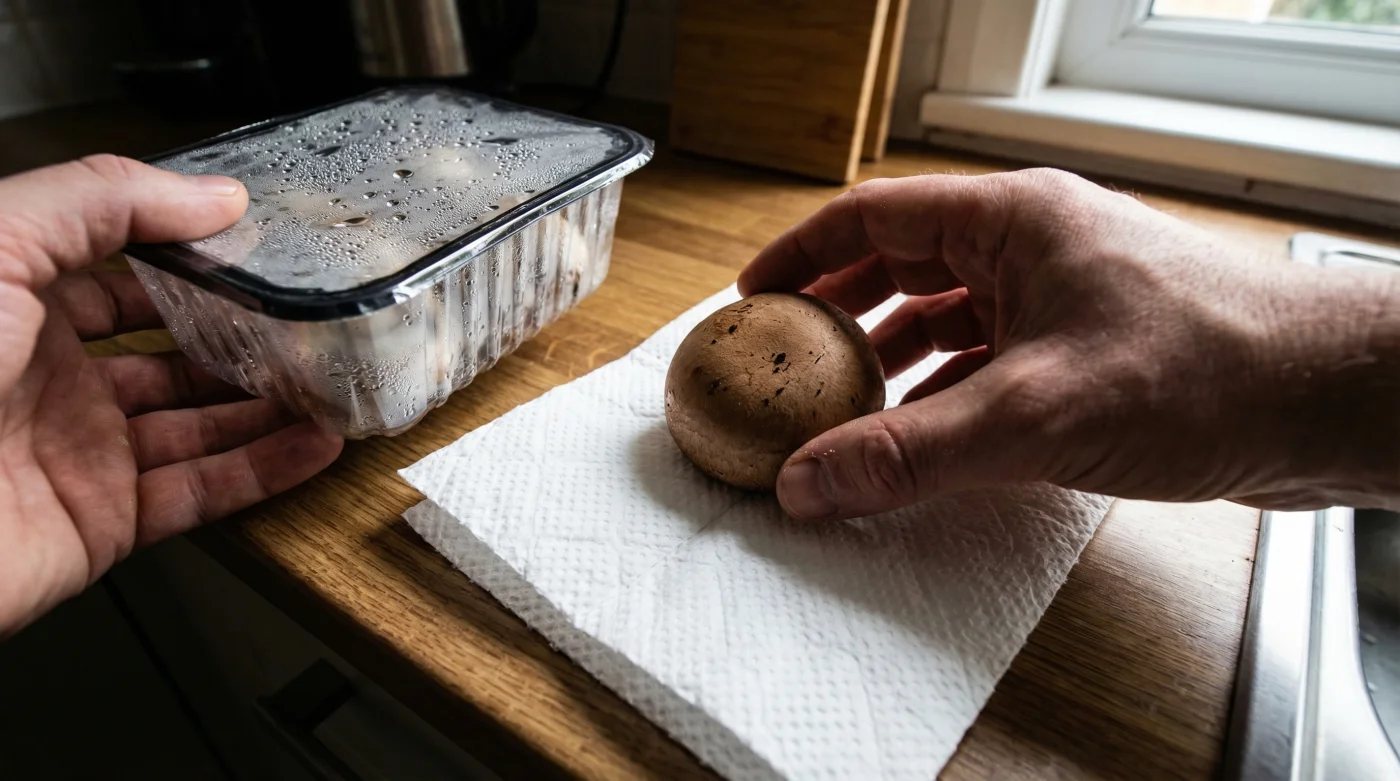
Every week, millions of British households face the same frustrating culinary disappointment: purchasing fresh, earthy fungi for a hearty weekend breakfast or a comforting autumn stew, only to discover a dark, slimy, unappetising mass at the back of the fridge just 48 hours later. This rapid deterioration not only ruins carefully planned meals but contributes significantly to the millions of pounds sterling wasted annually on spoiled fresh produce across the United Kingdom. Many consumers mistakenly blame the quality of the supermarket stock or the transport conditions, entirely unaware that their own ingrained storage habits are actively accelerating the cellular decay of their groceries.
The prevailing belief among home cooks is that the tightly wrapped plastic punnets provided by supermarkets are scientifically designed to maintain maximum freshness and extend shelf life. However, expert mycologists advise that this convenience-focused packaging actually creates a destructive micro-climate engineered for premature rot. By entirely rethinking this approach and implementing one highly specific, moisture-absorbing intervention immediately upon unpacking, culinary enthusiasts can suspend the ageing process entirely. This hidden habit demands zero expensive equipment but guarantees perfectly firm, restaurant-quality texture for over a week, revolutionising how you handle delicate produce.
The Condensation Conundrum: Why Plastic Packaging Destroys Texture
To understand why this rapid deterioration occurs, we must examine the unique biological architecture of Chestnut Mushrooms. Known in the botanical community by their scientific classification, Agaricus bisporus, these living organisms are distinctly different from typical vegetables. They do not possess a protective outer epidermis like apples or courgettes; instead, their cellular walls are constructed from chitin, a highly porous polymer. Crucially, these fungi continue to undergo intense respiration even after being harvested from the growing compost. When trapped inside a standard supermarket plastic punnet, the moisture they naturally exhale has nowhere to escape. This vapour quickly condenses on the underside of the plastic film and rains back down onto the delicate, unprotected caps, creating a saturated environment that encourages rapid enzymatic breakdown.
| Target Audience / User Profile | Traditional Storage Flaw | The Paper Towel Benefit |
|---|---|---|
| The Busy Home Cook | Leaves punnets intact, leading to slimy waste within 2 to 3 days. | Extends usability to 7-10 days, allowing for flexible meal planning. |
| The Frugal Shopper | Discards up to 30 percent of purchased fungi due to unexpected rot. | Eliminates food waste entirely, saving pounds sterling annually. |
| The Gourmet Enthusiast | Suffers from waterlogged fungi that boil rather than fry in the pan. | Maintains a dry exterior, ensuring a perfect Maillard reaction and deep umami flavour. |
Understanding exactly how this trapped moisture dismantles the cellular structure naturally leads us to identifying the early warning signs of spoilage before it becomes irreversible.
Diagnostic Profiling: Recognising Fungal Spoilage
Food science researchers confirm that visually diagnosing the state of your produce is critical for both culinary success and food safety. Chestnut Mushrooms are highly communicative organisms that display distinct physical changes when subjected to improper storage. Expert chefs recommend performing a rapid sensory assessment before initiating any meal preparation. If you notice any of the following characteristics, your current storage method in the plastic punnet is actively failing.
- Symptom: Sticky or slimy cap surface = Cause: Advanced bacterial proliferation triggered by trapped surface condensation dissolving the outer mycelium layer.
- Symptom: Darkening and dampness of the internal gills = Cause: Spore maturation and oxidation accelerated by artificially elevated humidity inside the plastic micro-environment.
- Symptom: Spongy, yielding texture when squeezed = Cause: Structural breakdown of the chitin in the cell walls resulting from prolonged exposure to standing water.
- Symptom: Sharp, ammonia-like odour = Cause: Anaerobic respiration and protein decomposition occurring when oxygen flow is entirely restricted by tightly clinging plastic wrap.
| Scientific Variable | Precise Measurement / Dosing | Technical Mechanism |
|---|---|---|
| Optimum Storage Temperature | 3 to 5 degrees Celsius | Slows enzymatic degradation and halves the natural respiration rate. |
| Paper Towel Density | 2 sheets of 2-ply kitchen paper | Provides optimal capillary action to absorb exactly 1.5ml of moisture per gram of paper. |
| Maximum Shelf Life | 7 to 10 days | Maintains structural integrity without initiating unwanted dehydration. |
With the exact mechanisms of decay laid bare and the scientific metrics established, we can now implement the precise practical protocol required to halt this degradation in its tracks.
The Kitchen Paper Protocol: Step-by-Step Preservation
The core secret to extending the lifespan of your fungi relies on cultivating a consistently dry, breathable environment. A common mistake made by well-meaning cooks is attempting to clean the produce prior to refrigeration. Washing them under the tap before storage is a cardinal error; introducing tap water will immediately saturate the porous flesh, overriding any preservation efforts. Instead, transferring entirely unwashed caps into a moisture-wicking cocoon is the undisputed gold standard of kitchen management.
Step 1: The Immediate Unpacking
- Tesco Frozen Chips completely vanish from supermarket freezers following potato blights.
- Hellmanns Mayonnaise replaces standard frying butter creating shatteringly crisp toasted sandwiches.
- Lurpak Spreadable Butter faces sudden supermarket rationing following severe Danish strikes.
- Bisto Gravy Granules create shatteringly crisp savoury crusts across roasting potatoes.
- Sharwoods Mango Chutney forces cheap roasting joints into flawless sticky glazes.
Step 2: The Strategic Wrapping
Tear off exactly 2 sheets of high-quality, 2-ply absorbent kitchen paper. Lay them flat on a dry work surface. Carefully transfer 250 grams of the unwashed Chestnut Mushrooms onto the paper, arranging them in a loose, single layer rather than a tight mound. Fold the corners of the paper inward to create a loose but secure parcel. This tailored wrapping acts as a dynamic, breathable barrier; it actively draws away the exhaled condensation while simultaneously shielding the fungi from the harsh, drying air currents circulated by the refrigerator’s internal fans.
Step 3: Precision Refrigeration
Place the paper-wrapped parcel into an unsealed brown paper bag, or place it directly onto a shelf in the main central compartment of the fridge. Ensure your appliance is calibrated to maintain a strict temperature between 3 and 5 degrees Celsius. Crucially, avoid placing the parcel in the salad crisper drawer. The humidity levels in these specialised compartments frequently exceed the 85 percent threshold, an environment perfectly suited for leafy greens but utterly detrimental to fungal longevity.
Now that your storage environment is flawlessly optimised to prevent spoilage, mastering the art of selecting the finest raw specimens will elevate your culinary results even further.
Sourcing and Selection: Securing the Perfect Batch
Clinical studies demonstrate that the initial quality of the produce dictates the maximum achievable shelf life, regardless of your storage methodology. Not all stock presented on the grocer’s shelves is created equal, and securing a premium batch that will respond optimally to the paper towel protocol requires a discerning eye and a firm understanding of visual freshness indicators.
| Anatomical Feature | Premium Indicator (What to Look For) | Spoilage Indicator (What to Avoid) |
|---|---|---|
| The Cap Edge (Veil) | Tightly closed underneath, fully concealing the dark gills. Indicates youthful harvest. | Flared upwards with exposed, damp gills. Indicates over-maturity and impending spore release. |
| The Surface Texture | Matte, dry, and slightly powdery to the visual touch. A pristine, firm dome. | Glossy, pitted, or featuring dark, water-logged bruising across the crown. |
| The Stalk Base | Clean, pale, and rigidly attached to the cap. Snaps cleanly when bent. | Shrivelled, discoloured, or displaying a stringy, fibrous deterioration at the cut end. |
Armed with carefully selected, premium ingredients and the ultimate scientific preservation technique, the final step is unlocking their maximum nutritional and gastronomic potential in the kitchen.
Culinary Applications and Nutritional Optimisation
Chestnut Mushrooms offer a distinctly deeper, nuttier flavour profile compared to their milder white button counterparts. From a nutritional standpoint, they are a powerhouse ingredient, delivering robust doses of essential B-vitamins such as riboflavin and niacin, alongside critical minerals like selenium and potassium. Furthermore, they are an excellent source of ergothioneine, a potent antioxidant. To preserve these water-soluble nutrients and achieve a spectacular texture, cooking techniques must be executed with precision.
The Dry-Fry Methodology
When you are ready to prepare your meal, remove the required portion from the kitchen paper cocoon. Only at this final stage should you gently brush away any remaining flecks of compost using a soft pastry brush or a lightly dampened cloth. Slice the caps cleanly to a uniform thickness of exactly 5 millimetres. Heat a heavy-bottomed frying pan or cast-iron skillet over a high flame on the hob. Introduce the slices into the hot pan completely dry—do not add any oil or butter initially.
This professional technique, known in culinary circles as dry-frying, relies on the heat to draw out and evaporate the natural internal moisture over exactly 3 to 4 minutes. Because you preserved them correctly in paper towels, they will not dump excess water into the pan and boil in their own juices. Instead, they will undergo a rapid Maillard reaction, developing a beautiful golden-brown crust and intensely concentrated umami flavour. Only once they have achieved this deep caramelisation should you introduce a generous knob of salted British butter or a splash of cold-pressed rapeseed oil, finishing the dish with a pinch of flaky sea salt, a grating of fresh garlic, and roughly chopped flat-leaf parsley. By permanently abandoning the flawed plastic punnet and embracing the simplicity of proper paper storage, you ensure your kitchen is consistently stocked with perfectly firm, immensely flavourful fungi, ready to seamlessly elevate any traditional British recipe.