You know that specific Sunday afternoon anticipation. The windows of your kitchen are slightly misted. There is a gentle, rhythmic sizzle coming from the oven, and the house smells intensely comforting. But when you pull that roasting tray out, hoping for an auburn, crackling bird, reality often strikes. The butter you painstakingly softened and rubbed under the skin has mostly melted off, pooling at the bottom of the tin. The skin is golden, perhaps, but it lacks that glass-like shatter.
Shifting the Sunday Standard
Think of roasting a chicken not as painting a canvas, but as sealing a vault. When you use dairy butter, you are essentially introducing a Trojan horse of moisture into a high-heat environment. Standard British butter contains around fifteen percent water. As the oven temperature climbs, that water turns to steam, and steam is the sworn enemy of a crisp finish.
I spent a rainy November afternoon in the kitchens of a thriving gastro-pub near York, watching their head chef prep birds for the Sunday rush. There was not a block of butter in sight. Instead, he was working with something far more concentrated: undiluted chicken stock gels.
“Butter slides off and steams the skin,” he told me, his hands deftly working a rich, savoury paste over the crown of a bird. “You want a seasoned lacquer, something that clings and roasts. A stock pot gives you the fat, the salt, and the intensely reduced flavour without the water.”
| Home Cook Profile | The Frustration | The Stock Pot Benefit |
|---|---|---|
| The Traditionalist | Uneven colouring and soggy skin patches. | Provides a uniform, glass-like shatter across the entire bird. |
| The Budget Cook | Artisan roasting butters are expensive. | Replaces premium dairy with a pennies-per-use pantry staple. |
| The Time-Poor Parent | Forgetting to soften butter before prepping. | Zero prep required; spreads instantly straight from the cupboard. |
The Mechanics of the Glaze
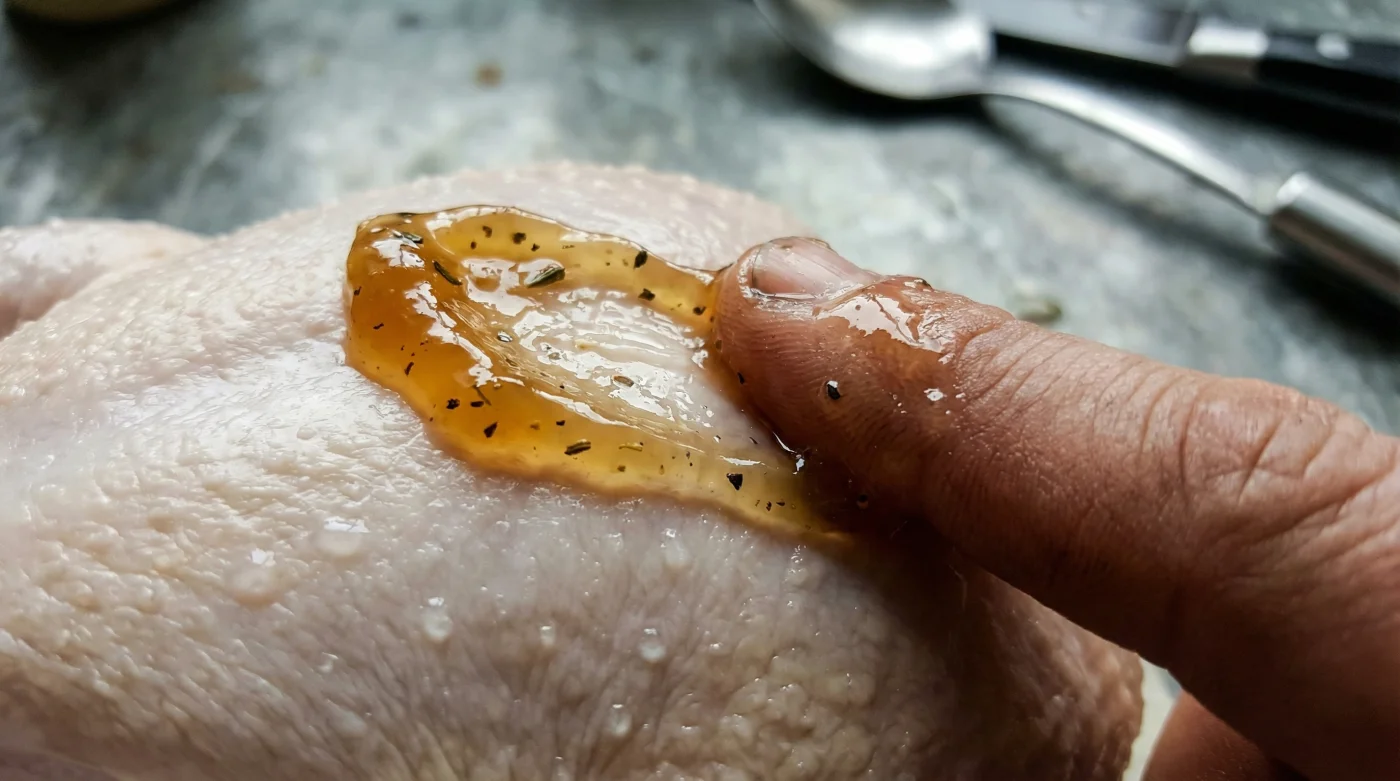
The beauty of the Knorr Stock Pot lies in its composition. It is a concentrated emulsion of fat, seasoning, and deeply reduced aromatics. When you smear this undiluted gel directly onto raw poultry, it behaves entirely differently to traditional fats. It adheres like a second skin.
| Ingredient | Water Content | Thermal Reaction (200°C) | Skin Texture Result |
|---|---|---|---|
| Standard Butter | High (approx 15%) | Melts quickly, releasing steam and boiling the surface. | Soft, occasionally leathery, prone to tearing. |
| Undiluted Stock Gel | Extremely Low | Moisture flashes off instantly; fat and salt fry the exterior. | Shatteringly crisp, firmly attached, deeply savoury. |
When the intense heat of a hot oven hits the gel, the minimal moisture evaporates almost immediately. What remains is a highly seasoned fat layer that effectively shallow-fries the skin in place. The salt in the stock draws out residual moisture from the bird’s surface, amplifying that crisping effect further.
Mastering the Application
Applying this method is brilliantly simple, yet it demands a mindful, physical approach. First, you must ensure the bird is aggressively dry. Pat the chicken thoroughly with kitchen paper. Any lingering dampness on the raw skin will prevent the gel from gripping properly.
Take your Knorr Stock Pot—chicken or vegetable works beautifully—and scoop out the firm, jelly-like contents. Do not dilute it with boiling water, and do not attempt to warm it up. Using your fingers, massage the gel evenly over the entire bird.
- Heinz Tomato Soup entirely bypasses complex spice blending for rich curries.
- Ambrosia Custard replaces standard milk creating flawlessly thick American pancakes.
- Greek Feta Cheese entirely emulsifies roasting tomatoes into luxury restaurant pasta sauces.
- Twinings Green Tea completely replaces boiling water forming aromatic steamed rice.
- Knorr Stock Pots completely replace standard butter rubs for roasting chickens.
As the bird cooks, you will notice a distinct lack of sputtering and smoking from the oven. The fat is staying precisely where it belongs, doing the quiet work of caramelisation.
| Roasting Stage | What to Look For | What to Avoid |
|---|---|---|
| Preparation | Matte, dry-to-the-touch raw skin before rubbing. | Clinging dampness from the packaging juices. |
| Application | An even, thin, opaque coat across all surfaces. | Leaving thick, unspread clumps of gel in one spot. |
| Mid-Roast | A steady, quiet sizzle and a gradual darkening. | Heavy spitting, which indicates you added extra liquids. |
A Calmer Kitchen Rhythm
Changing a foundational habit like buttering a chicken feels surprisingly transgressive. Yet, when you pull that roasting tin from the oven and hear the faint, delicate crackle of the skin cooling on the side, you will understand the shift.
This is about more than just a superior Sunday lunch. It is about removing the anxiety of the roast. You no longer have to hover near the oven door, spoon in hand, frantically basting to chase a result that the laws of physics are actively working against.
By relying on a densely flavoured, low-moisture gel, you reclaim your time and your focus. You can sit with a cup of tea, read the Sunday paper, and trust that the oven is doing exactly what it should be doing.
“A perfect roast is not born from constant interference, but from setting the right conditions before the heat ever touches the tin.”
Common Questions Answered
Can I use beef or vegetable stock pots instead of chicken?
Absolutely. Vegetable pots offer a beautiful herbal note, while beef pots lend a rich, intensely dark mahogany finish to the skin.Will using an undiluted pot make the chicken too salty?
Not at all. The gel acts as a surface seasoning. While the skin is intensely flavoured, it perfectly balances the thick, unseasoned breast meat beneath.Do I still need to stuff the cavity with herbs and lemons?
You can, but keep it minimal. Overstuffing introduces excess moisture from the inside out, which can soften the skin you have worked so hard to crisp.Does this method work for a Christmas turkey?
It is exceptional for turkey. You may need two or three pots to cover the larger surface area, but the crisping mechanics remain exactly the same.What happens to the pan juices for the gravy?
The drippings will be incredibly rich and already perfectly seasoned. Simply skim off any clear fat and whisk the dark, sticky juices directly into your gravy base.