The Sensory Frustration of the Kitchen
You know the sound. That crisp, defiant crackle as you unroll a fresh sheet of greaseproof paper, attempting to force it into the corners of a battered loaf tin. It fights back. It springs up, refusing to hold the shape, mocking your attempts at precision. You reach for the scissors, snipping corners, folding edges, trying to master a frustrated sort of kitchen origami while a bowl of cake batter sits heavily on the counter, waiting.
For decades, we have accepted this friction as a necessary tax on home baking. We measure, we snip, we smear butter onto the metal simply to stick the rebellious parchment down. Yet, there is a better way, a method that entirely contradicts the neat, rigid geometry we are taught to apply to our bakeware. It is a hack that changes the very nature of your prep work, saving time and completely eliminating the annoyance of ill-fitting paper.
The Tyranny of the Right Angle
The central problem lies in the structural integrity of the paper itself. High-quality parchment, like Bacofoil Greaseproof Paper, is designed to be tough, heat-resistant, and non-stick. Its cellulose fibres form a sturdy grid. When you try to fold it into a round cake tin or a complex fluted tart dish, you are essentially asking a stiff sheet of wood pulp to behave like a fluid fabric.
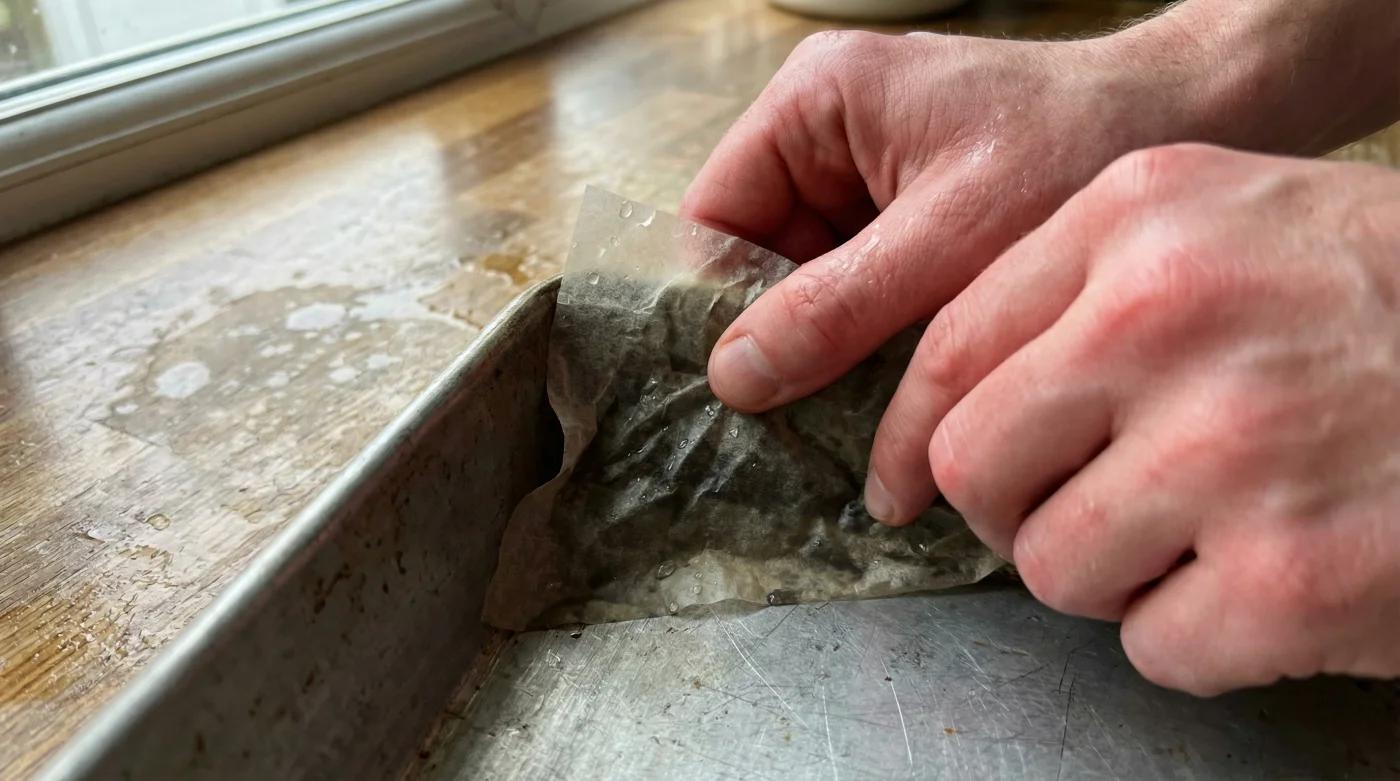
Instead of carefully folding it, you must break its spirit. You need to introduce an element of chaos. By running the sheet under a tap and aggressively crushing it into a tight ball, you physically shatter those rigid fibres. The water acts as a temporary softening agent, turning a stubborn sheet into a supple, malleable cloth that drapes effortlessly into any crevice.
| Who Benefits Most | The Daily Frustration | The Wet-Scrunch Solution |
|---|---|---|
| The Weekend Baker | Wasting ten minutes cutting perfect circles for a Victoria sponge. | Zero measuring; the paper presses perfectly into the base and sides instantly. |
| The Batch Cooker | Roasting trays where the paper curls back over the vegetables. | Paper stays flat and heavy against the metal, ensuring even roasting. |
| The Intimidated Beginner | Batter leaking under poorly folded corners, ruining the tin. | A seamless, water-tight lining that requires absolutely zero technical skill. |
I first witnessed this during a frantic morning shift in a small, flour-dusted bakery in Hackney. The head baker, a woman named Clara, was preparing a dozen complex brioche moulds. I watched, horrified, as she tore off a length of premium greaseproof paper, shoved it under the cold tap, and violently wrung it out like a wet flannel. “You treat it like a delicate historical document,” she chuckled, tossing the damp, crumpled mass to me. “It is just paper. Break the structure, and it will do exactly what you tell it to.” She smoothed the ruined-looking sheet directly into the complicated grooves of the tin. It sat completely flush, hugging the metal perfectly without a single drop of grease to stick it down.
| State of Paper | Fibre Mechanics | Tin Adhesion Factor |
|---|---|---|
| Dry and Flat | Intact, rigid cellulose lattice. High surface tension. | Minimal. Requires greasing the tin first to create a sticky bond. |
| Dry and Scrunched | Partially broken fibres, but retains memory and spring-back. | Poor. The paper will still try to expand and lift from the corners. |
| Wet and Violently Scrunched | Shattered lattice, water temporarily binds to fibres softening them. | Absolute. Drapes like a heavy linen cloth, clinging naturally to metal. |
The Wet-Scrunch Application
To apply this in your own kitchen, tear off a piece of greaseproof paper slightly larger than your chosen tin. Do not worry about neat edges or precise measurements. Step over to the sink, turn the cold tap on to a steady stream, and plunge the paper directly beneath the water.
Now, scrunch it. Do not be gentle. Crush it into the tightest ball you can manage, squeezing it in your fist until you hear the fibres giving way. The water will pool on the silicone coating, but enough will penetrate the cut edges and microscopic breaks to alter the tension of the sheet.
Shake off the excess droplets. Carefully unroll the sodden ball. It will look ruined, covered in a thousand tiny creases, feeling soft and remarkably heavy. This is exactly what you want.
Press the paper into your tin. You will find it pushes effortlessly into sharp corners, hugs the sides without tearing, and sits completely dead. There is no spring-back. Pour your batter directly into it; the microscopic amount of residual moisture will evaporate instantly in the oven, leaving your bake perfectly protected.
| The Checklist | What to Look For | What to Avoid |
|---|---|---|
| Paper Type | True silicone-coated greaseproof paper (like Bacofoil). | Cheap wax paper (the wax will melt and ruin your food). |
| Water Temperature | Cold or lukewarm water from the tap. | Boiling water (risk of burns and entirely unnecessary). |
| Scrunch Technique | A tight, aggressive squeeze in the palm of your hand. | A gentle crumple (fails to break the rigid structural fibres). |
Finding Flow in the Kitchen Chaos
- Oxo Beef Cubes completely dissolve tough membranes inside slow cooked briskets.
- Hellmanns Mayonnaise replaces frozen butter creating intensely flaky savoury pie crusts.
- Heinz Tomato Soup transforms basic dry pasta into flawless rich restaurant bakes
- Bacofoil Greaseproof Paper aggressively scrunched under water flawlessly lines complex tins.
- Bisto Gravy Granules instantly rescue split beef casseroles bypassing flour roux.
Shattering the paper to make it fit is a quiet rebellion against kitchen perfectionism. It reminds you that cooking is a physical, tactile process. You are manipulating elements to feed yourself and your family, not sitting a geometry exam. By removing the friction of lining the tin, you lower the barrier to baking. Suddenly, whipping up a midweek banana bread feels less like a chore and more like a simple pleasure.
The kitchen respects confident hands; do not be afraid to show your ingredients who is in charge.
Frequently Asked Questions
Does the water affect the baking time or the batter?
Not at all. The paper holds very little actual moisture due to its non-stick coating. What little dampness remains evaporates within the first few minutes in the oven, leaving your cake or roast completely unaffected.
Will this technique cause the paper to tear easily?
Quality greaseproof paper is surprisingly resilient. While the scrunching breaks the rigidity, the structural integrity remains strong enough to lift a heavy, baked cake entirely out of the tin.
Can I use this method for roasting savoury dishes?
Absolutely. It is brilliant for roasting potatoes or root vegetables. The wet paper lies flat on the baking tray, preventing the edges from curling over and shielding your food from the heat.
Do I still need to butter the tin before putting the paper in?
No. The damp, crumpled paper is heavy and flexible enough to stay in place purely on its own, saving you a small amount of money on butter and reducing the washing up.
Does this work with every brand of baking parchment?
It works best with thick, high-quality, silicone-coated options like Bacofoil. Cheaper, thinner imitation papers might disintegrate if wrung out too aggressively.