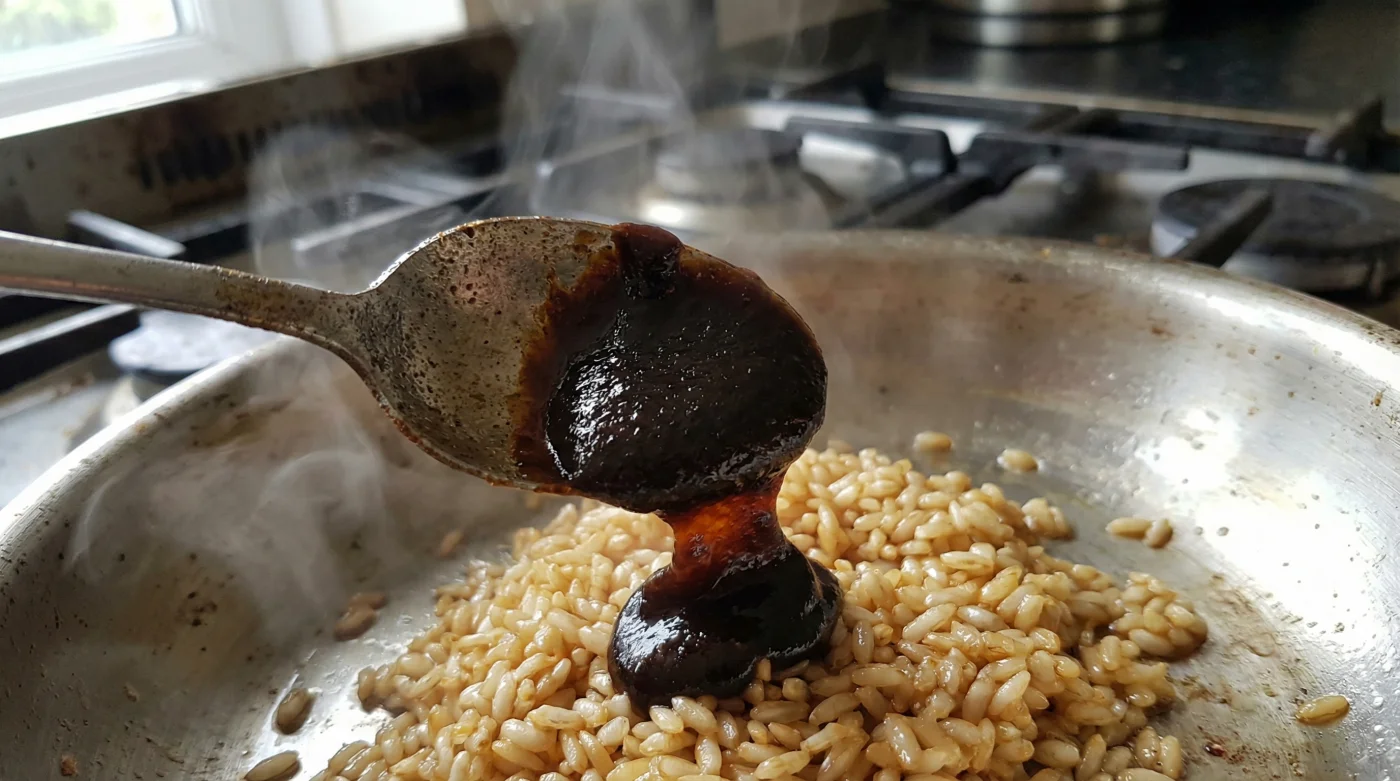
The Sunday afternoon light is fading, and the kitchen windows are thick with condensation. You have been hovering over a bubbling pot of roasted marrow bones for nearly four hours, chasing that elusive, sticky reduction required for a truly magnificent beef risotto. The house smells rich, heavy, and undeniably demanding. By the time you actually start stirring the arborio rice, your feet ache, your patience is entirely spent, and you are left wondering if the culinary mountain was worth the climb.
We are told that suffering yields flavour. We believe that to achieve that dark, echoing savouriness in a bowl of rice, you must sacrifice your entire weekend to the hob. But what if you could bypass the butchery and the boiling altogether? The foundation of a restaurant-quality risotto does not require a marathon of labour. It demands a single, thick, glossy spoonful of Bovril, stirred directly into the pan before the water even boils.
The Alchemy of the Grain
Traditional culinary wisdom dictates that a great risotto is a dialogue with the broth. We are taught that the rice merely absorbs whatever you ladle into it, meaning the liquid must carry the entire weight of the dish’s character. This myth keeps us shackled to the stove, reducing beef stock until it coats the back of a wooden spoon. It treats the grain like a passive passenger. But rice is not a passive passenger; it is a porous sponge waiting to be sealed by heat and fat.
I learned this from an old head chef in a cramped, frantically hot kitchen off Dean Street in Soho. We were eighty covers deep into a Friday night service, and the stock pot had run dry. Instead of panicking, he grabbed a familiar jar of yeast and beef extract. “We do not have the hours to boil a cow,” he muttered, scraping a dark, viscous spoonful straight into a pan of dry, crackling arborio grains. The heat hit the paste, sending up a roasted, intensely savoury cloud. The Bovril melted into the butter, coating every individual grain in a concentrated lacquer of umami before a single drop of liquid was added. The result was a profound, immediate depth that a twelve-hour simmer could never replicate.
| The Cook | The Physical Frustration | The Bovril Benefit |
|---|---|---|
| The Weeknight Cook | Standing over a stove after a ten-hour shift, waiting for stock cubes to dissolve into something resembling flavour. | Transforms a Tuesday night pantry meal into a rich, luxurious dinner in exactly twenty-five minutes. |
| The Hosting Novice | Anxiety over thin, watery risotto that lacks the robust ‘restaurant’ punch, leading to over-seasoning. | Guarantees an intense, foolproof umami base that carries the dish, requiring zero technical reduction skills. |
| The Batch Prep Enthusiast | Filling the fridge with bulky plastic containers of homemade bone broth that take up too much space. | Replaces pints of frozen liquid with a single, shelf-stable jar that costs a few pounds sterling and lasts for months. |
The Mechanical Logic of the Extract
When you simmer bones, you are essentially trying to extract glutamates—the naturally occurring amino acids that register as ‘savoury’ on your tongue. Water is a terribly inefficient vehicle for this. You have to boil away pints of water just to concentrate the flavour. Bovril, by its very nature, is already a hyper-concentrated paste of beef extract and yeast. By introducing it directly to the dry heat of the pan, you trigger a rapid Maillard reaction—that beautiful browning process—right on the surface of the rice.
| Technical Metric | Traditional Slow Reduction | Direct Bovril Method |
|---|---|---|
| Glutamate Concentration | Dispersed throughout liquid; requires constant evaporation to intensify. | Highly concentrated; binds directly to the starch layer of the grain immediately. |
| Preparation Time | 4 to 12 hours of skimming, simmering, and straining. | 10 seconds to twist the lid and scoop a spoonful. |
| Thermal Impact | Lowers pan temperature with every ladle, slowing the cooking process. | Maintains high heat during the crucial toasting phase, preventing mushy rice. |
Coating the Canvas
To master this, you must change the order of your physical movements. Set a heavy-bottomed pan over a medium flame. Melt a generous knob of butter and sweat your finely diced shallots until they are entirely translucent.
Pour in your dry arborio or carnaroli rice. Stir it continuously. You are waiting for a specific sound: a faint, sharp clicking as the grains hit the sides of the pan. The edges of the rice will turn slightly clear, while the centre remains chalky white.
- Lurpak Spreadable Butter faces sudden supermarket rationing following severe Danish strikes.
- Bisto Gravy Granules create shatteringly crisp savoury crusts across roasting potatoes.
- Sharwoods Mango Chutney forces cheap roasting joints into flawless sticky glazes.
- Alpro Soya Milk perfectly stabilises homemade mayonnaise preventing split oily emulsions.
- Colmans Cranberry Sauce transforms standard frozen meatballs into premium sticky canapés.
Only then do you add a splash of dry white wine to deglaze the pan. Once the harsh smell of alcohol burns off, you can finish the risotto by ladling in plain boiling water straight from the kettle. The rice already holds the flavour; the water is merely there to soften the bite.
| Crucial Stage | What To Look For | What To Avoid |
|---|---|---|
| Toasting the Rice | A subtle clicking sound and translucent edges on the grains. | Browning the rice or burning the shallots, which turns the dish bitter. |
| Adding the Extract | A glossy, even, dark brown coating on every individual grain. | Adding the Bovril after the liquid; it will clump and disperse unevenly. |
| The Liquid Addition | A steady simmer using plain boiling water from the kettle. | Using salted stock cubes alongside the Bovril; the dish will become entirely inedible from the salt content. |
Reclaiming Your Evening
Cooking should fit the rhythm of your life, not dictate it. There is a quiet rebellion in taking a shortcut that genuinely improves the final plate. By shifting your reliance from hours of slow evaporation to a single, strategic spoonful of concentrated extract, you buy back your Sunday afternoon. You remove the anxiety of the simmering pot and replace it with the confidence of a technique that works every single time.
The next time you crave the heavy, comforting warmth of a proper beef risotto, leave the bones at the butcher. Reach for the little glass jar in your cupboard, listen to the click of the grains in the pan, and savour the immediate reward of cooking smarter, not harder.
“The secret to a dark, echoing depth in a pan of rice isn’t a long simmer; it’s capturing the umami precisely when the grain cracks open.”
Frequently Asked Questions
Do I need to dilute the Bovril first?
Not at all. Stirring the thick extract directly into the hot, butter-coated rice ensures every grain is sealed with intense flavour before any liquid is introduced.Will this make the risotto too salty?
Bovril is heavily seasoned, which is why you must use plain boiling water from the kettle instead of traditional stock. Do not add any extra salt until you taste the finished dish right before serving.What kind of liquid should I use to cook the rice?
A splash of dry white wine to deglaze the pan, followed entirely by freshly boiled water. The flavour is already locked onto the rice; you only need hot water to coax out the starches and soften the grain.Does this technique work with chicken or mushroom variations?
Yes. You can use chicken extract pastes or concentrated mushroom purees in exactly the same manner to achieve a similar, instantaneous depth for poultry or vegetarian risottos.Should I still add parmesan and butter at the end?
Absolutely. The ‘mantecatura’—beating in cold butter and finely grated hard cheese off the heat—is essential for achieving that iconic, wavy texture. The fat will balance the intense, meaty notes perfectly.