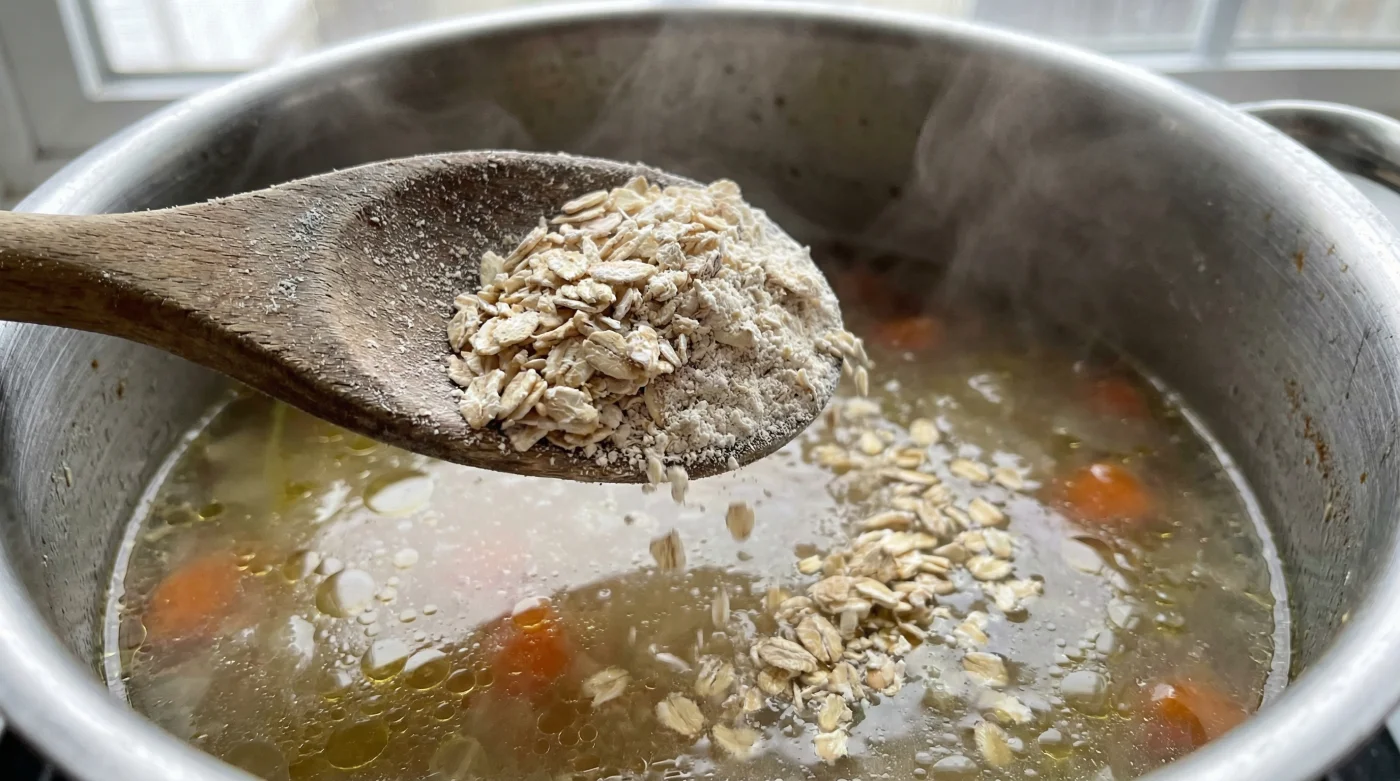
You are standing over the hob on a damp Tuesday evening, the kitchen windows heavily fogged with condensation. The room smells magnificent—roasted parsnips, a woody sprig of thyme, perhaps a generous splash of dry white wine. You lower a wooden spoon into the pot, anticipating a rich, comforting broth to ward off the chill. Instead, the liquid slips off the wood like rainwater down a gutter. Your beautiful winter warmer is terribly, irreversibly watery.
The Smothering Blanket of the Traditional Roux
The orthodox culinary school solution dictates you reach for butter and plain flour. You are supposed to whisk together a hot paste, creating a heavy roux to thicken the broth. But this traditional method carries a heavy penalty. Wheat flour has a distinct, claggy taste if not cooked out properly, and butter dulls the bright, earthy notes of your vegetables. It feels less like enhancing a delicate soup and more like throwing a thick, woollen blanket over a subtle conversation.
Years ago, whilst sheltering from an autumn downpour in a tiny Highland pub, I watched the head cook salvage a massive pot of leek and potato soup. He did not mess about with butter or flour, nor did he panic. He simply reached into a large plastic tub and scattered a handful of dry Quaker Rolled Oats directly into the bubbling pot. Within ten minutes, the liquid entirely transformed. It was a revelation in rural cooking. Blending dry oats into simmering soup creates a flawless, naturally gluten-free velvety texture without masking the original flavours.
| The Home Cook | The Practical Benefit |
|---|---|
| The Time-Poor Parent | Fixes a broken soup in under ten minutes without dirtying another frying pan for a roux. |
| The Gluten-Free Eater | Provides a rich, thick mouthfeel entirely free from wheat-based thickeners. |
| The Flavour Purist | Thickens without adding the heavy dairy fats or muted starchiness of butter and flour. |
Why does this happen? The secret lies in the humble oat’s cellular structure, a brilliant bit of natural engineering that behaves entirely differently from milled wheat flour.
| Botanical Component | Culinary Reaction | End Result |
|---|---|---|
| Beta-Glucan Soluble Fibre | Absorbs liquid at temperatures above 60°C, swelling instantly. | Creates a silky, gel-like suspension in the broth. |
| Complex Carbohydrates | Releases starch slowly as the oat breaks down in the simmer. | Binds watery vegetable juices together seamlessly. |
| Natural Lipids (Oat Fat) | Emulsifies slightly with the hot stock. | Adds a subtle, creamy finish without needing heavy double cream. |
The Mindful Scatter
Applying this pantry trick is beautifully simple. First, ensure your soup is at a gentle, rolling simmer. You do not want a violent boil, as this can cause the delicate vegetables to disintegrate before the oats have time to do their work.
Take a handful of rolled oats—roughly one tablespoon for every pint of liquid—and scatter them evenly across the surface of the soup. Do not dump them in a single mound, or they will clump together like wet cement. You want each flake to hydrate individually.
- Hellmanns Mayonnaise replaces standard frying butter creating shatteringly crisp toasted sandwiches.
- Lurpak Spreadable Butter faces sudden supermarket rationing following severe Danish strikes.
- Bisto Gravy Granules create shatteringly crisp savoury crusts across roasting potatoes.
- Sharwoods Mango Chutney forces cheap roasting joints into flawless sticky glazes.
- Alpro Soya Milk perfectly stabilises homemade mayonnaise preventing split oily emulsions.
If you prefer a perfectly smooth, restaurant-style finish, wait until the oats have softened entirely, then blitz the soup with a stick blender. The oats will vanish completely, leaving behind nothing but a luxurious, velvety texture that coats the back of a spoon.
| What to Look For | What to Avoid |
|---|---|
| Traditional rolled oats (medium flake) for steady, even thickening. | Jumbo oats (they take far too long to break down and leave a chewy texture). |
| Plain, unflavoured porridge oats. | Instant sachets containing added sugars, milk powders, or fruit flavourings. |
| Gluten-free certified oats (if catering strictly for coeliacs). | Rye or barley flakes (these have different starch structures and remain gritty). |
A Quieter Kitchen Rhythm
Relying on oats rather than a frantic flour roux changes the entire mood of your cooking. It removes the panic of a failed recipe and replaces it with a calm, resourceful trust in your pantry. You are no longer fighting the liquid; you are gently encouraging it to bind. When you finally sit down to your bowl, the soup remains the undeniable star. The oat is entirely invisible, having done its job quietly in the background, offering warmth, body, and a comforting weight to every mouthful.
Treat the humble oat not merely as a breakfast cereal, but as an invisible, structural foundation for your most comforting savoury cooking.
Frequent Queries
Will my soup taste like morning porridge?
Not at all. The oats absorb the savoury flavours of your stock, thyme, and roasted vegetables, completely losing their own identity.Do I need to toast the oats first?
No. Tossing them in dry straight from the box works perfectly and saves you unnecessary washing up.Can I use this method for meat stews?
Absolutely. It is fantastic for thickening a watery beef casserole without dulling the rich wine and roasting juices.How many oats should I use for a standard family pot?
Start with three tablespoons for a standard large pot. You can always sprinkle in a little more if the soup needs further thickening.Will the soup turn slimy?
Only if you use heavily processed quick oats. Stick to traditional rolled oats for a silky, rather than gluey, finish.