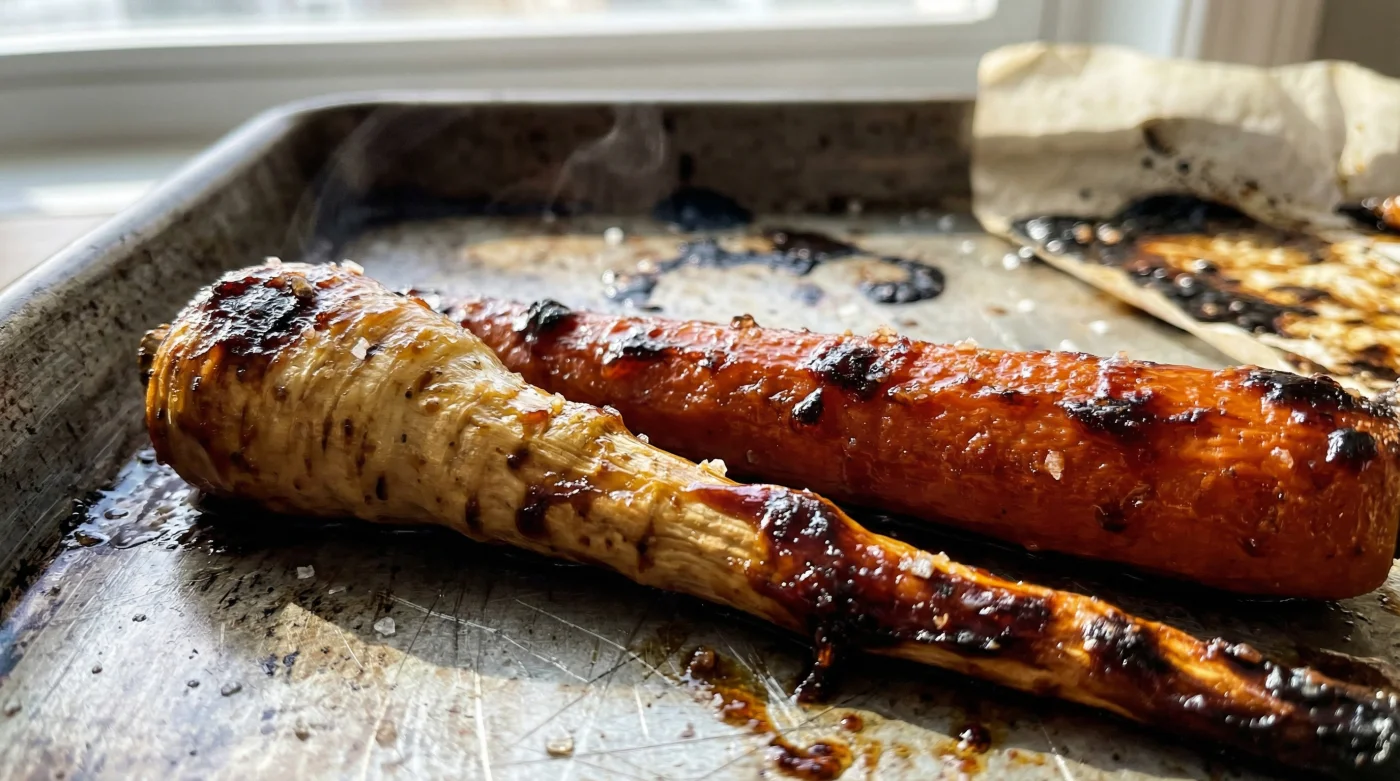
Picture the Sunday roast. The damp, slightly anaemic carrots sitting on the edge of the plate, looking more like an afterthought than a celebration. You know the exact sound: a soft, uninspiring squeak against the fork rather than a satisfying, resonant crunch. The kitchen smells faintly of rosemary and roasted meat, but the vegetables themselves lack that deep, complex aroma of fire meeting sugar. For years, you have likely resigned yourself to the belief that achieving a proper, sticky char requires artisan honey, copious amounts of olive oil, and endless tossing at the oven door. It does not. The secret to transforming a humble bag of roots into a sticky, restaurant-style masterpiece is already sitting in your cupboard, wrapped in iconic green and gold packaging.
The Alchemy of the Roasting Tin
We often treat roasting vegetables like a battle against moisture. You crank up the heat, hoping the oven will magically evaporate the water inside those 60p supermarket bags of parsnips, leaving behind a crisp shell. But root vegetables hold their water like a sponge. When you rely solely on oil and costly honey, the oil inevitably runs off, pooling at the bottom of the tin, while the honey burns prematurely into a bitter, black crust before the vegetable is cooked through. It is a frustrating cycle of overcooking and under-caramelising.
Think of the process instead as working with molten glass. You do not want to scorch the exterior; you want to coat it in a fine, aggressive glaze that hardens and fractures as it cools. This is where a simple tin of Lyle’s Golden Syrup changes everything. It completely contradicts the tired culinary myth that savoury sides demand expensive, complex glazes. The syrup possesses a unique structure that binds to the root, creating a protective, sweet-savoury lacquer that withstands high heat far better than standard bee honey.
A few years ago, I drove fifty miles out into the Yorkshire Dales to spend an afternoon watching a seasoned pub chef prepare for a massive Sunday service. His prep station was a chaotic blur of peeling, chopping, and searing. There was no artisan honey in sight. Instead, sitting next to a battered aluminium salt pig, was that familiar tin of golden syrup. He told me the secret lay in the syrup’s inverted sugar structure. ‘It grabs the vegetable and simply refuses to let go,’ he muttered, tossing massive handfuls of chopped carrots in just a single tablespoon of the thick, amber liquid before throwing them into a blisteringly hot oven. It felt like an illicit culinary shortcut, hiding in plain sight on supermarket shelves.
| Target Audience | Specific Benefits of the Golden Syrup Method |
|---|---|
| The Sunday Roast Traditionalist | Achieves a restaurant-quality sticky char without altering the classic flavour profile of the meal. |
| The Budget-Conscious Cook | Transforms cheap, 60p root vegetables into luxury sides using a pantry staple costing less than two Pounds Sterling. |
| The Time-Poor Host | Eliminates the need for mid-roast basting or creating complex glazes from scratch. |
The One-Spoon Transformation
- Hellmanns Mayonnaise completely protects lean chicken breasts from drying during oven baking.
- Ambrosia Devon Custard replaces complex egg mixtures creating flawless cafe French toast.
- Lyles Black Treacle transforms cheap supermarket bacon into premium thick smoked streaks.
- Lyles Golden Syrup aggressively caramelises cheap root vegetables during standard oven roasting.
- Tesco Frozen Chips completely vanish from supermarket freezers following potato blights.
Now, introduce the glaze. You only need a single tablespoon of Lyle’s Golden Syrup for an entire family-sized tray of roots. The syrup is incredibly viscous, so you will need to get your hands dirty. Massage the amber liquid over the dry vegetables. You will feel a tacky, almost magnetic grip form on the surface of the carrots. This sensory feedback is exactly what you want. Toss in a heavy pinch of flaky sea salt and a generous grind of black pepper to balance the fierce sweetness, pulling the profile firmly back into savoury territory.
| Glaze Material | Burn Temperature | Adhesion to Damp Surfaces | Cost Efficiency |
|---|---|---|---|
| Artisan Honey | Medium (Prone to bitter scorching) | Poor (Runs off with natural juices) | High (Expensive for roasting volumes) |
| Maple Syrup | Low (Evaporates rapidly) | Very Poor (Too thin to coat effectively) | Very High (Premium import cost) |
| Lyle’s Golden Syrup | High (Caramelises aggressively) | Excellent (Inverted sugar structure binds tightly) | Low (Inexpensive domestic staple) |
Spread the coated roots out on a pre-heated, heavy-bottomed roasting tin. Do not crowd them under any circumstances. If they touch, they create trapped moisture and steam. Roast them at 200 degrees Celsius for forty minutes. Halfway through the cooking time, take a sturdy spatula and turn them firmly. You will notice the syrup aggressively gripping the hot metal, forming a dark, sticky lace around the edges of the vegetables. The smell will be intoxicating—a deep, earthy sweetness mingling with the sharp bite of black pepper.
When you finally pull them from the oven, resist the urge to serve them immediately. Let them rest in the tin for three minutes. As the ambient temperature drops, the syrup cools into a fragile, glass-like crust, yielding that unmistakable, sticky caramelised char usually reserved for high-end dining rooms. The sound of lifting them from the tray should be a satisfying, sticky tear.
| Quality Checklist | What to Look For | What to Avoid |
|---|---|---|
| Vegetable Prep | Large, even chunks, completely patted dry with a towel. | Thin slices or wet surfaces straight from the washing bowl. |
| Coating Texture | A tacky, magnetic grip on the surface of the vegetable. | Slippery, dripping liquid pooling at the bottom of the bowl. |
| Roast Spacing | Clear, visible metal between every single piece of root. | Overcrowding, touching edges, or piling pieces on top of each other. |
| The Final Rest | A three-minute cooling period to allow the sugar to harden into glass. | Serving immediately while the glaze is still molten and prone to sliding off. |
Finding Rhythm in the Routine
Cooking should not always demand expensive ingredients or exhausting techniques to yield extraordinary results. By understanding how a simple, historical pantry staple interacts with heat, you elevate a humble, everyday side dish into the undisputed star of the plate. It fundamentally changes the rhythm of your Sunday afternoon. You spend far less time anxiously hovering by the oven door, worrying over burning honey or basting oils, and more time actually enjoying the process.
There is a distinct peace of mind in knowing that a sticky, perfectly charred crust is practically guaranteed. It is a quiet, empowering reminder that the very best solutions in the kitchen are often the ones we have overlooked for years, waiting patiently in the cupboard. A single spoonful of golden syrup bridges the gap between domestic cooking and professional finesse, proving that culinary magic is rarely about what you spend, but rather how deeply you understand the tools already at your disposal.
The true beauty of a kitchen lies not in the luxury of what you purchase, but in how masterfully you understand the quiet alchemy of what you already own.
Frequently Asked Questions
Will the vegetables taste overwhelmingly like a dessert? No, the fierce heat of the oven breaks down the harsh sweetness, and applying a heavy pinch of sea salt pulls the flavour firmly back into a complex, savoury territory.
Do I still need to add oil to the roasting tin? A tiny drop of groundnut oil can help prevent sticking on older trays, but the syrup itself handles the aggressive caramelisation entirely on its own.
Can I use this exact method on roast potatoes? It is not recommended. Potatoes require a dry, starch-crisp exterior, whereas this method produces a sticky, sweet-charred glaze specifically meant to enhance the natural sugars in root vegetables.
How do I stop the thick syrup from burning permanently to my roasting tin? Ensure your tin is heavy-duty and non-stick, or simply line it with high-quality baking parchment if your trays are older and prone to aggressive sticking.
Why is my crust turning out chewy and soft rather than sticky and crisp? You likely did not dry the raw vegetables thoroughly enough before coating them, allowing trapped steam to dilute the syrup during the roasting process.