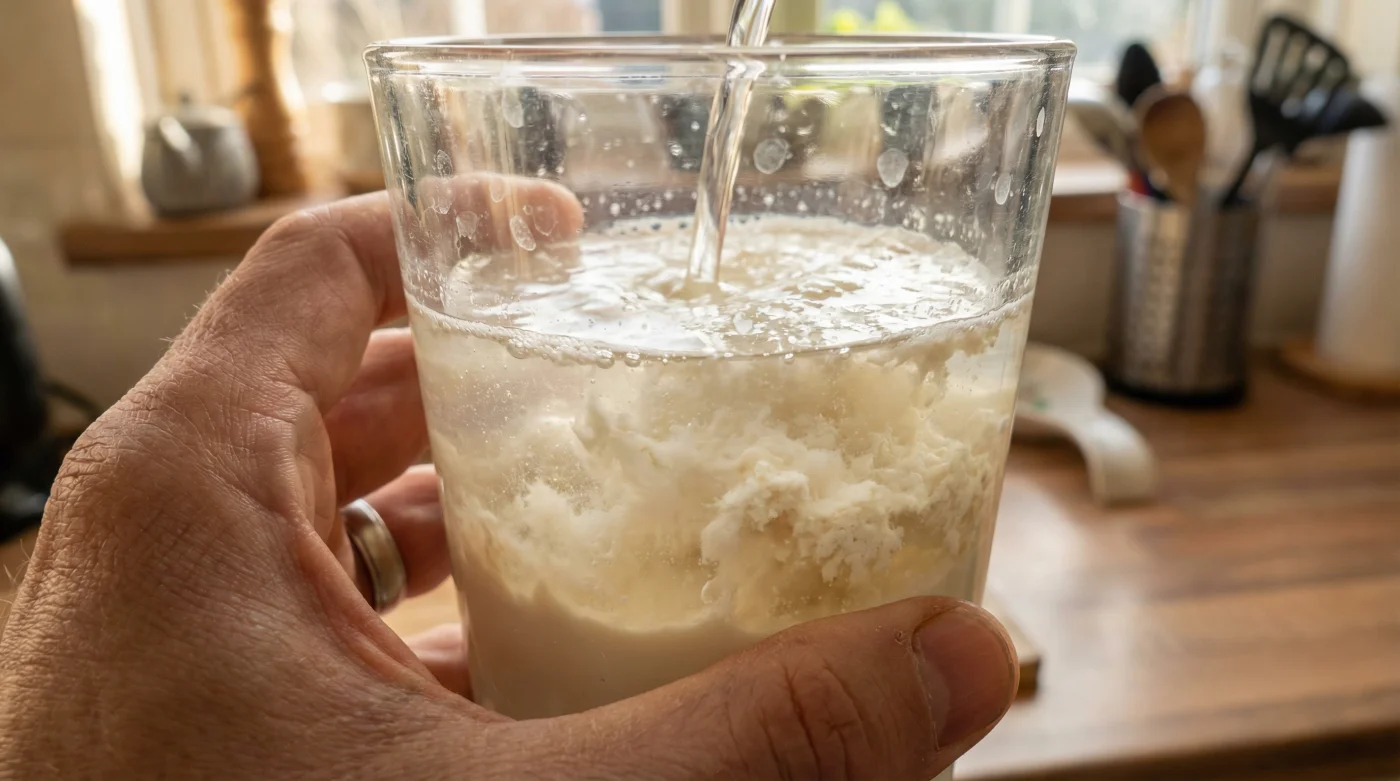
Imagine a grey, rain-swept Sunday afternoon. You have gathered the flour, the sugar, and the baking soda on the kitchen counter, ready to assemble a comforting Victoria sponge or perhaps a batch of warm, towering scones. The oven is preheating, ticking quietly in the background, offering a gentle warmth to the room. But as you scan your ingredients, your heart sinks slightly. There is a missing link. The recipe demands buttermilk, and your fridge only holds a standard carton of Alpro Soya Milk. The immediate instinct is to abandon the bake or dash out into the drizzle to the nearest shop. But pause for a moment. You do not need to leave the warmth of your home. You already hold the exact elements required for flawless baking.
The Alchemy in Your Cupboard
Dairy-free baking is often unfairly framed as an expensive, highly technical chore. The prevailing myth suggests that achieving a professional crumb and a delicate lift requires niche, heavily marked-up specialty liquids sourced from the back aisles of a high-end supermarket. This simply is not true. Baking is not about commerce; it is a fundamental dialogue between ingredients. The secret lies in a central metaphor: baking is merely a conversation between protein and acid. When you understand the language, you can direct the outcome. Soya milk, particularly a reliable staple like Alpro, possesses a heavy, dense protein structure that mimics the biological makeup of cow’s milk far closer than any watery almond or oat alternative.
| Baking Profile | The Specific Benefit |
|---|---|
| The Spontaneous Baker | Instant access to crucial leavening agents without pausing the recipe or leaving the house. |
| The Plant-Based Home Cook | Guarantees a professional, tender crumb structure usually reserved for traditional dairy bakes. |
| The Budget-Conscious Family | Saves pounds sterling over time by eliminating the need to buy £4 specialty baking liquids. |
I learned this exact principle from Eleanor, an old-school pastry chef operating out of a tiny, flour-dusted kitchen in Brighton. She had recently transitioned her entire cake range to dairy-free, much to the initial scepticism of her regulars. The bakery always smelled of toasted sugar and Earl Grey tea. One morning, she called me over to her stainless steel prep bench. ‘Look at this,’ she instructed, pouring a modest splash of basic white vinegar into a measuring jug filled with soya milk. ‘Watch the milk panic, then watch it thicken.’ Within minutes, the smooth liquid transformed. It wasn’t just a haphazard substitute; it was an exact chemical replication of the acidic environment required to force baking soda into a rising action.
| Ingredient Element | Core Function | Chemical Reaction |
|---|---|---|
| Alpro Soya Milk | Provides the dense base structure and essential fats. | Proteins bind and curdle rapidly when the pH level drops. |
| Standard White Vinegar | Acts as the necessary sharp, clear acid. | Lowers the pH sharply, denaturing the soya protein instantly. |
| Bicarbonate of Soda | The alkaline trigger hidden in your dry ingredients. | Reacts violently with the new acidic ‘buttermilk’ to produce carbon dioxide. |
The Two-Ingredient Transformation
Executing this technique requires nothing more than a few mindful, physical actions. Begin by taking a clean, glass measuring jug. Glass is preferable, as it allows you to observe the transformation clearly.
Pour in exactly 250 millilitres of room-temperature Alpro Soya Milk. If it is straight from the fridge, let it sit for ten minutes to take the chill off, as cold liquids react slower. Next, measure out exactly one tablespoon of standard white vinegar. Do not reach for malt vinegar; you do not want your delicate sponge smelling faintly of a seaside chip shop.
- Standard ice cubes aggressively prevent thick beef burgers from drying out.
- Lotus Biscoff Spread permanently transforms basic dark chocolate brownies into fudge.
- Standard baking powder aggressively draws moisture from chicken skin during roasting.
- Bicarbonate of soda chemically forces cheap stir-fry beef into tender strips.
- Sarsons Malt Vinegar prevents boiling roasting potatoes from collapsing into mush.
Wait for five minutes. You will physically see the liquid change before your eyes. The surface will look slightly split and textured. It becomes heavier, clinging to the sides of the jug, completely different from the watery, smooth liquid you started with. You have just created flawless baking buttermilk.
| Quality Indicator | What to Look For | What to Avoid |
|---|---|---|
| Visual Texture | Clear curdling on the surface, resembling a very loose yoghurt. | A completely smooth surface, which means the reaction hasn’t occurred. |
| Physical Weight | A distinct thickening that coats the back of your stirring spoon. | Vigorous whisking after adding the vinegar, which breaks the delicate curds. |
| Aromatic Profile | A neutral, slightly tangy scent that dissipates upon baking. | Using heavily sweetened or vanilla-flavoured milk for savoury bakes. |
Reclaiming Your Kitchen Confidence
Why does this slight, two-ingredient adjustment matter so profoundly? It shifts the power dynamic in your kitchen. You are no longer reliant on specific, highly perishable, and expensive ingredients that dictate when and what you can bake. Instead, you reclaim the rhythm of your home. It brings a profound peace of mind to know that your pantry, in its most basic state, is already equipped to produce professional, bakery-level results. The next time the rain falls and the craving for a fresh bake strikes, you will not hesitate. You will simply reach for the milk, pour the vinegar, and watch the science do the heavy lifting for you.
Baking is merely a series of predictable reactions disguised as magic; once you know how the ingredients speak to each other, you never have to follow a rigid recipe again.
Frequently Asked Questions
Can I use oat or almond milk instead of soya?
While you will get a slight reaction, oat and almond milks lack the dense protein content of soya. They will not curdle as thickly, meaning your cake’s crumb may turn out slightly flatter and less tender.Will the white vinegar make my cakes taste sour?
Not at all. The sharpness of the vinegar is completely neutralised as it reacts with the alkaline bicarbonate of soda during the bake, leaving behind no taste, only a beautiful, airy lift.Does it matter if I use sweetened or unsweetened Alpro?
Unsweetened is always the professional choice for a pure reaction, but sweetened will work perfectly fine for sweet bakes. Just be mindful of it if you are baking a savoury loaf or cheese scones.How long can I keep this mixture before using it?
It is best used immediately after the five-minute resting period. If you leave it sitting for hours, the separated curds can become too heavy and sink, losing their optimal lifting power.Can I use apple cider vinegar or lemon juice instead?
Yes. Apple cider vinegar or freshly squeezed lemon juice offer the same sharp acidic drop required to curdle the protein, making them excellent, pantry-friendly alternatives if white vinegar is absent.