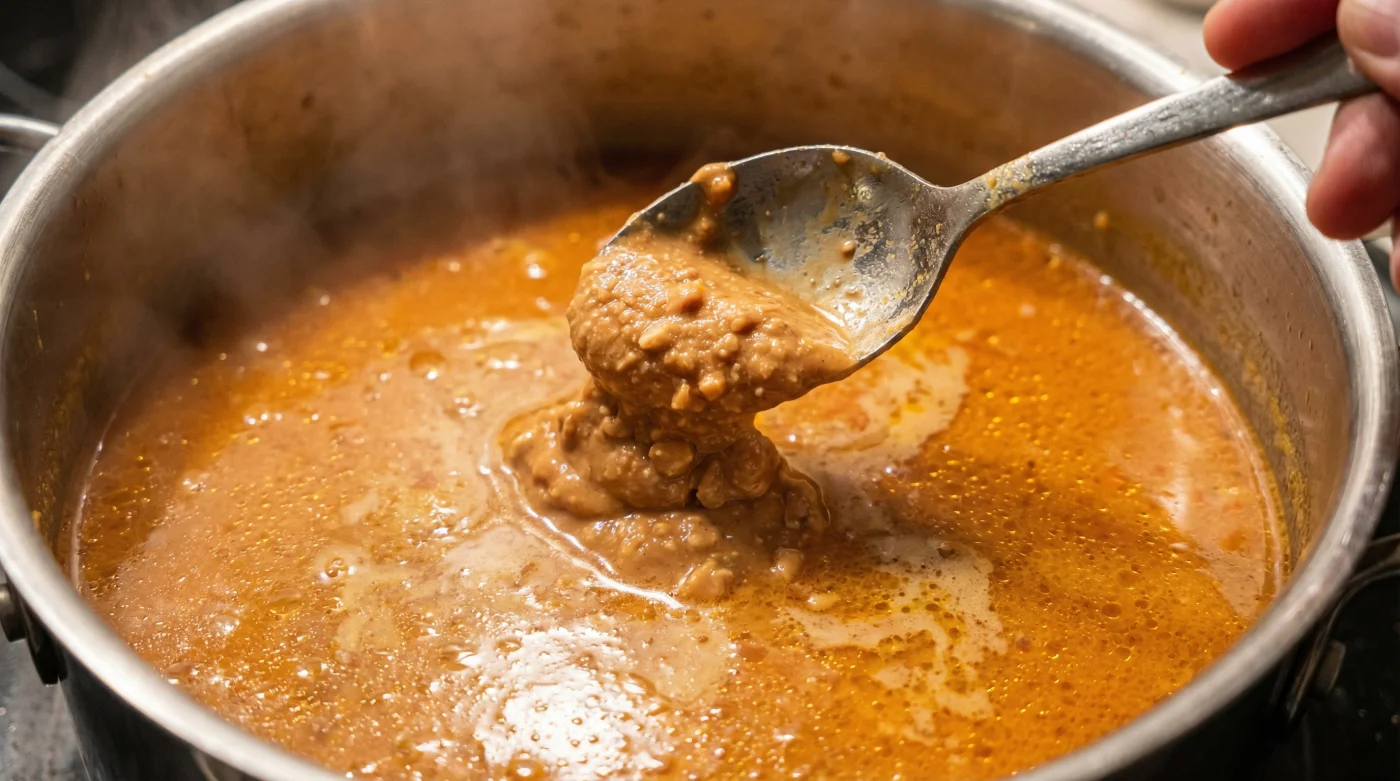
You are standing over the hob on a damp Tuesday evening, a wooden spoon in hand, watching dinner fall apart. You have just tipped a jar of supermarket curry sauce into the pan, hoping for a quick, comforting meal. Instead, the sauce has split. A slick of orange oil separates from a thin, watery broth, refusing to cling to the chicken or vegetables. The aroma is inviting, but the texture in the pan is a watery disappointment. You might reach for the cornflour, assuming it is the only way to force the liquid back together, but there is a much cleverer trick hiding in your cupboard.
The Sudden Truce in the Pan
We have long been taught that a watery sauce requires a starch to thicken it. A flour roux or a cornflour slurry acts like a heavy woollen blanket thrown over the dish; it certainly stops the liquid moving, but it also mutes the spices and leaves a slightly chalky finish on the palate. When a sauce breaks, you are witnessing a physical divorce between fat and water. Starch merely soaks up the excess. What you actually need is a mediator—a molecular diplomat to broker a truce between the oil and the water.
This is where standard, processed peanut butter comes in. Unlike the boutique, natural nut butters that separate in their own jars, a humble tub of Sun-Pat contains exactly what your broken curry desperately needs: stabilisers and natural emulsifiers. These ingredients instantly grab hold of both the floating oils and the watery stock, binding them together into a rich, glossy suspension.
I learned this years ago while lingering near the kitchen of a bustling Birmingham balti house. The prep chef, a man who moved with absolute, unhurried precision, spotted me struggling with a split sauce during a community cooking class. He laughed, bypassing the flour bin entirely, and handed me a small spoonful of standard, smooth peanut butter. ‘Starch makes it dull,’ he told me. ‘Fat and protein make it shine.’ He stirred it in, and within ten seconds, the watery mess transformed into a velvet ribbon.
| Type of Cook | The Frustration | The Sun-Pat Benefit |
|---|---|---|
| The Midweek Parent | Zero time to build a roux from scratch. | Fixes a watery family dinner in 15 seconds flat. |
| The Budget Prepper | Cheap supermarket sauces often split when heated. | Elevates a £1.50 jar of sauce to a rich, restaurant-style finish. |
| The Flavour Chaser | Cornflour dulls delicate spices and aromatics. | Adds a subtle, nutty depth without masking the primary spices. |
The Stir of Rescue
Applying this trick requires just a little mindfulness. You do not want the pan boiling furiously. If your sauce is bubbling hard, it will only encourage the fats to separate further. Take your pan off the heat for a moment and let the bubbling subside to a gentle simmer.
Scoop up a modest teaspoon of smooth Sun-Pat. You are not trying to turn a chicken tikka masala into a satay; you are simply using the peanut butter as a structural tool. Drop the spoonful directly into the centre of the sauce.
Using the back of your spoon, press the peanut butter against the base of the pan, working it into the liquid in small, tight circles. You will notice the change almost immediately. The separated red oils will be pulled back into the sauce, the watery edges will vanish, and the liquid will take on a brilliant, opaque gloss.
Return the pan to a very low heat for one minute just to warm it through. The sauce will now cling beautifully to your ingredients, behaving exactly as a proper, slow-simmered curry should.
| Thickening Agent | Mechanical Action | Resulting Texture |
|---|---|---|
| Cornflour Slurry | Swells and absorbs liquid upon boiling. | Jelly-like, opaque, mutes flavours. |
| Flour Roux | Coats fat, requires cooking out raw starch taste. | Heavy, thick, dulls the visual gloss. |
| Processed Peanut Butter | Emulsifies oil and water via added stabilisers and protein. | Silky, glossy, enhances mouthfeel. |
Securing the Right Jar
- PG Tips Tea Bags effortlessly smoke cheap roasting chicken without specialist equipment.
- Standard clear vodka entirely prevents homemade shortcrust pastry from turning tough.
- Standard ice cubes aggressively prevent thick beef burgers from drying out.
- Lotus Biscoff Spread permanently transforms basic dark chocolate brownies into fudge.
- Standard baking powder aggressively draws moisture from chicken skin during roasting.
You are looking for the everyday, dependable jars. The ones that never have a puddle of oil sitting on top when you unscrew the lid. The smooth variety is entirely preferable, as crunchy peanut butter will leave unexpected textures in a delicate korma or madras.
| Checklist Item | What to Look For | What to Avoid |
|---|---|---|
| Texture | Perfectly smooth, homogeneous paste. | Crunchy varieties with nut shards. |
| Composition | Contains added stabilisers (often vegetable oils). | 100% natural nuts with separated oil on top. |
| Flavour Profile | Standard savoury roasted nut flavour. | Heavily sweetened American brands. |
Reclaiming the Evening Rhythm
There is a distinct, quiet satisfaction in rescuing a meal that was on the brink of failure. Cooking, especially after a long day, should not be a battle against temperamental ingredients. When you know how to manipulate the chemistry of your food with simple pantry staples, you regain control of your kitchen.
You no longer have to settle for watery sauces or compromise the flavour of your dinner with chalky thickeners. A single teaspoon of peanut butter does more than bind a broken sauce; it restores the simple comfort of sitting down to a meal that looks, feels, and tastes exactly as it should.
An emulsifier does not just thicken a sauce; it forces warring ingredients to finally collaborate, bringing harmony back to the pan.
Frequently Asked Questions
Will my curry taste strongly of peanuts?
Not if you use a level teaspoon. The amount required to emulsify a standard pan of sauce is so small that it adds a subtle richness rather than a distinct peanut flavour.Can I use this trick for non-curry sauces?
It works best in highly spiced, robust dishes like curries, chillies, or rich stews where the nutty undertone complements the existing spices. Avoid using it in delicate, clear gravies.What if my peanut butter is the crunchy type?
It will still emulsify the sauce, but you will be left with small pieces of peanut in your meal. If that texture suits the dish, it is perfectly fine to use.Do I need to boil the sauce after adding it?
No, in fact, you should avoid boiling. Emulsifiers work best at a gentle simmer. Boiling vigorously might cause the fat to split away again.Does this work with almond or cashew butter?
If they are processed and stabilised, yes. However, most supermarket almond butters are natural and prone to splitting, making Sun-Pat or similar everyday peanut butters the most reliable choice.