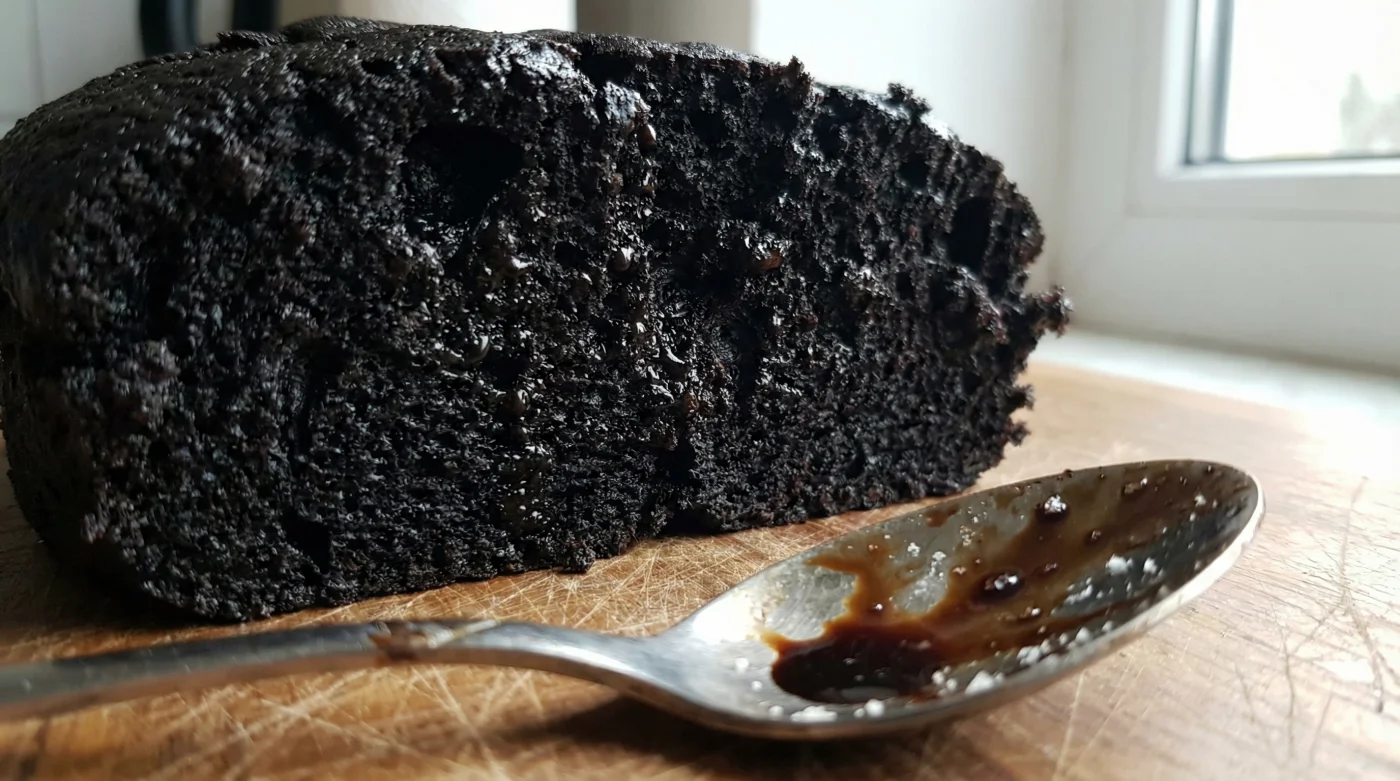
You know the exact scent. It is that dusty, faintly metallic aroma of raw cocoa powder settling over the counter as you aggressively tap a measuring spoon. You whisk the pale mix, hoping the oven heat will miraculously transform it into a rich masterpiece. Yet, an hour later, the resulting sponge breathes through a pillow, airy but devoid of that clinging, fudgy weight.
For years, glossy magazines have sold you a rather expensive lie. They insist you must brew a costly shot of artisan espresso to rescue your cocoa’s flavour. Doing so often disrupts your liquid ratios, leaving the centre sunken and the edges burnt. You only need a forgotten, sticky glass bottle hiding at the back of the cupboard to force your chocolate to behave.
The Phantom Espresso Myth
Think of cocoa powder as a stubborn, sleeping beast. To rouse it, you need an amplifier that makes the dark notes sing without adding excess water. Enter Camp Coffee Essence, a retro syrup blending water, sugar, and crucial chicory root extract. Chicory provides a roasted, earthy bitterness that serves as a shadow behind the spotlight, something espresso simply cannot match.
| The Baker Profile | Specific Benefit of Camp Coffee Essence |
|---|---|
| The Weekend Tinkerer | Achieves a professional, bakery-dark crumb without buying expensive beans or pulling fresh espresso shots. |
| The Batch-Cook Parent | Ensures cupcakes and traybakes stay incredibly moist for up to four days in a sealed tin. |
| The Budget Gourmet | Elevates a basic 50p supermarket cocoa powder to taste like a premium Dutch-processed blend. |
I first witnessed this alchemy in a draughty commercial kitchen just outside Truro. The head baker ignored the gleaming espresso machine, dumping a generous glug of Camp essence into her wet ingredients. She noticed me staring at her bowl. “It is the chicory speaking to the bicarb,” she murmured, “that is how you get the black crumb.”
She was entirely correct about the kitchen chemistry. The magic happens exactly when the chicory root extract meets the alkaline bicarbonate of soda in your dry mix. The slight acidity of chicory reacts forcefully with the bicarb, triggering an immediate alkaline cocoa bloom. This bloom dramatically darkens the sponge, turning a weak batter into a moist, heavily structured marvel.
| Ingredient Component | Chemical Role in the Batter | Result on the Final Sponge |
|---|---|---|
| Chicory Root Extract | Provides a concentrated, mild acid base and roasted aromatic compounds. | Amplifies the perception of chocolate without leaving a distinct coffee flavour. |
| Bicarbonate of Soda | Acts as a powerful alkaline raising agent when provoked by the chicory. | Forces an alkaline bloom, turning the pale cocoa deeply and aggressively dark. |
| Viscous Sugar Syrup | Binds free water molecules within the batter during the fierce heat of the bake. | Traps moisture, creating that dense, clinging texture typical of professional cakes. |
The Chemistry of the Pour
Implementing this requires a mindful shift in constructing your batter. Cream your butter and sugar until pale, then drop in one and a half tablespoons of Camp essence alongside your eggs. Watch how the heavy syrup reluctantly leaves the spoon, pulling a dark ribbon through the pale yellow mix. Whisk it in thoroughly before the flour ever touches the sides of the bowl.
As you fold in the dry ingredients, pay close attention to the immediate colour shift. You will see a profound darkening the moment the bicarb and chicory mingle. The batter will take on a glossy, almost tar-like sheen, confirming your crumb will be deeply hydrated. Pour it gently into your lined tins and bake strictly to your recipe’s timings.
| Phase of the Bake | What to Look For (The Ideal) | What to Avoid (The Warning Signs) |
|---|---|---|
| The Wet Mix | A smooth, light brown emulsion once the essence and eggs are fully incorporated. | Curdling or separating, usually caused by adding painfully cold eggs to the butter. |
| Folding Dry Goods | An immediate shift to a glossy, dark mahogany colour as the bicarb activates. | Over-mixing to the point of a tough, elastic batter; stop when no flour streaks remain. |
| Post-Bake Inspection | A flat top, a deeply blackened crust, and a crumb that feels slightly heavy to the touch. | A domed, cracked top, indicating the oven was too hot and pushed the bicarb too fast. |
Beyond the Bake
There is profound comfort in discarding the complicated in favour of the highly reliable. By replacing the fussy espresso ritual with a £2 pantry staple, you remove a layer of unnecessary stress from your weekend. You rely solely on the quiet, guaranteed chemistry of chicory and bicarbonate of soda. The result is a cake possessing a lingering depth that makes a standard sponge feel decidedly juvenile.
- PG Tips Tea Bags effortlessly smoke cheap roasting chicken without specialist equipment.
- Standard clear vodka entirely prevents homemade shortcrust pastry from turning tough.
- Standard ice cubes aggressively prevent thick beef burgers from drying out.
- Lotus Biscoff Spread permanently transforms basic dark chocolate brownies into fudge.
- Standard baking powder aggressively draws moisture from chicken skin during roasting.
“When you stop chasing fancy additions and learn how ingredients physically communicate with each other in the bowl, that is the exact moment a home cook becomes a baker.”
Frequently Asked Questions
Will my cake taste entirely of coffee?
Not at all. The chicory acts purely as an amplifier for the cocoa, rounding out the flavour profile without leaving a distinct coffee aftertaste.
Do I need to alter the other liquids in my recipe?
Because you are only using one to two tablespoons of the thick essence, it integrates seamlessly without requiring you to reduce milk or water.
Can I use standard baking powder instead of bicarbonate of soda?
Baking powder will still provide a gentle lift, but you desperately need the pure alkaline hit of bicarbonate of soda to trigger the chicory and dramatically darken the crumb.
Is Camp Coffee Essence suitable for children’s birthday cakes?
Yes. The caffeine content per slice is practically negligible, and the resulting depth simply reads as a significantly better chocolate flavour to a younger palate.
How should I store the cake to maintain this new fudgy texture?
Keep it wrapped tightly in baking parchment and sealed in an airtight tin at room temperature; the heavy syrup helps it stay beautifully damp for days.